
Inbound marketing attracts B2B buyers through valuable content, SEO, and personalized experiences — and companies using it generate 54% more leads at a fraction of outbound cost. These 20 strategies span content creation, mobile optimization, SEO, video, intent data, chatbots, retargeting, and analytics. With 82% of marketers already using inbound tactics, falling behind means ceding pipeline to competitors who show up where buyers are already looking.
Last Refreshed: March 2026 with updated statistics and tool information.
Inbound marketing is a non-intrusive strategy that attracts potential B2B buyers by creating valuable content, optimizing for search engines, and delivering personalized experiences — rather than interrupting them with ads or cold outreach.
From Daniel Conn, GTM Strategist, graph8: “The biggest mistake B2B teams make with inbound is treating it as a passive strategy. Smart inbound generates intent signals — then the best teams trigger immediate outbound follow-up when those signals fire. Content without activation is just hope.”
82% of marketers already use content marketing and social media as two core inbound marketing strategies because they bring customers to their brand without being “too pushy.” And that is a top reason why companies decide on inbound strategies.
Instead of interrupting potential customers with ads, inbound marketing focuses on giving them content that is sure to catch their attention and satisfy their needs. With an effective inbound marketing strategy, a company can position itself as an expert in its field to get more visitors, leads, and sales.
These marketing efforts have the power to awaken deeper connections between companies and their customers, which is why they remain such a hot topic in the marketing world. Additionally, these strategies help establish trust, nurture deeper relationships, and ultimately drive more conversions and bring new leads in.
Consequently, it’s important to think about inbound marketing strategies as a useful tool to develop your brand, whether you’re a small business owner, marketer, or sales enterprise leader.
This article will explain why marketers swear by them, how they differ from more traditional forms of marketing, and how you can use the most effective ones in your own future inbound strategy.
What Is Inbound Marketing All About?
All inbound marketing strategies have the same main goal: to bring in customers, clients, and other prospects. Contrary to some other marketing strategies that concentrate solely on the buying process, inbound methodologies are based on the values that customers can gain insights into as well as feel like they are part of the community.
Here is a simple example: Imagine you’re working as a freelance video editor. Your inbound marketing tactics should revolve around providing knowledge and assistance to others in your field. That can be done in many ways, such as by publishing short how-to videos in the form of TikToks, Instagram Reels, creating webinars about the latest video editing software updates, or writing a regular newsletter on your latest work.
In addition to attracting people looking for video editing advice, this will also establish you as an authority in your field of work.
Briefly put, the core principle of inbound marketing is to focus first on the customer’s needs and then on converting them into buyers. It is all about being found through your online presence and addressing customer demands.
Find Out How Inbound Can Work for You
Inbound Marketing vs. Outbound Marketing
What makes inbound and outbound marketing strategies different from one another is the way they draw customers in. Even though people tend to put inbound marketing vs. outbound marketing in opposition, the truth is that they work best when combined. But let’s digest them individually first.
Inbound marketing
With an inbound marketing strategy, the way you get your target audience interested in your product or service doesn’t interfere with what they’re doing online. It’s a “pull” method that makes them more likely to interact with your content because it meets their needs—just like putting a worm on a hook and waiting for a fish to catch it.
What’s amazing about these techniques is that they are non-intrusive and targeted. In that sense, your prospects aren’t limited to immediate responses that can lead them to less-informed decisions they may regret later.
Another advantage is that, if the content you produce is high-quality, it will be discovered as long as it’s online. As more prospects come upon it, Google will keep ranking it higher, which is much more affordable than buying traffic in the long run.
Because inbound marketing is digital, it is possible to keep track of what users do and adapt strategies accordingly. Also, online audience targeting makes it much easier to find potential customers than marketing to anyone who will listen.
Yet, it takes a lot of time to produce high-quality content, not to mention the three to six months that it takes search engine optimization (SEO) to work its magic. And with so much content online, you must stand out to be recognized and remembered. If you don’t have the means, that’s an unreasonable request.
Outbound marketing
Outbound marketing, which is also called “push” marketing, is about delivering messages to prospects through different kinds of outreach. Cold calling, email marketing, direct mail, or even using more conventional forms of advertising like print ads, TV commercials, or billboards are all possible ways to accomplish this.
In a nutshell, outbound marketing is all about making your company the first point of contact between potential buyers and your business.
These marketing methods are thoroughly tried and true, and as such, they are easier to set up and bring faster and trackable results. Yet, the oversaturation of ads in the online world has affected offline lives as well, leading to “banner blindness.”
Although people tend to look away from billboards or printed ads, or ignore cold calls, they are still effective in the sense that they speak to a much broader audience—something you can’t be sure of with exclusively online advertising.
There are drawbacks to using outbound marketing: It’s not cheap, and companies don’t always get the returns they expect from their marketing investments. Another major drawback is the difficulty in measuring its effectiveness or return on investment (ROI).
Combining the best of two marketing worlds
Inbound marketing focuses on turning leads into customers, while outbound marketing tries to get more people to know about your brand. The smartest move is to combine both methods — use inbound content to build credibility and capture intent, then layer outbound outreach to accelerate pipeline with the warmest prospects.
Should you do this by reusing your inbound content for outbound marketing or by getting in touch with prospects directly after inbound piqued their interest? It’s up to you to decide on your best strategy based on who you are trying to target and your business goals.
20 Proven Inbound Marketing Strategies
One of our favorite quotes says, “Being a giver is not good for a 100-yard dash, but it’s valuable in a marathon.” That being said, inbound marketing techniques aren’t something that will give you instant results, but they will certainly help you in the long run.
Here are the twenty best inbound marketing strategies you can implement in 2026 that will connect you with your audience and bring you amazing results in return.
1. Create compelling content.
You may think that people don’t read blogs that much anymore, but 79% of active bloggers say that their work has delivered strong results in return.
Blogging is a great inbound methodology that helps with creating valuable content; it puts your knowledge upfront and presents you as a reliable source of information. In addition to adding useful information to your website, blogs can help you get more people to interact with you on social media as well.
You can find inspiration by closely watching what your competitors publish or by conducting creative collaborations with videographers, designers, or social media managers. They can give you insight into what kind of content works best and help you tell interesting stories that keep people talking.
You can even “go premium” and start making more personalized content that brings greater knowledge to your audience. This is because 80% of people are interested in learning more about your business through personalized premium content, which is why you shouldn’t avoid offering it to them.
Your customer relationship management (CRM) data can also be used to produce more personalized content based on which pages of your website they visit and which emails they open and click on. With this information in hand, you can tailor your content to the prospect’s individual wants, needs, and interests.
2. Make sure your website is mobile-friendly.
More than half of all B2B research now happens on mobile devices before buyers ever reach a desktop. A site that works well on mobile converts better, ranks higher in search results, and reduces bounce rate — all of which directly impact how many leads your inbound efforts actually capture. Test your site on multiple device sizes and prioritize load speed; even a one-second delay can reduce conversions by 7%. Having a website design that works well on mobile is the first and most important step to turning visitors into qualified leads.
3. Use smart SEO tactics to increase your online visibility.
Search engine optimization is still the number-one way of getting found online, as most people search for what they need on Google. But for you to gain traffic in the search-driven marketplace, you need to nail your keyword optimization strategies.
While there are other ways to improve your SEO outreach, specific long-tail keywords are more likely to be searched for and, therefore, more effective in turning visitors into customers. Prioritize question-based keywords (what, how, why) that match buyer intent at each stage of the funnel — awareness, consideration, and decision — for the most sustained traffic growth.
4. Write captivating headlines.
It sometimes doesn’t matter how great your content is; the headline is often the only thing people will remember. That’s what will get people clicking and interested in visiting your site.
Put in a lot of effort to write a headline that speaks to your ideal customer. Having trouble doing so? Try using a headline generator that will help you hit the nail on the head.
5. Publish short-form videos.
If 91% of marketers use video as one of their inbound strategies, what are you waiting for? Video was the top media format in 2022, and that trend continues to strengthen year over year.
And not just any kind of video; the top spot is reserved for short-form video content, like Instagram Reels and TikToks, especially funny ones. YouTube videos remain particularly effective for B2B education, especially like the explainer videos from the CIENCE Academy:
6. Identify anonymous website visitors.
Once your ideal leads have been found, it’s time to start working with them. With visitor tracking tools, you are able to turn anonymous website visitors into your regular audience by building filters based on lead demographics and activities on your website. This way, you can automatically score and classify leads.
Tools like CIENCE GO Show give you the possibility to filter out any bot traffic and see only quality leads that you can reach through sales, ads, or marketing.
Retargeting each and every cookie that visits your website is unnecessary. With GO Show, you can see which visitors who were previously anonymous are a good fit for your business and only send ads to them.
7. Collaborate with niche influencers.
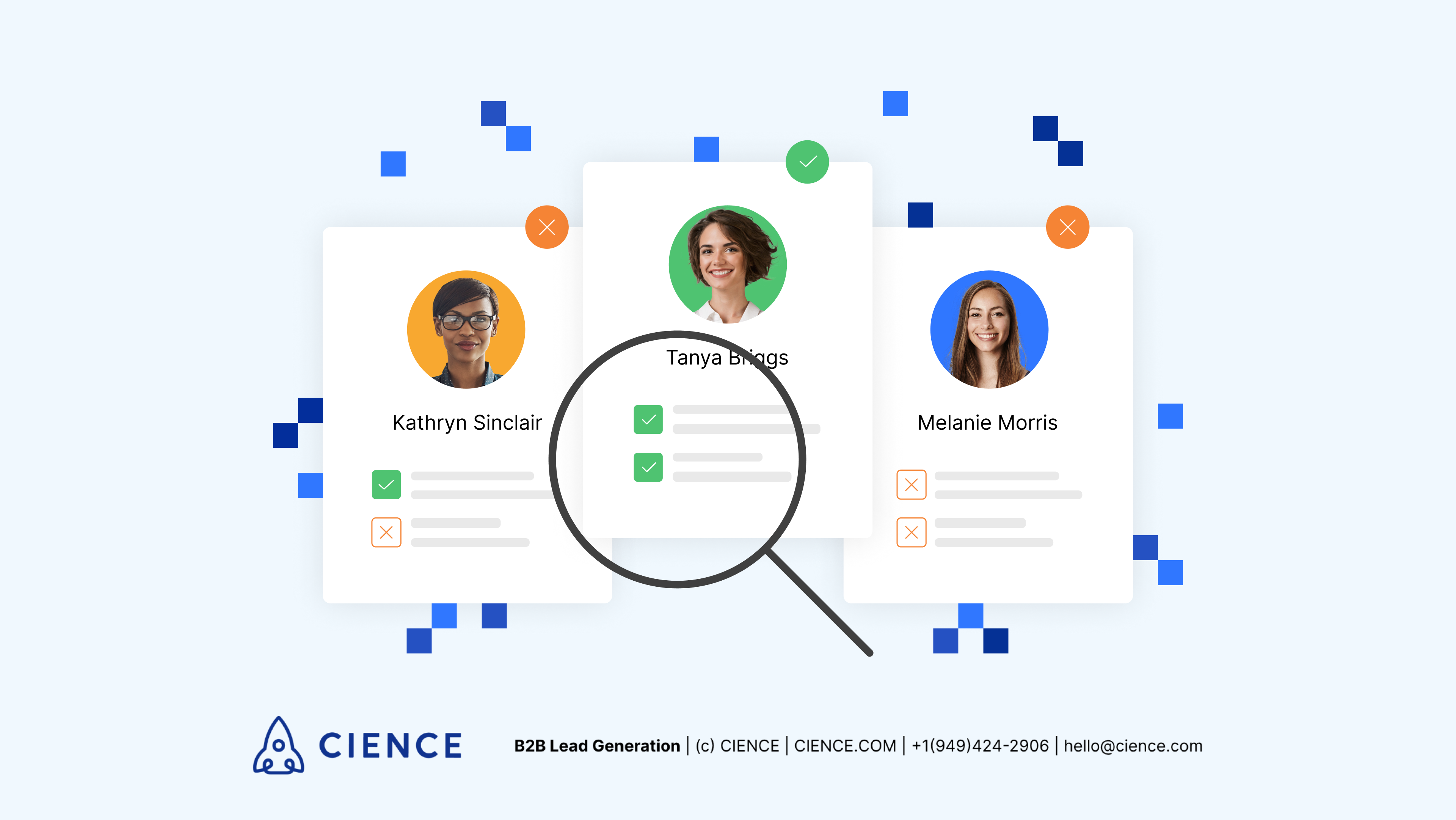
Collaborating with influencers is a great way to attract new customers, but it’s important to choose those who share your brand’s values and can communicate well with their own audience. (You can find relevant influencers by using Upfluence influencer tool).
Niche influencer campaigns are a good way to do inbound marketing because these people have a large base of followers who trust and value their opinion and are, therefore, more likely to value the endorsement of your product, brand, or company when it comes from someone they respect and admire.
8. Share user-generated content.
While collaborating with influencers brings good results, you can expect even better ones when sharing content made by your users. User-generated content (UGC) signals to prospects that real customers trust and actively use your product — which matters far more than polished brand messaging.
Encourage UGC by making it easy to share: create a branded hashtag, feature customer stories on your social profiles, and respond publicly to testimonials and reviews. Each piece of UGC also functions as a permanent inbound asset, discoverable by future buyers who are searching for social proof before making a purchase decision.
9. Give away things for free (and get more in return).
Lead magnets like ebooks, demos, webinars, events, and other services are a great way to get your website visitors’ contact information. You are giving something away for free, but in return, you are getting the most valuable component—sales data.
As the scope of your work makes an email address seem like a bargain, this is a fantastic way to generate high-quality leads. And while you’re at it, try to obtain as much demographic information as possible, as that will help you understand your audience better.
10. Design CTAs that sell.
Giving away free stuff is great, but will your visitors be interested in that? If your call to action is not clear enough, they probably won’t be.
A CTA should be a big, noticeable button on your website that requests immediate action. Something like “Download the Free Manual” clearly states what the prospect will get in return for the action.
11. Use intent data tools.
Intent data tools are software solutions that gather and analyze data on the online behavior of individuals and businesses to identify signals that indicate their interests and intentions. This data is then used to help sales and marketing teams tailor their messaging and campaigns to the specific needs and preferences of potential customers.
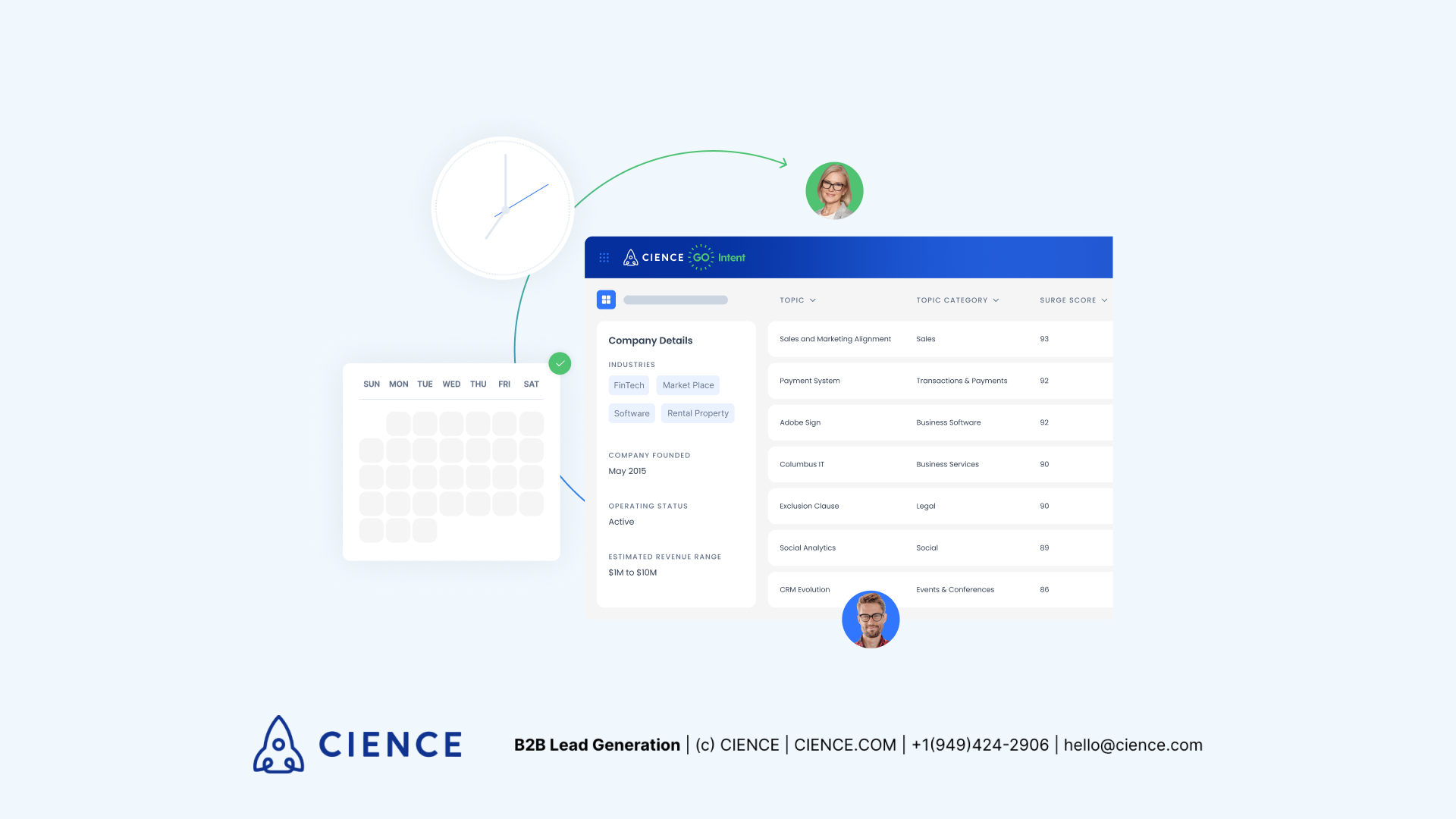
If you spend too much time identifying who you should reach out to, tools like CIENCE GO Intent literally turn intent signals into sales. You’ll be able to narrow down the thousands of intent topics to just the handful that matter to your company’s success with this tool.
12. Send emails to increase sales.
Another way of utilizing emails is to close more sales. Sending emails is a cost-effective way to reach a large audience, as it requires minimal investment in terms of resources and budget. In fact, email marketing has a big ROI: for every $1 you spend, you receive $36 in return.
Additionally, email campaigns can be easily tracked and analyzed to measure their effectiveness, allowing businesses to refine their strategy and optimize their results.
As long as your email has enticing subject lines and clear closing lines, you are almost guaranteed to end up with a new prospect.
13. Track leads with a CRM.
By keeping track of your leads, a CRM system can help you manage your sales pipeline, stay organized, and boost productivity.
CRM tools can also allow you to monitor leads’ engagement with your brand across all channels, from the first time they visit your website to the last time they interact with it via social media or email.
14. Integrate your data.
Conversations with your ideal customers are the lifeblood of any B2B marketing list. That is why you should integrate the data about your audiences and use tools that help you grow it even further.
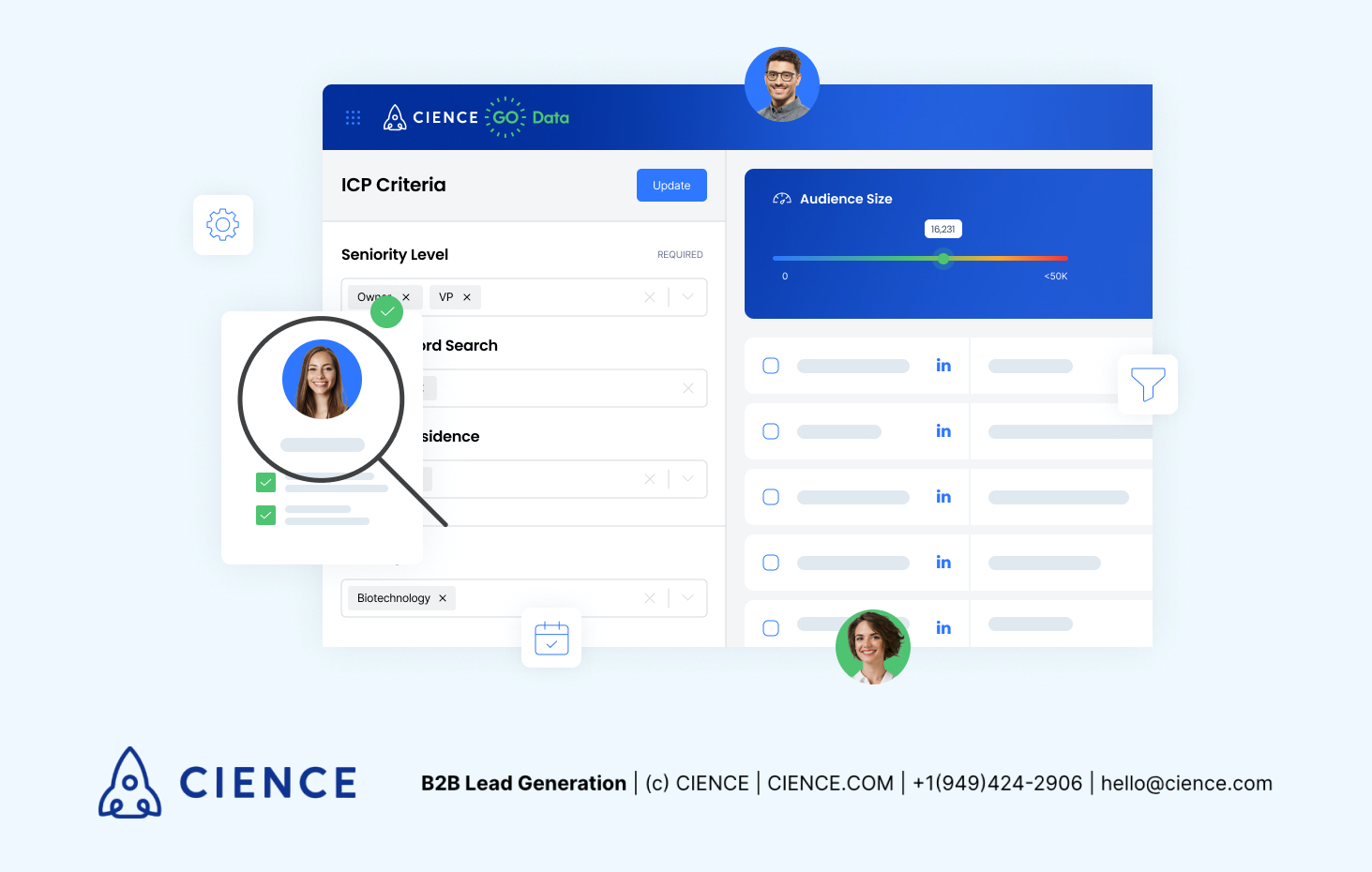
With tools like the CIENCE GO Data platform, all data becomes useful for your business. You are able to create an ideal customer profile (ICP) to target, and GO Data helps you find loads of other contacts similar to your ICP. This robust software will also routinely check your B2B contact database for updated or new matches.
15. Start podcasting.
A great way for businesses to increase authority, trust, and personal connections with a larger audience is through podcasting. Companies can raise brand awareness, generate leads and sales, and differentiate themselves from the competition by producing valuable content that instructs and informs listeners.
Podcasting is a valuable addition to any inbound marketing strategy because it allows for the repurposing of content and interaction with a committed audience. The CIENCE Enterprise Sales Development podcast talks to top leaders each week:
16. Reward loyalty.
Keeping an existing customer costs far less than acquiring a new one — the ratio is typically 5:1 or higher. Loyalty programs that reward repeat engagement through exclusive content, early feature access, referral bonuses, or co-marketing opportunities not only reduce churn but turn existing clients into active advocates on your behalf.
Think about coupons, special discounts, promo codes, and client success stories that make customers feel valued and recognized. Satisfied customers also become your best inbound asset: their reviews, referrals, and case studies attract future buyers more credibly than any ad campaign.
17. Employ chatbots.
By providing instant responses to customer inquiries, chatbots on your website can help you improve customer service and engagement. They can be available 24/7, helping you maintain the happiness of your customers.
Another great thing about chatbots is their ability to personalize responses and provide tailored solutions while giving you insights into your customers’ needs and preferences. With this information, you can keep improving your products and services to meet customer needs better.
18. Use retargeting ads.
Ads that follow a user around the web after they’ve shown interest in your brand or products are called retargeting ads, and they can be an effective part of your inbound marketing strategy. Conversion rates, brand recognition, and return on investment can all be increased by making ads that are specifically tailored to their intended audience.
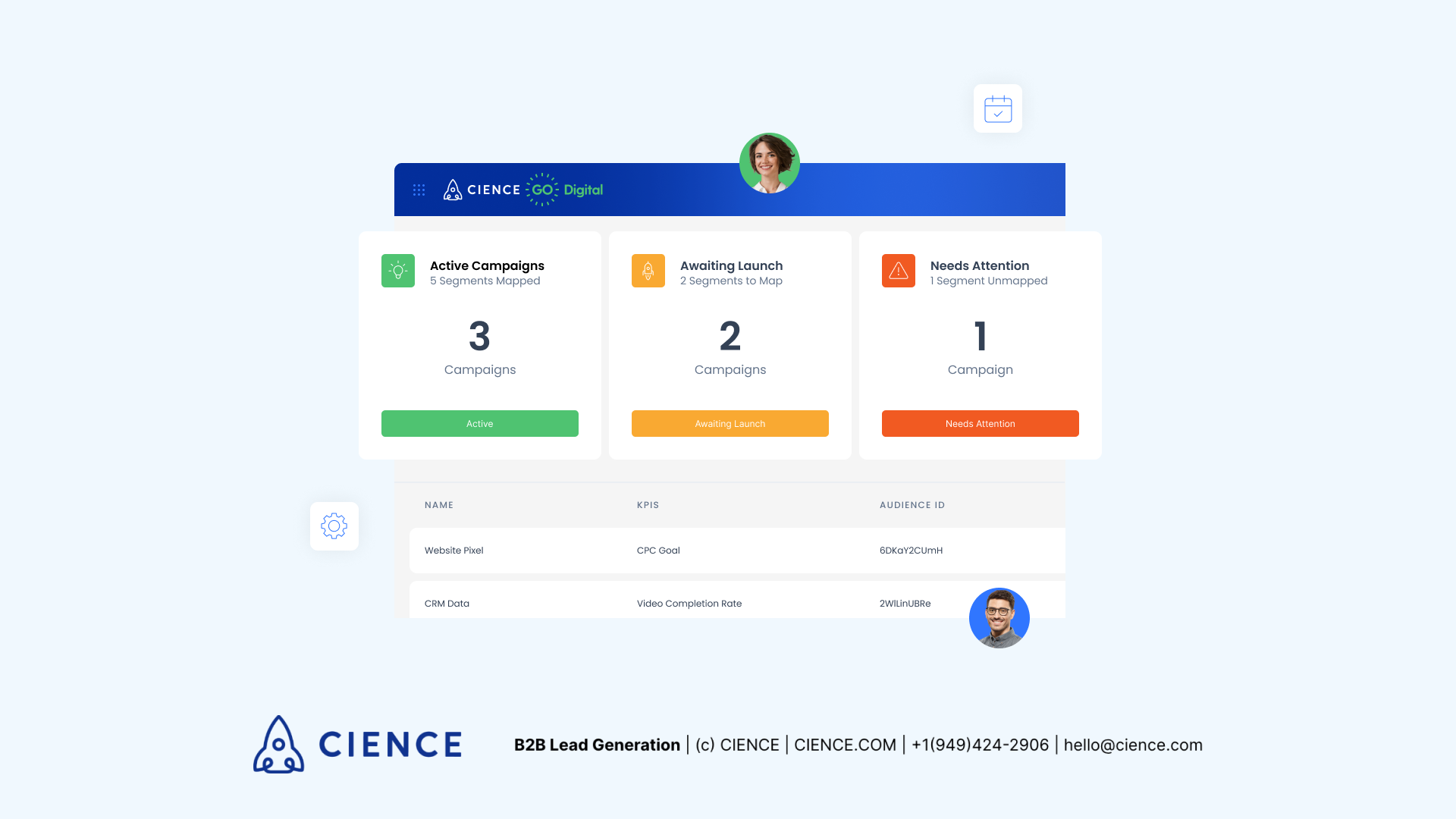
CIENCE GO Digital is a demand-side platform (DSP) with audience targeting built in, putting ads in front of your preferred B2B target audience. It works hand-in-hand with GO Show to identify website behavior and retarget ads only to potential buyers who would be interested in your products and services.
19. Display customer testimonials.
Did you know that it takes dozens of positive reviews to make up for a single negative review? That is why surveying your customers, gathering feedback, and displaying their satisfaction through your communication channels can demonstrate to other potential leads that they are on the right track toward satisfaction.
CIENCE has earned a 4.6/5 rating on Capterra from verified buyers — working with 2,500+ clients across 250+ industries. Those numbers reflect consistent delivery, not just good marketing copy.
20. Stay on top of your analytics.
When your cost per lead keeps climbing but pipeline stays flat, adding another tool won’t fix it. You need a different system.
All of your marketing efforts may be rendered ineffective unless you determine which ones produced the highest ROI. You can see where your inbound strategy is falling short and make adjustments to improve its effectiveness by tracking KPIs and metrics like bounce rate, time on page, and conversion rate.
“CIENCE helped us build a scalable, predictable pipeline — generating over 4,000 qualified leads in four months.” — Marketing team, August Ash
CIENCE + graph8 pricing: $5,000 one-time GTM system setup, $2,499/mo strategic execution, and the graph8 platform at $499/mo. No long-term contracts. See full pricing →
Whether or not you decide to work with us, you’ll walk away with a clear picture of where your pipeline is leaking and what it would take to fix it.
Frequently Asked Questions
What is the difference between inbound and outbound marketing?
Inbound marketing attracts prospects through valuable content, SEO, and social media — it is a “pull” method where buyers find you organically. Outbound marketing pushes messages to prospects through cold calling, email campaigns, direct mail, and advertising. The most effective B2B strategies combine both approaches, using inbound content to build awareness and outbound outreach to accelerate pipeline.
How long does inbound marketing take to produce results?
Inbound marketing typically takes 3-6 months to gain traction, with SEO being the slowest channel to show returns. Content marketing and social media require consistent effort over weeks and months before generating significant traffic and leads. However, once established, inbound content continues working indefinitely, making it far more cost-effective than paid campaigns over time.
What is the ROI of inbound marketing?
Inbound marketing delivers strong long-term ROI. Email marketing returns $36 for every $1 spent. Companies that blog actively see 79% report strong results, and inbound practices produce 54% more leads than traditional outbound methods at lower cost per lead. The key is measuring metrics like cost per lead, conversion rate, and customer lifetime value to optimize strategy over time.
“Since working with CIENCE, we’ve quadrupled our organic traffic — inbound is now our most consistent pipeline source.” — Growth team, Hirebook
Grow Your Business with CIENCE
Employ Inbound Marketing Strategies That Matter
We can’t say enough about how important inbound marketing is because it focuses on building relationships with potential clients instead of just quickly closing deals.
By providing personalized interactions, nurturing leads through the sales process, and delighting customers with exceptional service, you can increase the likelihood that website visitors will come back to you to make a purchase and recommend you to even more potential buyers.
Why does it all matter? This ultimately helps you build a strong brand reputation and long-lasting customer relationships, both of which are essential for your business to continue growing and prospering. Trusted by 2,500+ clients across 250+ industries — from SaaS startups to enterprise teams at Okta, Microsoft, and Google — CIENCE has been a proven partner for companies building inbound pipelines that compound over time.

A graph8 company — AI-powered GTM execution across 250+ B2B industries.
graph8 Platform
From $499/mo
Run your own GTM campaigns with AI-powered data, sequences, and analytics.
Start Free — 2,500 Credits No credit card requiredCIENCE Managed
From $2,499/mo
Our GTM teams build and run your outbound campaigns end-to-end.
15-min call · No commitment2,500+ B2B companies served · Month-to-month contracts · See full pricing →