
Customer data platforms (CDPs) collect first-party data from websites, apps, and marketing channels to build unified customer profiles. This guide compares 15 CDPs and explains how they differ from DMPs and CRMs — it takes 25-30 touchpoints to close a sale, making unified data critical.
From Daniel Conn, GTM Strategist, graph8: “Most B2B teams treat data quality as an IT problem when it’s actually a revenue problem. A CDP doesn’t just unify your data — it exposes exactly where your pipeline is leaking and which prospects you’ve already lost because the signal arrived too late.”
Last Refreshed: March 2026 with updated statistics and tool information.
A customer data platform (CDP) is a data management tool that collects first-party data from websites, apps, and marketing channels to build unified, continuously evolving customer profiles. The best CDPs for 2026 include Segment, Bloomreach, Treasure Data, Tealium, and ActionIQ.
It can take 25-30 touchpoints to close a sale, and with multiple channels and team members involved, critical buying signals get lost. CDPs solve this by unifying all customer data in one place — tracking behavior patterns, personalizing buyer experiences, and improving ROI. Below, we compare 15 CDP platforms with pricing, features, and integration details.
What Is a Customer Data Platform?
A customer data platform (CDP) is a software layer that collects behavioral, transactional, and firmographic data across all your channels — web, app, ads, and marketing clouds — and builds persistent, evolving profiles for every person in your database.
Such software can gather data from channels like websites, apps, digital assistants, and marketing clouds. It collects data including demographics, psychographics, behavioral, firmographics, transactional, and more. Most importantly, all of the data is collected in a legal way and can be constantly updated.
What does a customer data platform do?
A customer data platform provides a better understanding of your existing and potential customers, allows the crafting of hyper-personalized sales and marketing campaigns, ties new data together with the ones you already have, and is usually compatible with your existing tools.
Why is CDP important for marketing?
Being able to understand your customers’ needs across every platform where your interaction happens is a critical first step in aligning your marketing efforts and truly becoming a customer-oriented service provider.
A CDP gathers data from every channel (no matter what format it comes in), compiles it into one extensive customer profile, and helps marketers activate it. It provides the business intelligence you need to tailor messaging and create real relationships that last.
How Does a CDP Work?
A CDP data model powers on when a customer interacts with your business. This can be through an email, ad, website, chatbot, or social media post. At that moment, special pixels used in a CDP start gathering information.
Data points can vary from basic contact info to specific customer behavior. The most significant thing about CDP is that all of the data is compliant with data collection rules, is gathered directly from the source, and gets updated if the variables change.
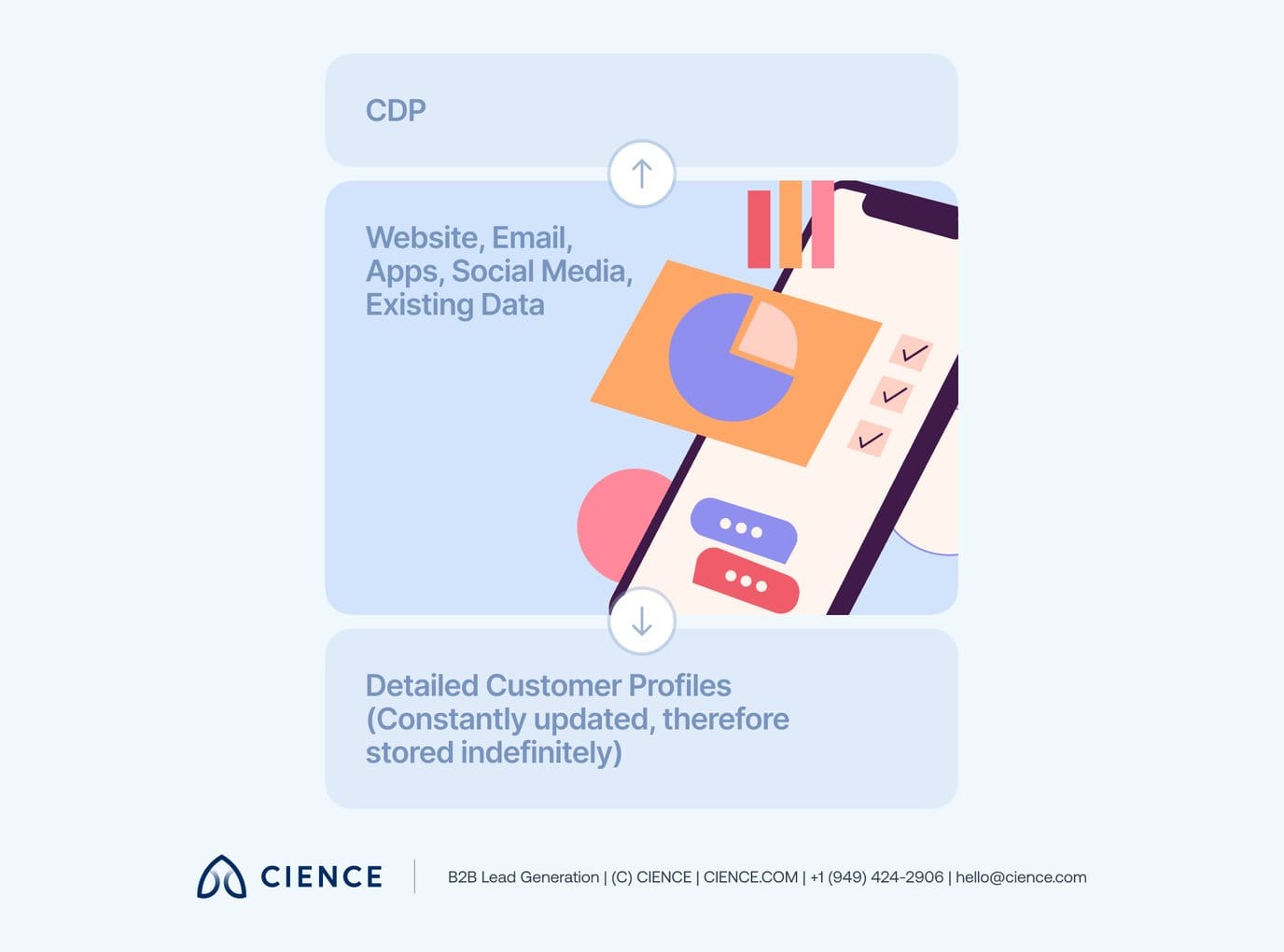
The customer data management platform collects the data (online or offline), creates personal profiles for each customer, and compiles an extensive database for your marketers to use. It is crucial for a better customer experience, better targeting, and better results.
CDPs vs. other data management solutions
Since CDP is a relatively new term in the industry, some might get it confused with other related products: data management platform (DMP) or customer relationship management (CRM) software. While these platforms share some similarities with CDPs, they have distinct purposes, functionalities, and use cases. Let’s dig into their main differences to avoid any confusion between those terms.
CDP vs. DMP
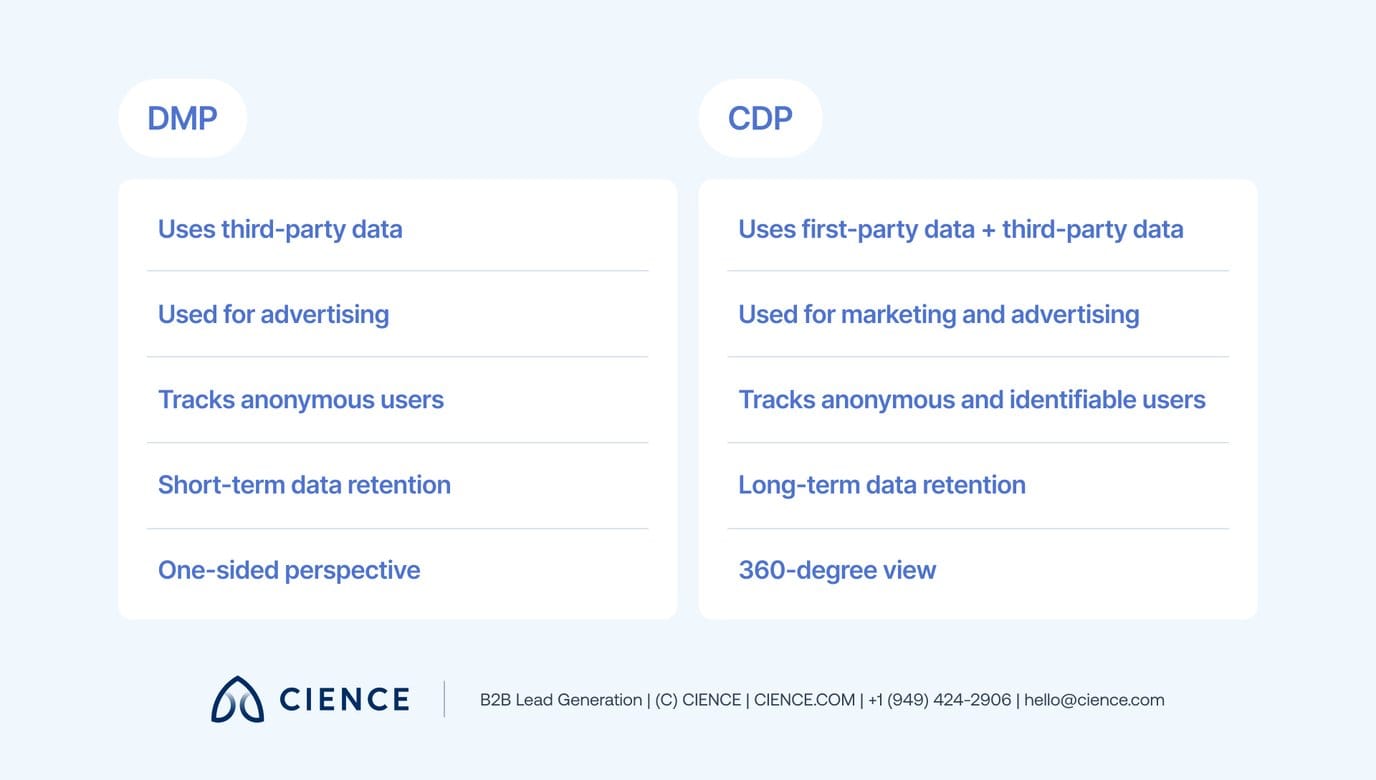
A DMP mainly focuses on anonymous users and third-party data. Its primary source of information is cookies, and it’s mostly used to support web display advertisements.
On the other hand, the CDP tracks both identifiable and anonymous users and mainly focuses on first-party data accordingly. Rather than tracking just a few parameters, it finds all available information for creating highly personalized marketing campaigns.
CDP vs. CRM
Although both the CDP and CRM software are absolutely vital for any marketer, they perform different functions in the field.
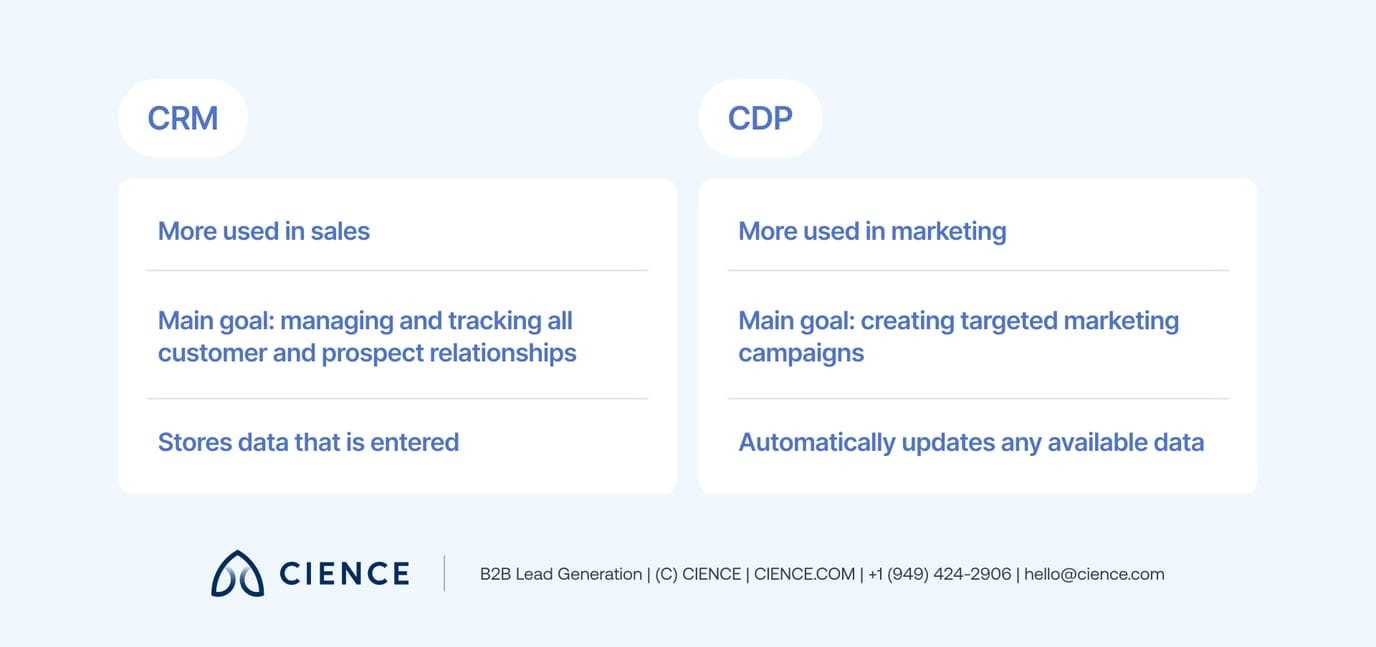
CRMs track every prospect and customer interaction, manage customer data, automate routine tasks like email send-outs or contact segmentation, and handle communications across channels.
CRMs are perfect for storing data, tracking customer relationships, and crafting outreach campaigns across different channels. However, CRMs are more like storage rooms that need to be constantly updated with new information while CDPs constantly evolve in real time.
What Are the Benefits of a Customer Data Platform?
While we’ve established the difference between CDP, DMP, and CRM and their importance for marketing, let’s talk about the unique value that a customer data platform can bring to your business. Here are three main benefits of using a CDP:
1. It gets you 1:1 with your audience.
According to Statista, 90% of consumers in the U.S. find the idea of personalization appealing. When you know who your customers are and what they need, it sharpens your targeting and outreach efforts and therefore creates a hyper-personalized customer experience.
CDP collects and aggregates big amounts of data from all over the place, unites it, and makes a picture of your potential customer much clearer. It helps you to relate to them on a deeper, individual level, which will lead to better communication.
2. It’s secure, compliant, and complete.
Most customers are ready to share some of their information to get a personalized experience. But what about the security of that data? If sensitive information goes public, at least 71% of customers say they will walk away from your company.
A CDP only seeks out customer information that is allowed to be gathered (GDPR compliant) and it is only available to you. Because a CDP is programmed to gather data from every possible resource, it creates a 360-degree view of the customer — and if any of the data components change, the data in the CDP will evolve as well.
3. It makes it easier for your teams.
The biggest benefit of a CDP over other solutions is that you get one place for all data. Now, all the teams that usually work separately (IT, sales, marketing, copy, and designers) get to see a unified database and customer data integration with the tools they already use. This way, no matter what channel a customer uses, a CDP creates a seamless experience across all platforms.
Besides these three biggest benefits, CDP implementation requires minimal effort in terms of setup, provides real-time data, and is more cost-effective than any lead list you could purchase. If any of these needs are relevant to you, a CDP is on your horizon, but first, you’ll have to go through the process of choosing one.
“CIENCE enriched over 1 million contact records for our team — giving us the data coverage we needed to aggressively scale lead generation across our target accounts.” — Okta
Bad data doesn’t just waste budget — it trains your team to accept poor results as normal. Clean intelligence changes everything.
How to Choose the Best CDP Software
To select the best CDP solution for your business, consider the following questions:
Who should be involved in decision-making?
Besides C-level management that greenlights such important decisions, you should also consider the right decision-makers who will be using a CDP directly. If you have a CRM, some data is there already, so you’ll need a representative from that side. Plus, you should include stakeholders from sales, customer success, and marketing.
What can I use a CDP for?
We know that having a CDP is beneficial; however, it’s easy to get caught up and forget the actual tasks you want it to solve. Here are some questions to ask:
- Do you want to create a more personalized experience on your site?
- Do you need better targeting of your audience?
- Would you like to understand your customers better?
- Are you looking to consolidate all of your data into one place?
Whatever the reason is, you should brainstorm ideas and come up with several use cases.
Which factors should I consider?
When you start comparing vendors, there are a few ways you can classify them:
- Time to value. This is the period of time it takes to get a CDP set up and running. Also, note if the vendor is offering assistance with it or if you have to dedicate your own resources.
- Cost. Since developing a customer data platform in-house can be very time-consuming and expensive, CDP vendors have a variety of subscriptions at different price ranges.
- Ease of use. The best CDPs don’t require a lot of groundwork; they may need system adjustments at first, but further updates should only take a couple of clicks to maneuver.
How do I compare CDP providers?
You should make a list of questions about how their CDP works, the tools it can be integrated with, the data sources it uses, its compliance with GDPR and CCPA, what analytics it offers, and if it includes any bonus services.
Best Customer Data Platforms for 2026
Today, the competition between CDP vendors is high, which is good for you because you’ll have plenty to choose from. However, there is also the chance you can get lost in the number of options. To help you out, we’ve created a list of the fifteen most popular customer database platforms.
1. CIENCE
Pricing: By request Free Trial: Not available CRM Integration: Available Browser Extension: Not available
The CIENCE platform combines multiple elements of a great, modern CDP:
CIENCE teams use a sales intelligence platform that offers over 140 million accurate records applicable for any industry, paired with a custom approach to provide a 360-degree view of prospects. The records are verified daily and perfectly match the ideal customer profile (ICP).
CIENCE’s advanced technology captures event data from any website and harnesses that information in a 360-degree view of all interactions. Trusted by 2,500+ clients across 250+ industries — with a 4.6/5 rating on Capterra — CIENCE delivers both the data infrastructure and the execution layer that traditional CDPs lack.
Together, these features offer robust CDP use and data flexibility. In addition to a comprehensive data plan, our teams employ various strategies such as real-time ID of website visitors, reporting and analytics, data licensing and validation, audience activation, custom research, data enrichment, deep profiling and micro-segmentation, and professional outreach support.
2. Adobe Real-Time CDP
Pricing: By request Free Trial: Not available CRM Integration: Available Browser Extension: Not available
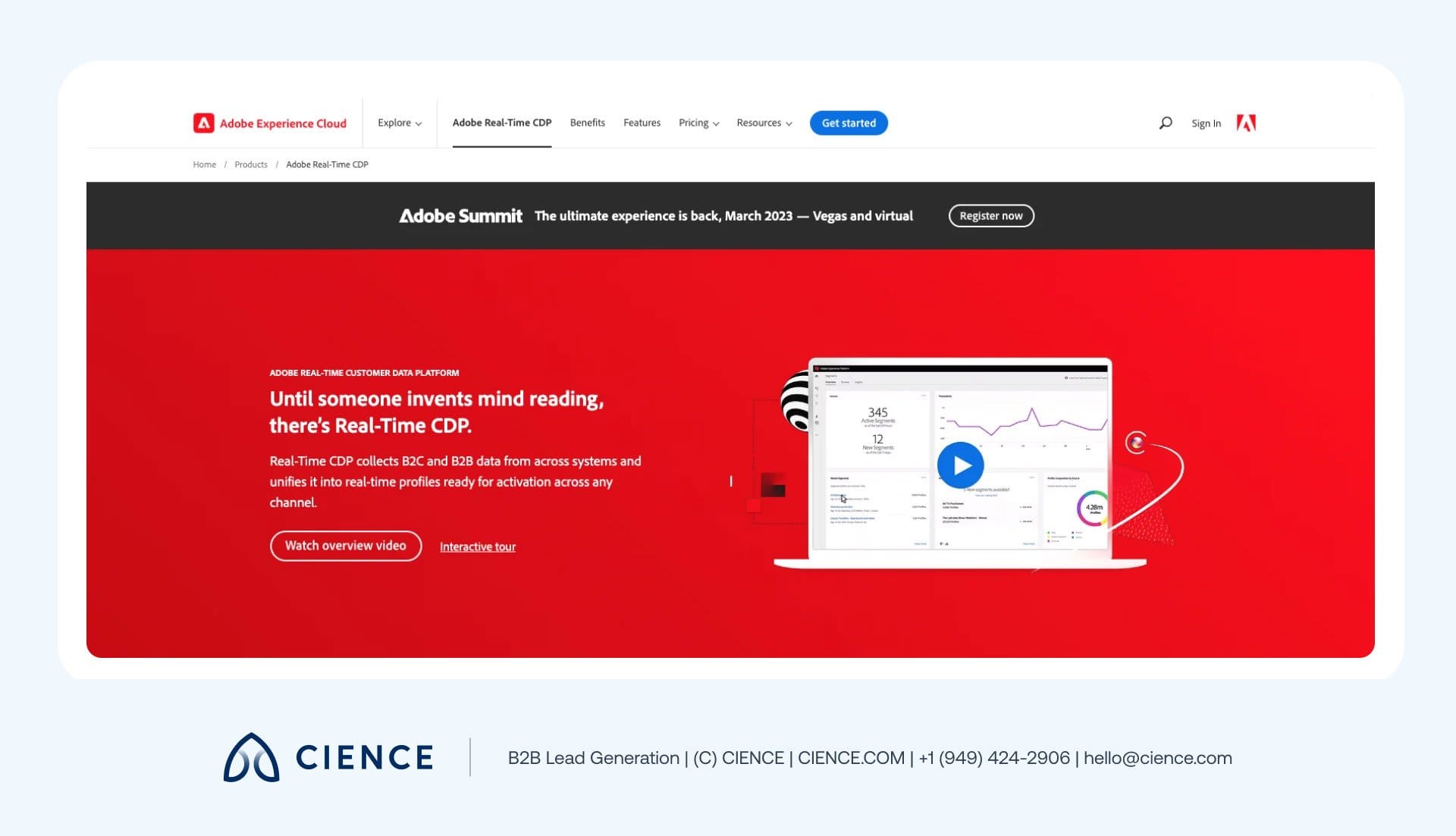
Real-Time CDP collects B2B data from across systems and unifies it into real-time profiles ready for activation across any channel. The tool provides hundreds of prebuilt and customizable connections to build complete profiles and activate audiences. It also delivers a flexible and configurable data governance framework that keeps data safe while giving teams the access they need.
3. Oracle Marketing
Pricing: By request Free Trial: Available CRM Integration: Available Browser Extension: Not available
Oracle Marketing is a CDP solution that converts data from multiple channels into a single profile for a better understanding of a customer perspective. Its key features include data quality management, A/B testing, launch of marketing campaigns, real-time data, lead nurturing, marketing automation, and various app integrations. It is meant to show a greater ROI on digital marketing and build customer loyalty through excellent campaign performance.
4. Segment
Pricing: From $120 per month Free Trial: Available CRM Integration: Available Browser Extension: Not available
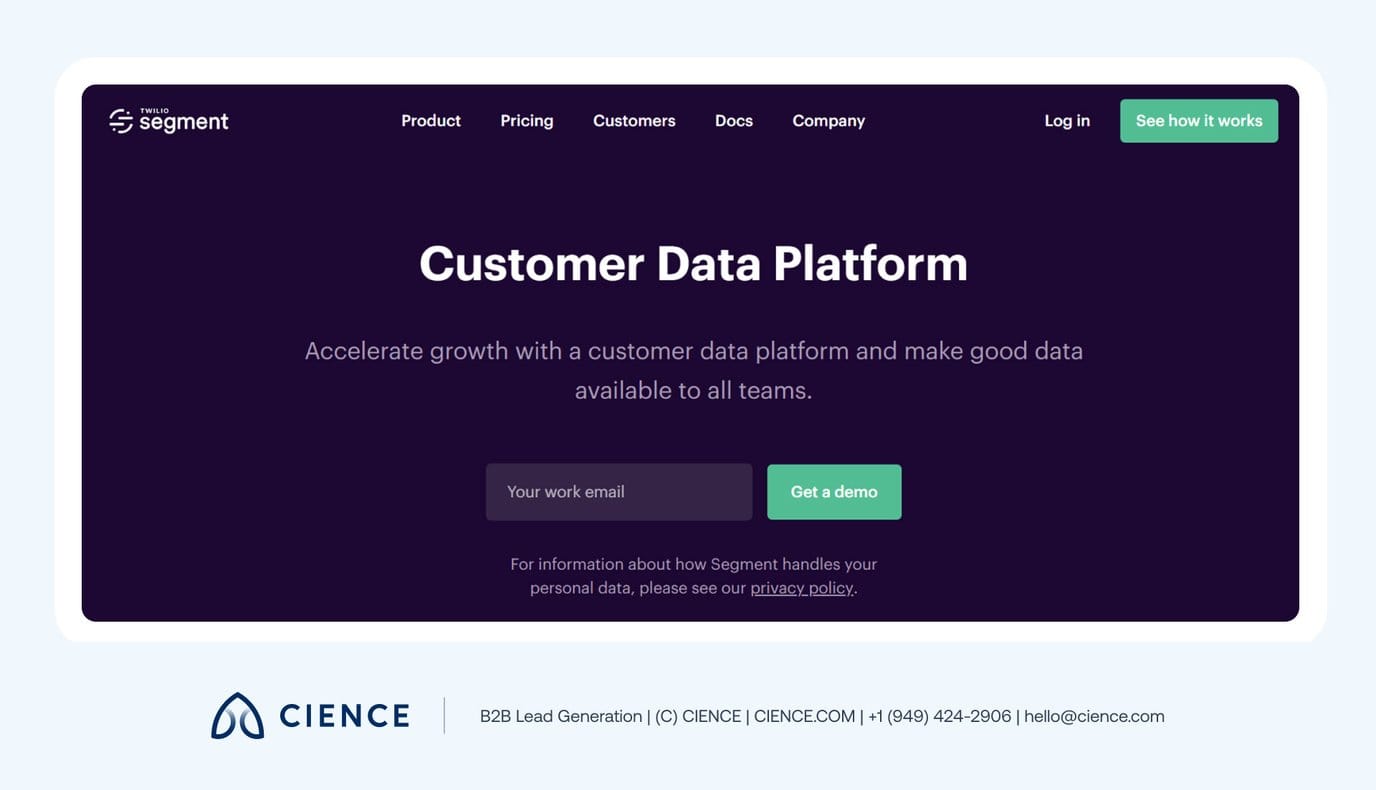
Segment is a CDP software that offers collecting, controlling, and cleansing data for better audience engagement. It’s perfect for data collection and integration, data centralization, audience management, and omnichannel messaging. Segment monitors every signal that comes from every channel you use and transforms it into smart personalization tips that allow your engagement to feel individually crafted.
5. Emarsys
Pricing: By request Free Trial: Not available CRM Integration: Not available Browser Extension: Not available
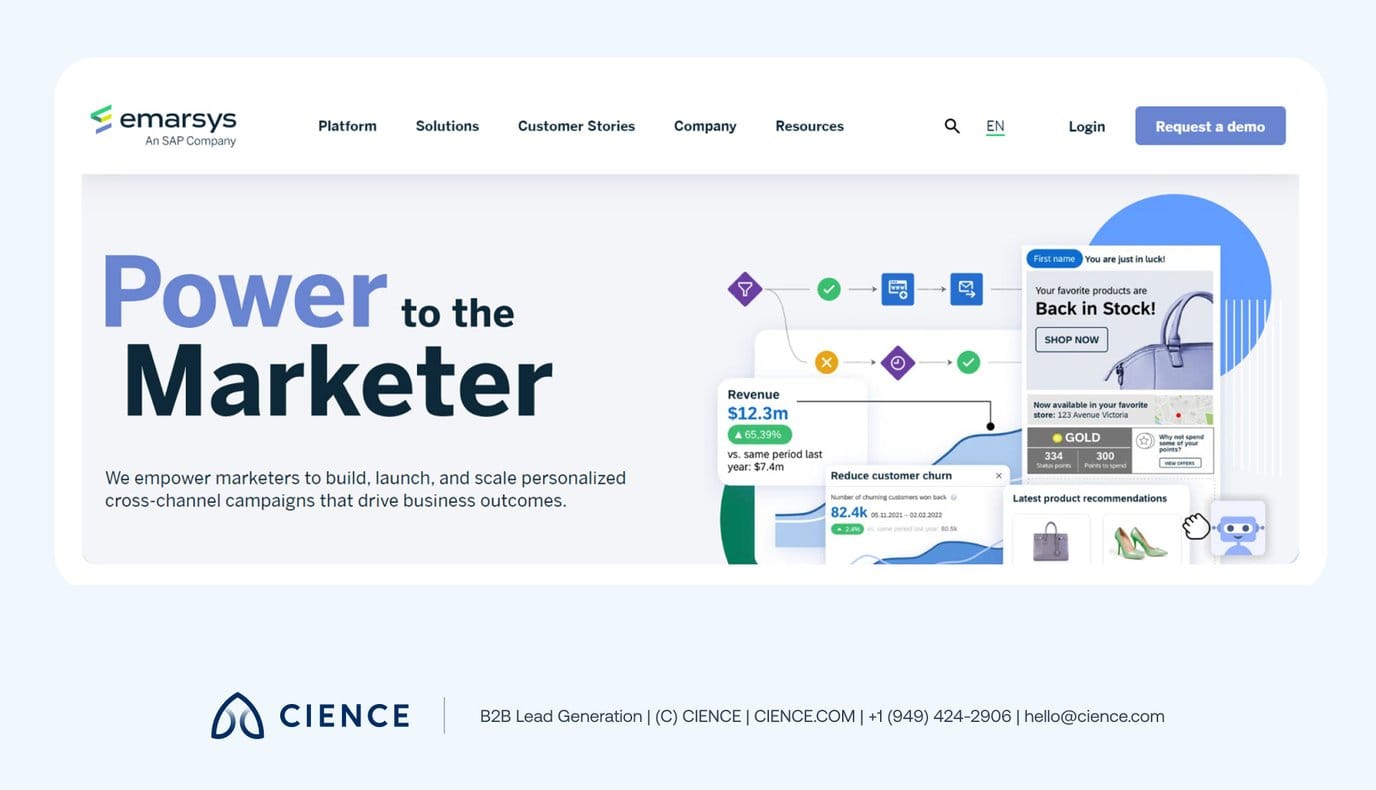
Emarsys is an omnichannel CDP tool that streamlines data from multiple platforms for the benefit of your business. It is most suitable for e-commerce, retail, and travel businesses. It provides AI-optimized data collection, real-time analytics, A/B testing, and third-party tools integration. It also offers marketing automation, customer lifecycle management, sales intelligence, and analytics.
6. Bloomreach
Pricing: By request Free Trial: Not available CRM Integration: Available Browser Extension: Not available
Bloomreach is a CDP software that focuses on delivering extra personalized customer journeys through data collection. This commerce experience cloud offers AI-driven search, customer engagement, marketing automation, merchandising, and a content management system. It offers solutions for businesses in any industry to create client experiences with a personal touch.
7. CaliberMind
Pricing: By request Free Trial: Not available CRM Integration: Available Browser Extension: Not available
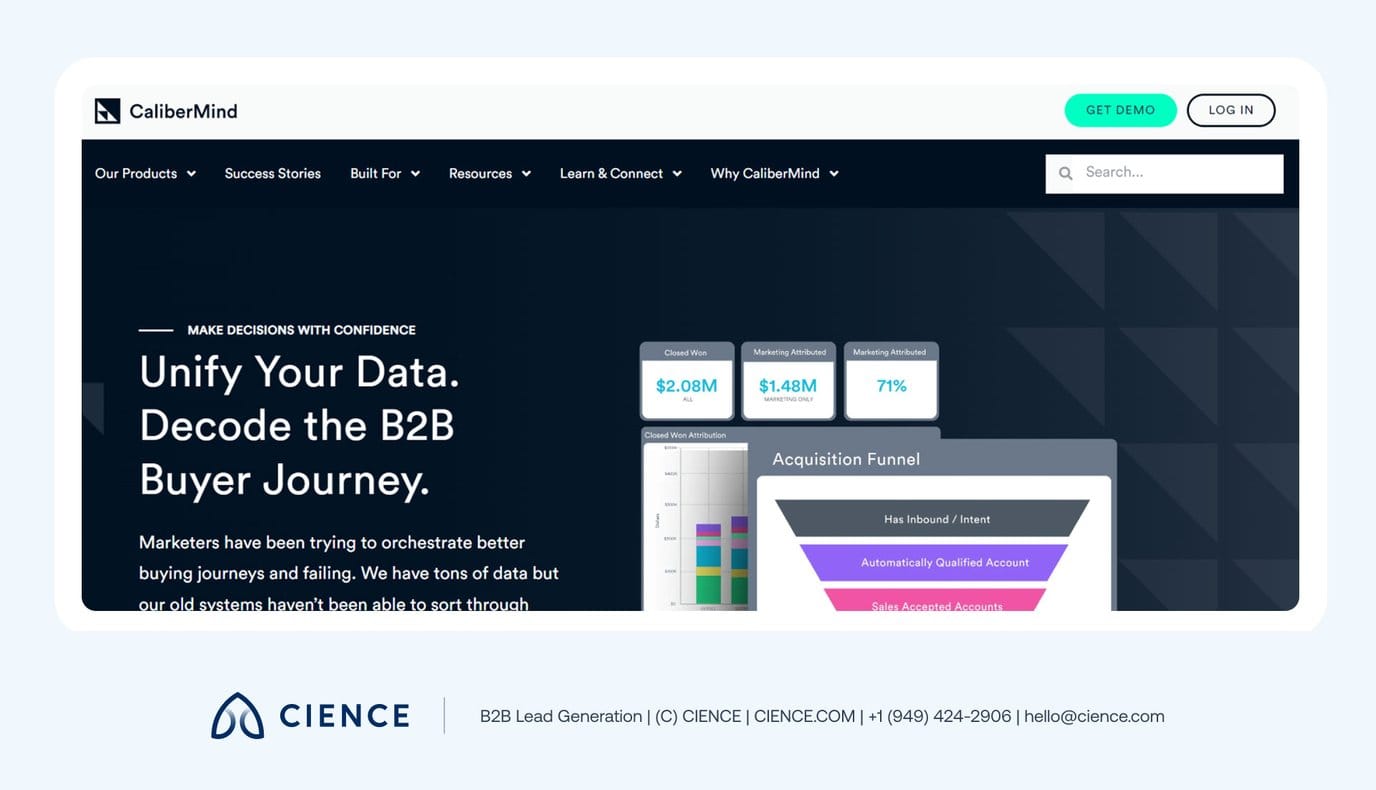
CaliberMind is a CDP software that analyzes, cleans out, organizes, and activates the data you have. It helps to see where your funnel is leaking, what is your perfect client like, how to shorten the sales cycle, and what prospecting techniques are working for you. CaliberMind’s philosophy is that no lead or investment should ever go to waste.
8. Insider
Pricing: By request Free Trial: Not available CRM Integration: Not available Browser Extension: Not available
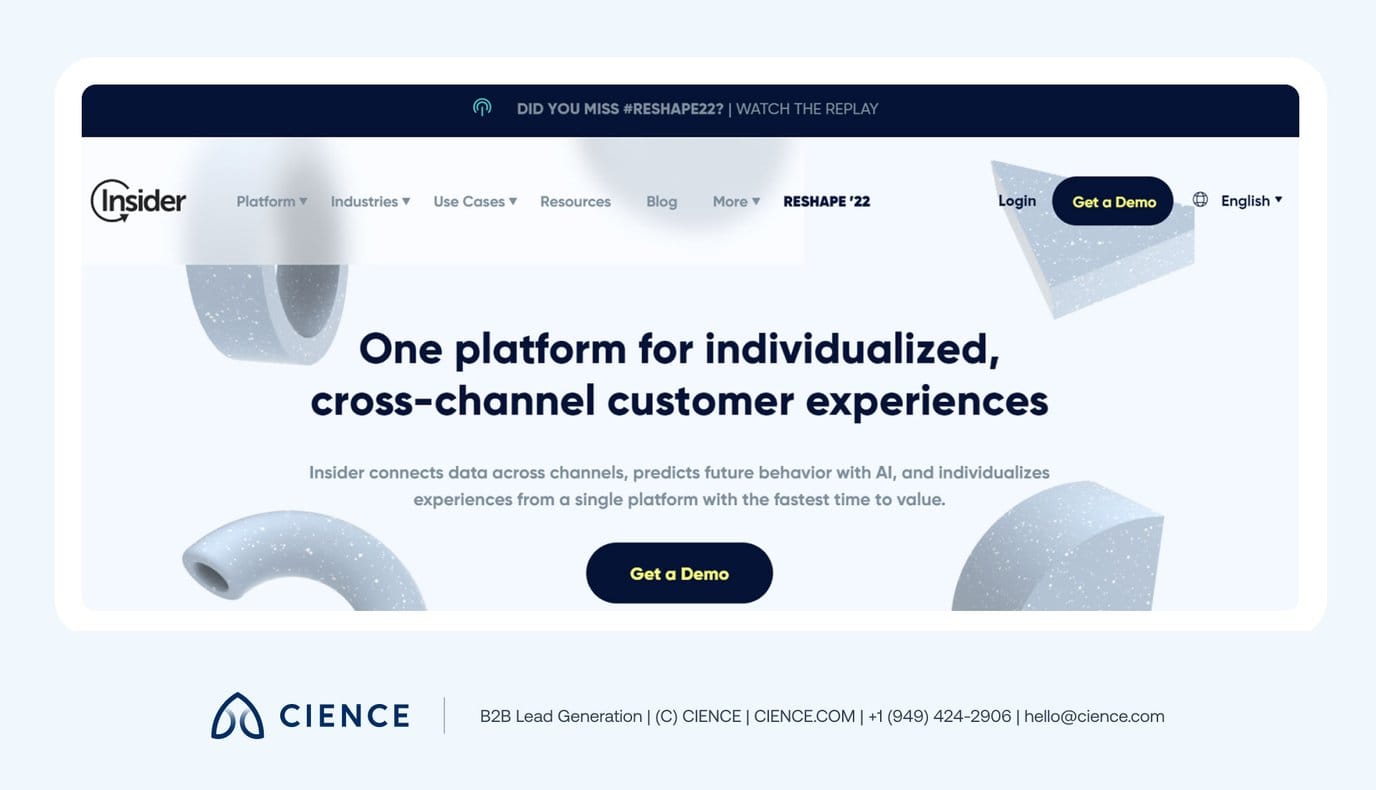
Insider is one of the top-rated CDP companies that enables marketers to gather data from all the channels for a united, highly individualized customer experience. This CDP has three main offerings: to connect (using unified profiles and segmentation), to predict (analyzing online customer interactions), and to individualize (using built-in AI and machine learning).
9. mParticle
Pricing: By request Free Trial: Not available CRM Integration: Not available Browser Extension: Not available
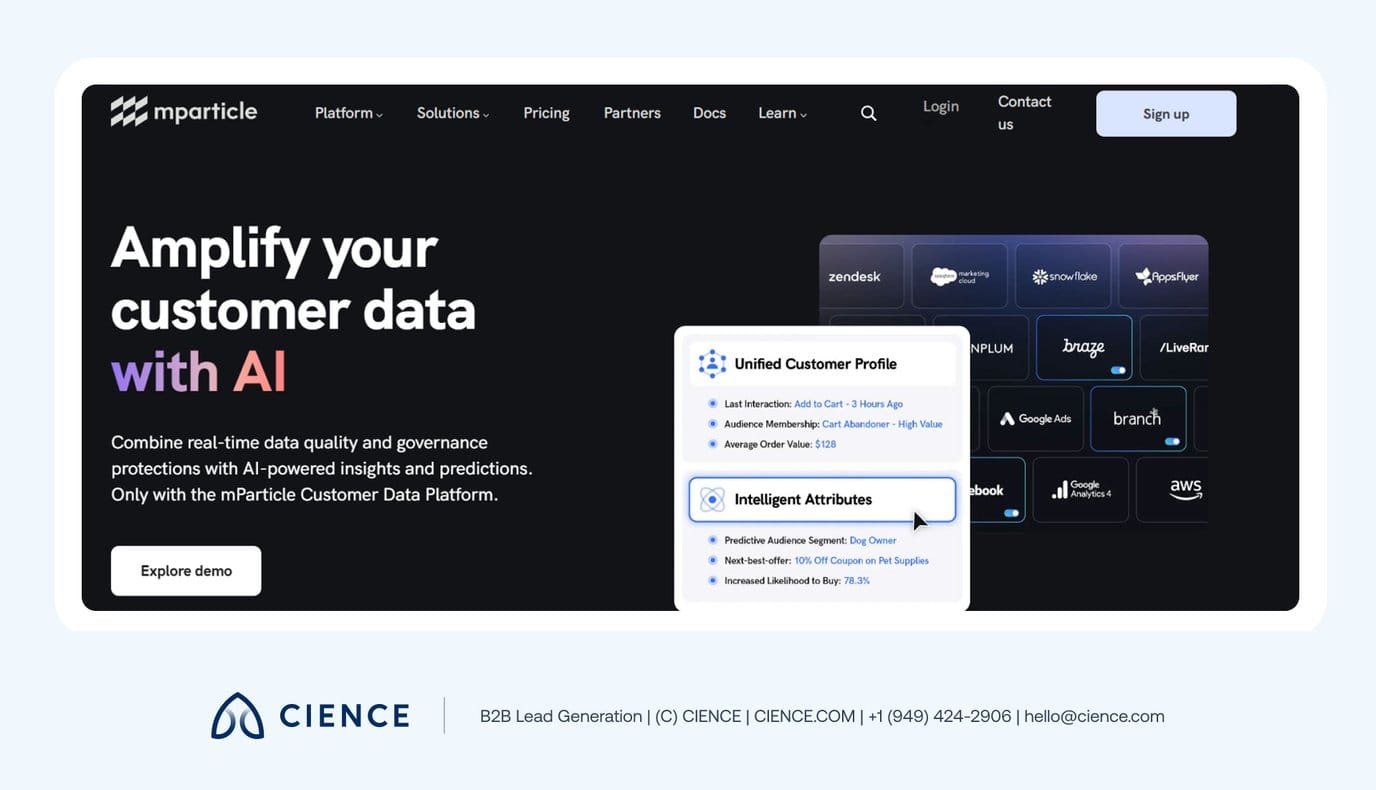
mParticle is an AI-powered customer data platform designed to increase customer loyalty and retention through the proper use of data. It creates comprehensive customer profiles that gather, unify, and synchronize data. It gathers the data through secure APIs and connects it with the tools you use. The data that’s gathered is then transformed into a data audience that evolves along with your needs.
10. Listrak
Pricing: By request Free Trial: Not available CRM Integration: Available Browser Extension: Not available
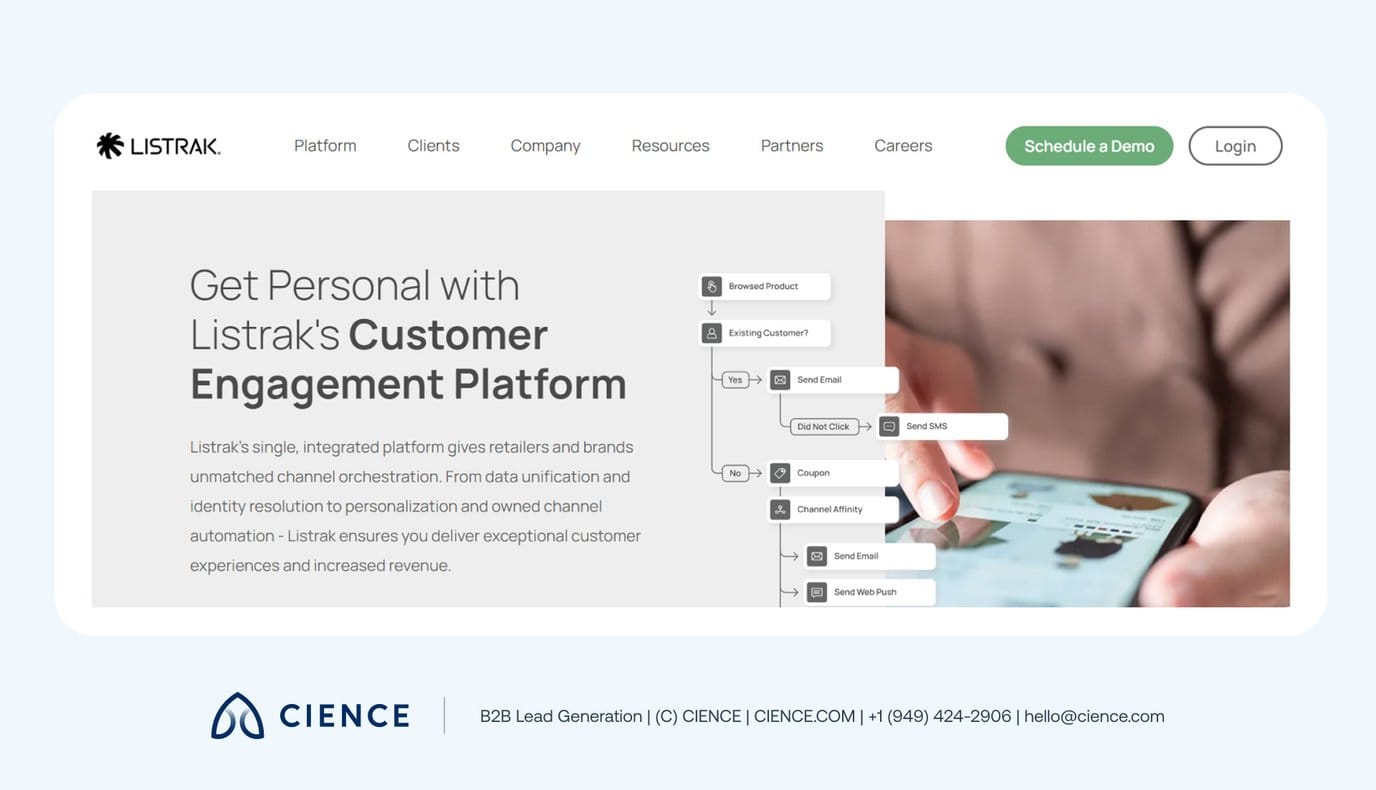
Listrak is one of the customer data platform companies that can do it all: behavioral triggers monitoring, cross-channel orchestration, predictive personalization, customer behavior analytics, segmentation and personalization, foundational marketing, and gathering all the collected data in one place. You can track your customers’ journeys, send relevant messages in any channel, and use AI insights and behavioral triggers to maximize customer engagement and revenue.
11. ActionIQ
Pricing: By request Free Trial: Not available CRM Integration: Available Browser Extension: Not available
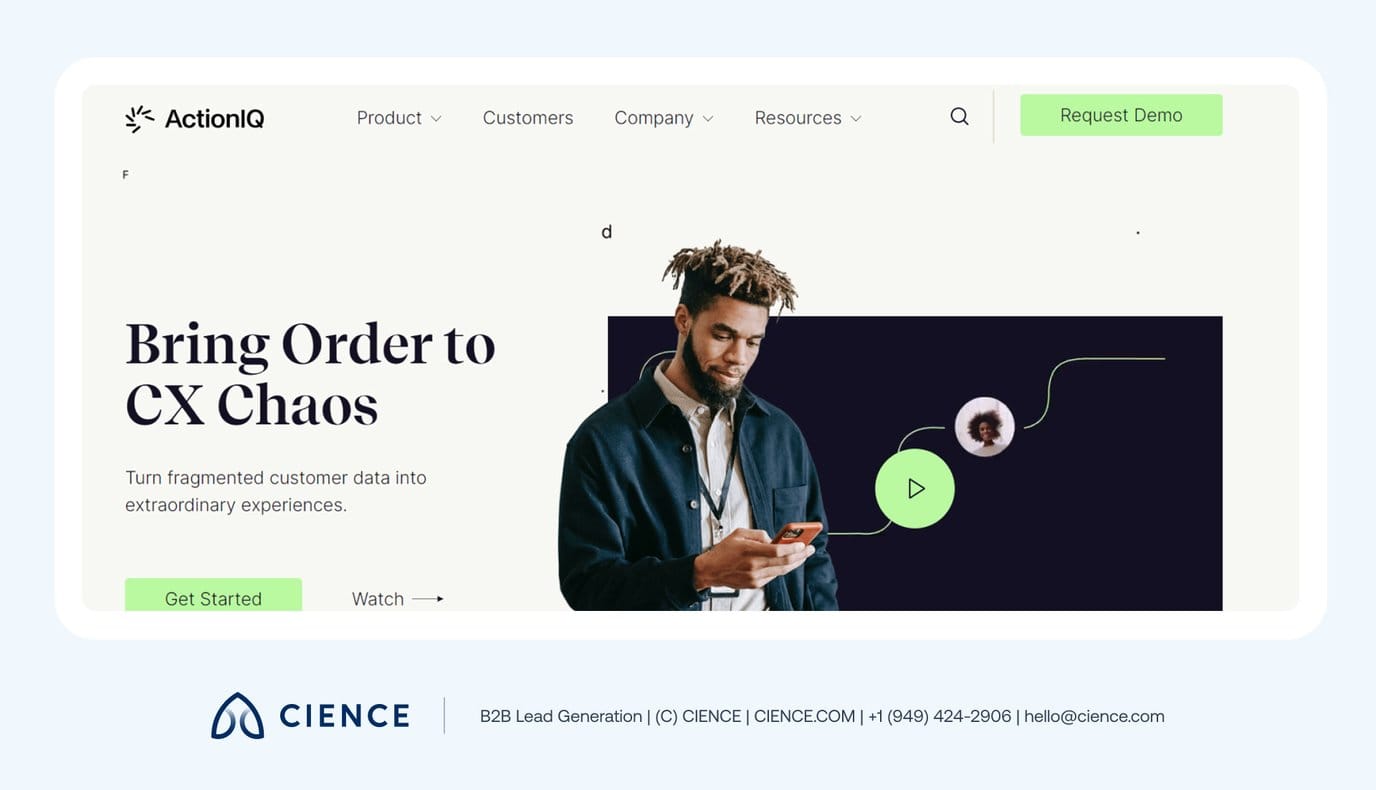
ActionIQ is a CDP platform vendor that transforms customer data into meaningful experiences by managing data governance, costs, and performance. It gathers data from any source you use, unifies it to create a full-view profile, carefully segments it, implements it in the multichannel outreach, and monitors it live. It serves both B2B and B2C industries and brings the work of various departments into one place.
12. SAP
Pricing: By request Free Trial: Not available CRM Integration: Available Browser Extension: Not available
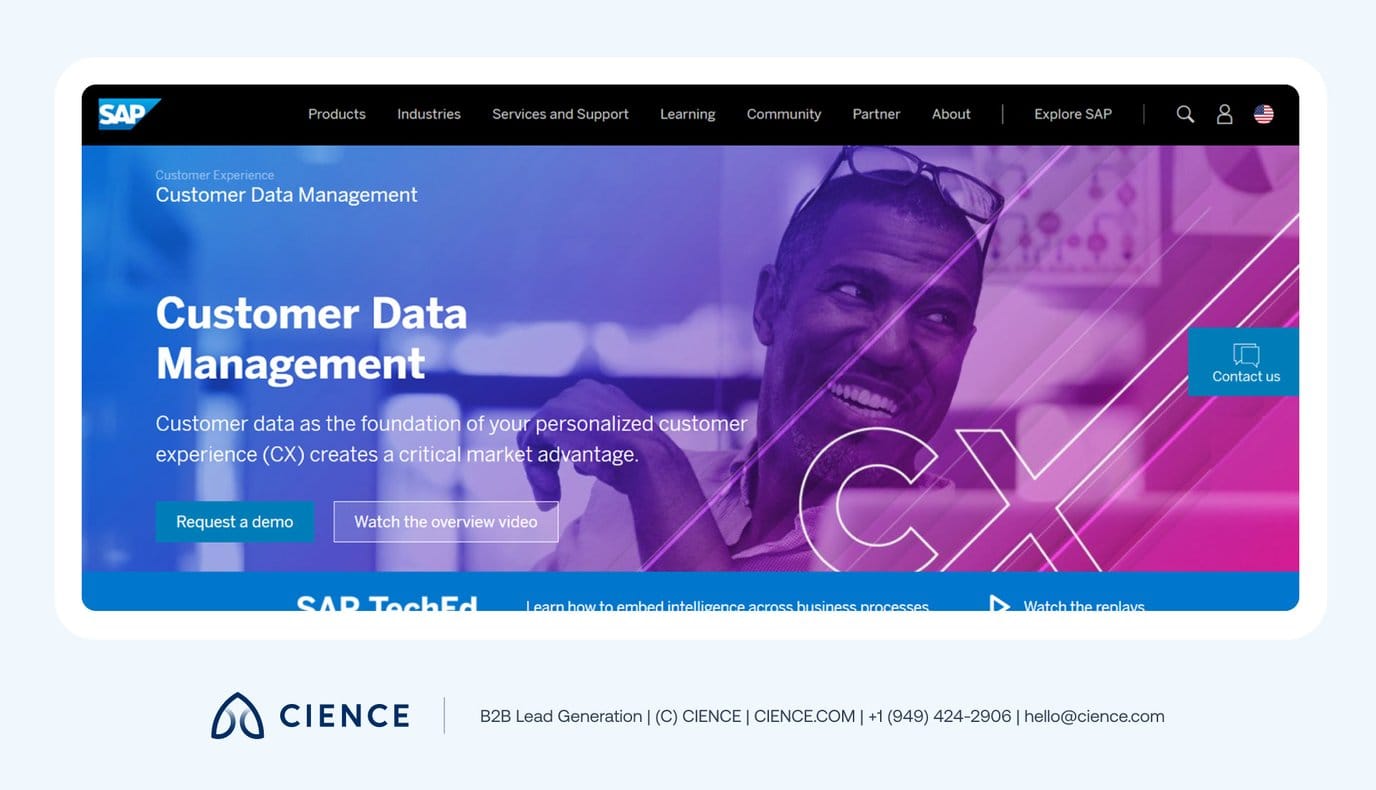
With the customer data platform from SAP, you can gather data from across your enterprise to make informed business decisions, strengthen customer relationships, and gain new revenue. SAP allows you to combine customer data with back-office data and get a 360-degree view of your lead. It is only collecting permission-based data to comply with the data production rules and build client trust. It also provides insight activation so you can promptly act and react during the decision-making process.
13. Treasure Data
Pricing: By request Free Trial: Not available CRM Integration: Available Browser Extension: Not available
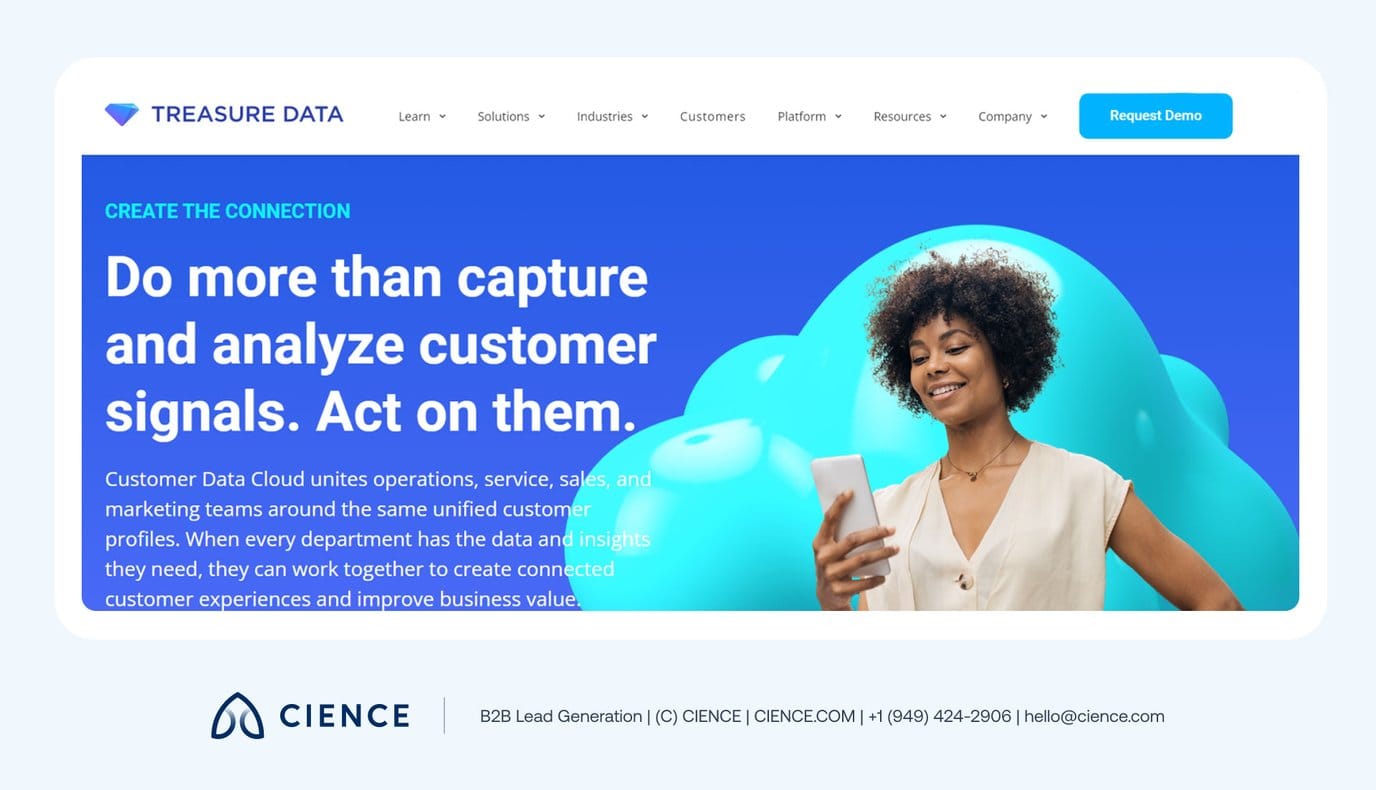
Treasure Data is one of the top CDP platforms that unites your teams around a single data platform, provides real-time data analytics, and offers expert support to fuel your growth. Among the special features are more than 180 out-of-the-box connectors that unify all your data and an enterprise-grade security and privacy system that keeps your data protected.
14. Totango
Pricing: From $249 per month Free Trial: Available CRM Integration: Available Browser Extension: Not available
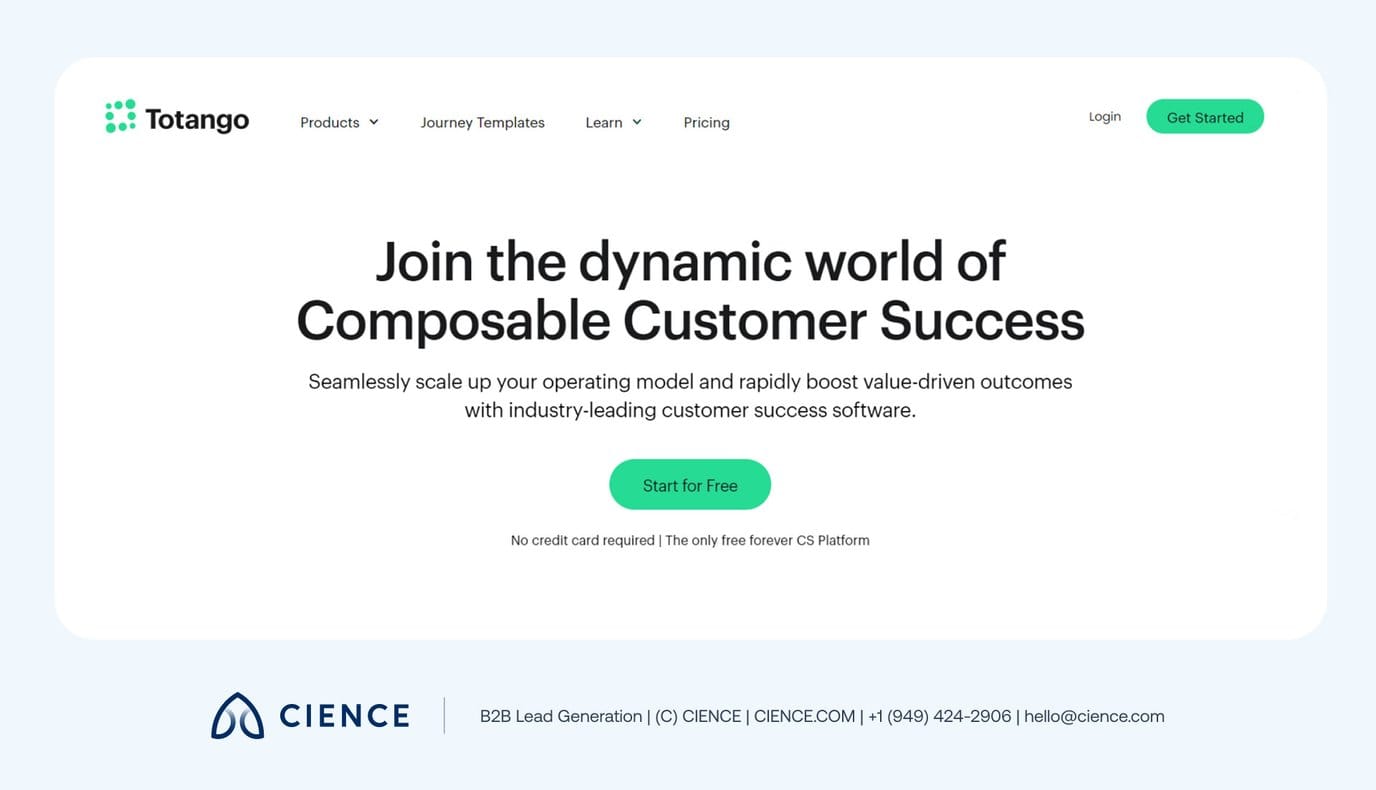
Totango is an intelligent customer data platform that connects the dots on customer information and keeps a handle on customer health changes so you can take needed sales actions at the right time. It offers a 360-degree view of the financial data from the tools like Salesforce and Netsuite, product usage data, survey responses, satisfaction scores, behavioral data, and every interaction with a customer.
15. Lytics
Pricing: By request Free Trial: Available CRM Integration: Not available Browser Extension: Not available
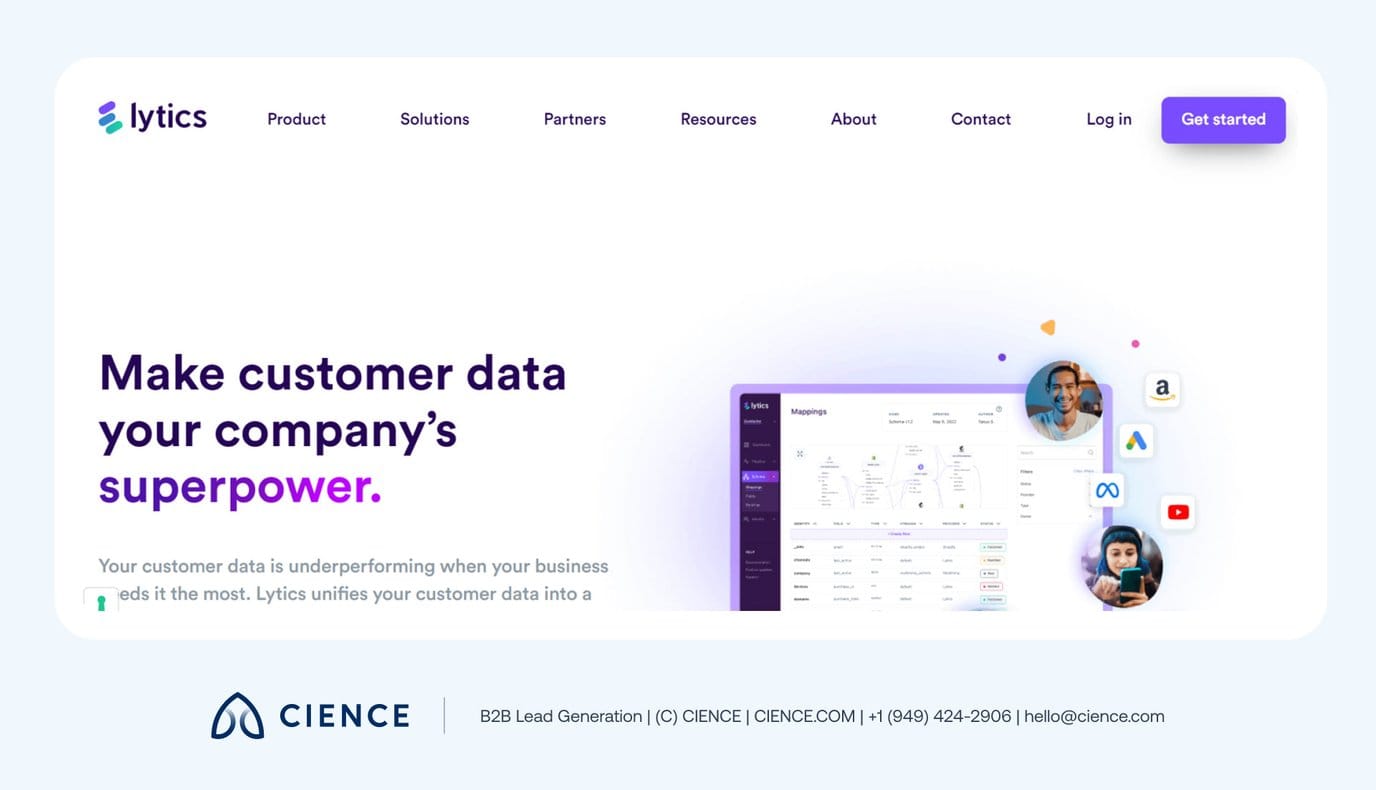
Lytics is one of the best CDP platforms for digital marketers that want to build personalized experiences quickly, easily, and affordably. It unifies your customer data in one complete profile, sets up real-time tracking of buying signals, and automates your workflows. Its solutions can be tailored to your buyer persona, industry, or prospecting needs.
Frequently Asked Questions
What is the difference between a CDP and a CRM?
A CRM (Customer Relationship Management) tracks known customer interactions and sales activities — contacts, deals, and communications. A CDP goes further by collecting first-party data from all channels (website, app, ads, email) and building unified profiles that include anonymous visitors and behavioral data. CDPs feed enriched data into your CRM, not replace it.
What is the difference between a CDP and a DMP?
A DMP (Data Management Platform) focuses on third-party, anonymized data for ad targeting with short retention windows (typically 90 days). A CDP collects first-party, identified data and stores it long-term to build persistent customer profiles. With third-party cookies declining, CDPs have become the preferred solution for data-driven marketing.
How much does a customer data platform cost?
CDP pricing varies widely. Entry-level solutions like RudderStack start free for low volumes. Mid-market CDPs typically cost $1,000-$5,000/month, while enterprise platforms like Treasure Data, Tealium, and Adobe can range from $10,000-$100,000+/month depending on data volume and features.
How long does it take to implement a CDP?
Most CDP implementations take 2-6 months depending on data complexity and the number of integrations. Simple setups with a few data sources can go live in weeks. Enterprise deployments with dozens of data sources, custom schemas, and team training typically take 3-6 months.
“We increased monthly appointments over 500% working with CIENCE. The data quality and targeting precision made the difference.” — Silicon Valley Insight
CIENCE + graph8 pricing: $5,000 one-time GTM system setup, $2,499/mo strategic execution, and the graph8 platform at $499/mo. No long-term contracts. See full pricing →
Whether or not you decide to work with us, you’ll walk away with a clear picture of where your pipeline is leaking and what it would take to fix it.
Strengthen Your Data Impact with a CDP
The best salespeople know how to hit the right spot when prospecting: what pain points are the companies facing right now, how ready they are to buy, where they come from, and what is important to them. While one or two people may have a gift to guess those things, the majority have a lot of actionable data to back up their techniques.
CDP companies are responsible for finding that data for you — whether it’s already tangled in your archives or has to be researched from scratch. A good CDP platform would research, track, and organize all of the information you need to provide better customer service, strengthen customer relationships, and bring in better sales results. CIENCE serves 2,500+ clients across 250+ industries with verified, real-time B2B data and the execution layer to activate it.

A graph8 company — AI-powered GTM execution across 250+ B2B industries.
graph8 Platform
From $499/mo
Run your own GTM campaigns with AI-powered data, sequences, and analytics.
Start Free — 2,500 Credits No credit card requiredCIENCE Managed
From $2,499/mo
Our GTM teams build and run your outbound campaigns end-to-end.
15-min call · No commitment2,500+ B2B companies served · Month-to-month contracts · See full pricing →