
Audience data is the information you collect about potential and current customers — including intent signals, demographics, firmographics, and psychographics. According to McKinsey, 75% of B2B businesses believe digital selling methods are as effective or more effective than traditional models. Combining multiple data types with a trusted provider turns guesswork into precision targeting that compounds over time.
Last Refreshed: March 2026 — updated provider comparisons, dead links removed, and expert commentary added.
Audience data is the information you collect about potential and current customers — including intent signals, demographics, firmographics, and psychographics — that powers targeted B2B marketing campaigns. A data-driven marketing strategy is no longer optional for B2B organizations; it’s the baseline. According to McKinsey, 75% of B2B businesses now believe that digital methods for reaching new customers are as effective, if not more effective, than traditional sales models.
From Daniel Conn, GTM Strategist, graph8: “Most companies think they have a volume problem — not enough leads. What they actually have is a targeting problem. The right audience data flips that equation: smaller, sharper lists that outperform bloated spray-and-pray campaigns every time.”
This shift isn’t temporary. Gartner found that 80% of B2B client interactions will occur through digital channels, making audience intelligence the foundation of every pipeline decision.
With more digital touchpoints available, companies have more signal to work with — and more ways to waste it. By using structured audience data to drive your marketing strategy, you can nurture leads more efficiently through data enrichment and smarter segmentation.
This article covers the five core audience data types and compares the top providers to help you build campaigns that actually reach the right people.
What Is Audience Data?
Audience data is the information you collect about potential and current customers. With the right tools, you can learn a great deal about the people who respond to your ads, buy your products, or visit your websites and other online platforms.
To fully incorporate audience data into your marketing model, you need to understand both the proper data collection protocols and the core audience data types — because each type surfaces a different layer of buyer intent.
Find Your Audience Data Solution
What Are the 5 Audience Data Types?
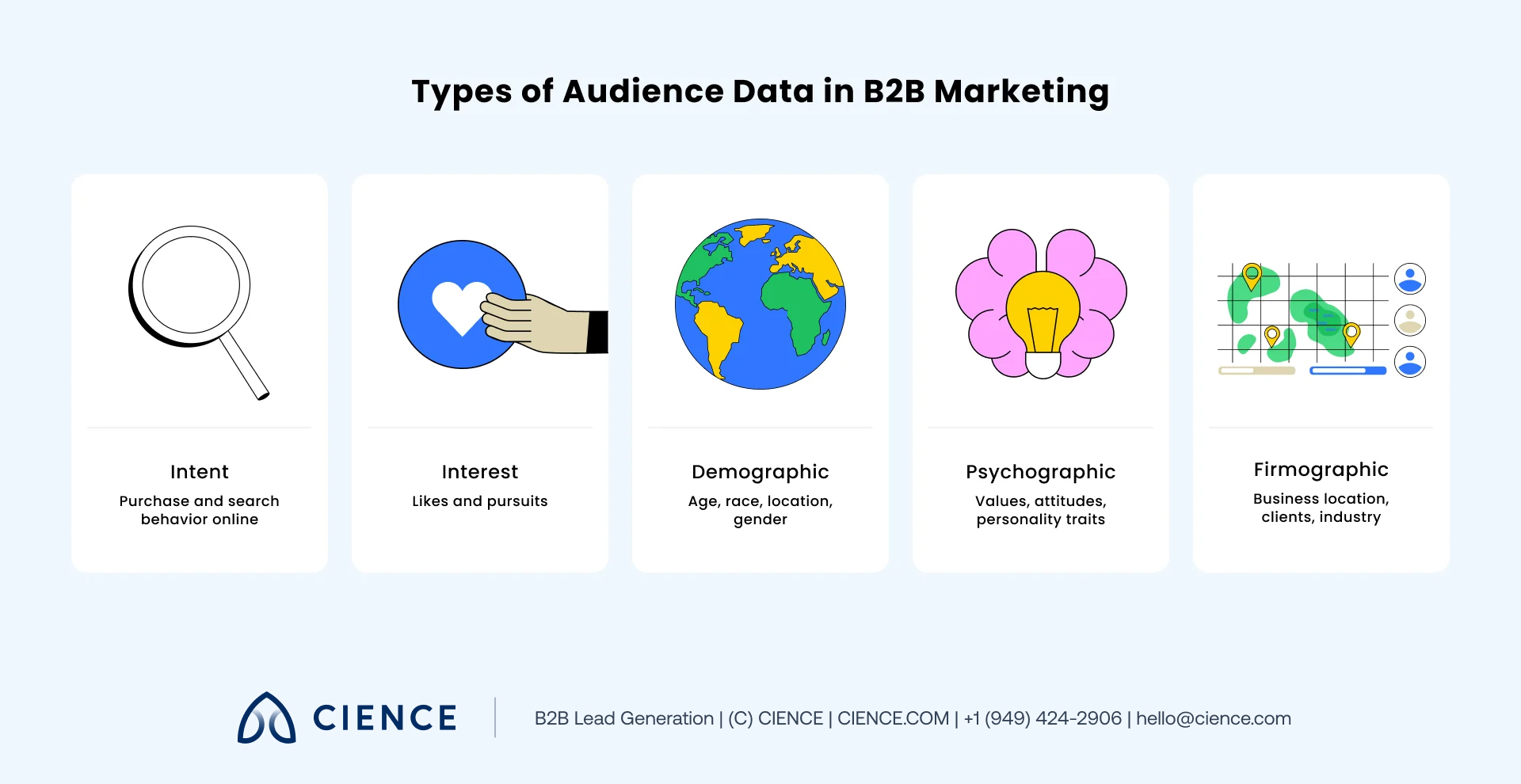
Audience data comes in distinct categories, each revealing something different about your buyer. Here are the five types that matter most for B2B marketing:
Intent data
Intent data is behavioral information about how your audience consumes web content. It shows you how prospects navigate websites and engage with content, giving you insight into where they are in the buying process.
For example, if a potential customer visits your product page frequently, their intent signals an imminent purchase decision. If they read your blog consistently, their intent may be to evaluate your expertise before committing.
You can use intent data to identify what each prospect is most likely trying to accomplish — then adjust your campaign tactics, content, and follow-up strategies accordingly.
Interest data
Interest data captures your audience’s long- and short-term interests by tracking how they navigate the digital world: their purchases, their content consumption, and how they engage with your brand.
You can use interest data to develop a content strategy that resonates at the right moment and prompts prospects to move toward a decision.
Demographic data
Demographic information is one of the most common audience data types. It encompasses socioeconomic signals alongside age, gender, ethnicity, income, education level, employment status, and geography.
Demographic data enables personalized B2B marketing campaigns. Tailoring outreach to specific individuals builds trust and increases conversion rates by speaking directly to what each buyer cares about.
Psychographic data
Psychographic data details your audience’s values, attitudes, and personality traits — including how someone views the world and their motivations for taking specific actions.
This data is invaluable for crafting buyer personas. You can test your marketing materials against these personas to confirm they’ll resonate with your ideal customers before launching.
Firmographic data
Firmographic data is the B2B equivalent of demographics for companies: geographic location, number of employees, annual revenue, industry, technology stack, and company structure.
Your marketing targets businesses, not consumers — so understanding the company and its decision-makers is essential for crafting content that generates results. Firmographic filters are what separate generic outreach from precision ABM.
Bad data doesn’t just waste budget — it trains your team to accept poor results as normal. Clean intelligence changes everything.
“CIENCE enriched over 1 million contact records for Okta, enabling precision audience targeting at enterprise scale and aggressively scaling their lead generation operations.” — CIENCE Case Study, Okta
The Importance of Audience Data for B2B Marketing
Audience data matters for B2B marketing because it replaces assumptions with evidence. When you understand your audience at a granular level, you can produce results across every stage of the funnel:
- Expand your customer base with precision targeting
- Create detailed buyer personas for high-conversion campaigns
- Make productive adjustments to your sales pipeline
- Develop a deeper understanding of the B2B buyer’s journey
- Optimize your campaigns and allocate marketing budget where it compounds
- Use audience data segmentation to build custom segments for every campaign
- Create inbound content that meets buyers where they are in the journey
- Continuously uncover insights into your audience’s evolving patterns and behaviors
- Personalize the customer experience with messages tailored to individuals
Audience data also powers data enrichment — the process of enhancing what you’ve already collected with additional signals from analytics tools, intent platforms, and third-party sources.
By pairing first-party audience data with third-party intelligence, you build a complete picture of your audience and unlock targeting precision that generic lists simply can’t match. CIENCE has applied this approach across 2,500+ clients in 250+ industries, holding a 4.6/5 rating on Capterra for data quality and campaign results.
Top 5 Audience Data Providers
When it comes to audience data providers, the market is crowded. Here are five providers worth evaluating, with a focus on what each does best:
1. CIENCE GO Data
Pricing: By request Free Trial: Not available CRM Integration: Available Browser Extension: Not available
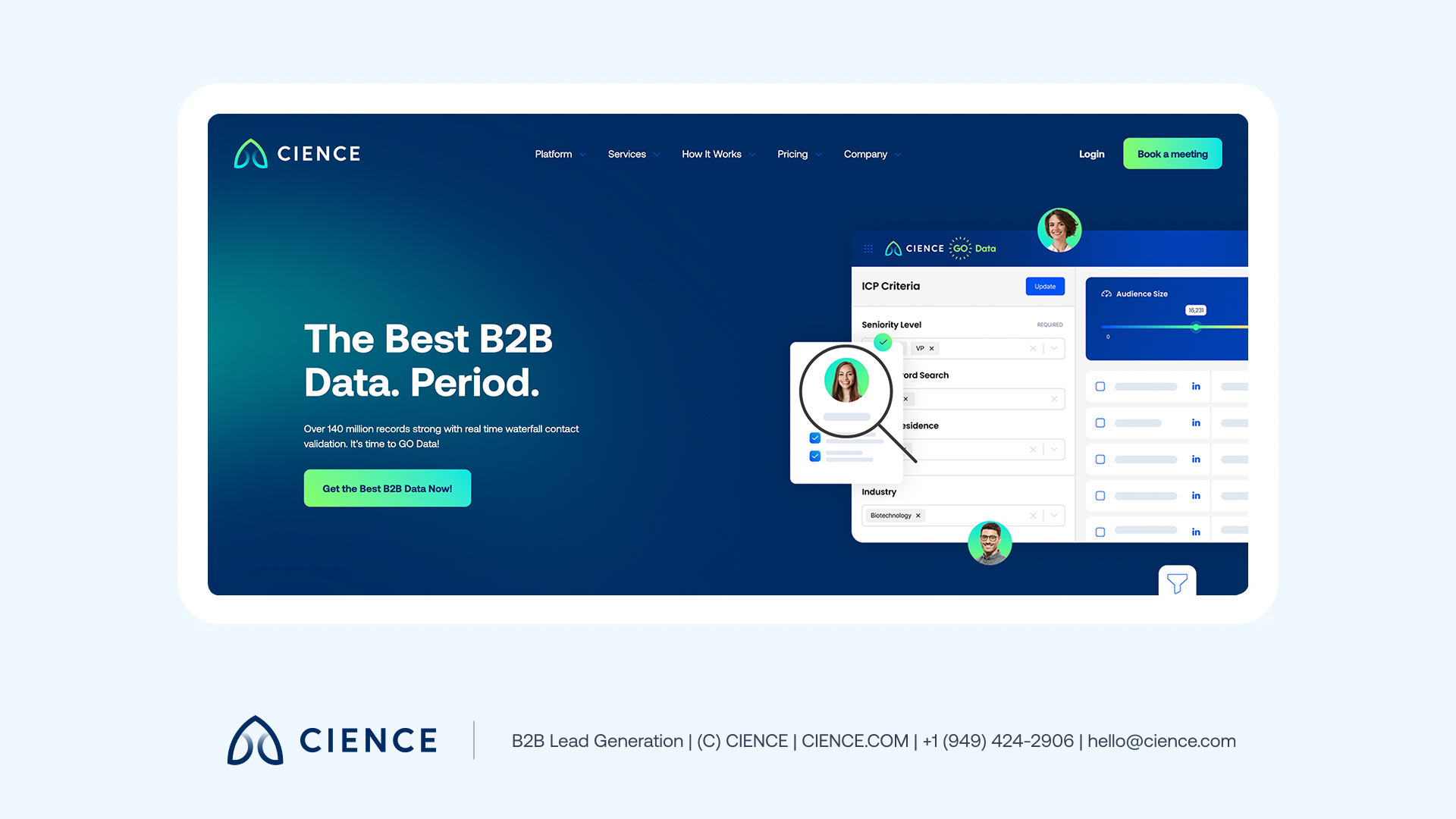
CIENCE GO Data is a sales intelligence platform that accesses over 200 million lead records across all industries, providing verified business contacts and audience data analysis. CIENCE helps you configure precise audiences and build ideal customer profiles (ICPs) that reflect real buying signals — not just static lists.
Every record is continuously validated by sales professionals running active campaigns daily, so you can count on the data being accurate when it reaches your team.
You can customize your GO Data subscription based on your specific data objectives, building a more effective data-driven marketing strategy that connects with your highest-value prospects.
Ready to build audiences that actually convert?
2. OnAudience
Pricing: By request Free Trial: Available CRM Integration: Available Browser Extension: Available
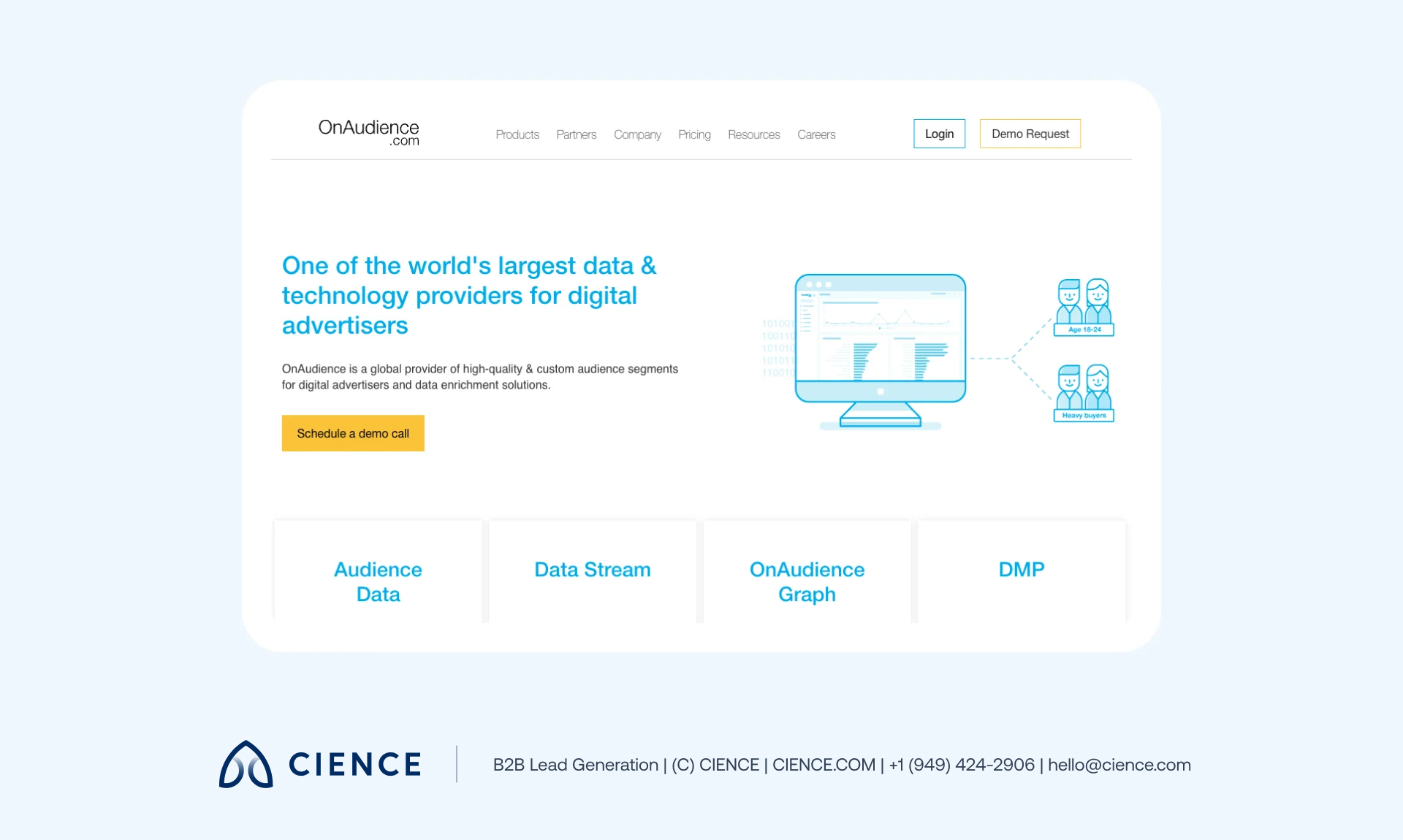
OnAudience is a reputable audience data marketplace sourcing data across 200 markets. The platform offers over 1,000 predefined audience segments to build custom target audiences with.
They specialize in demographic data, interest signals, and purchase intent — giving you enough context to run campaigns your audience will engage with. Free look-alike audiences and cookieless data options are available.
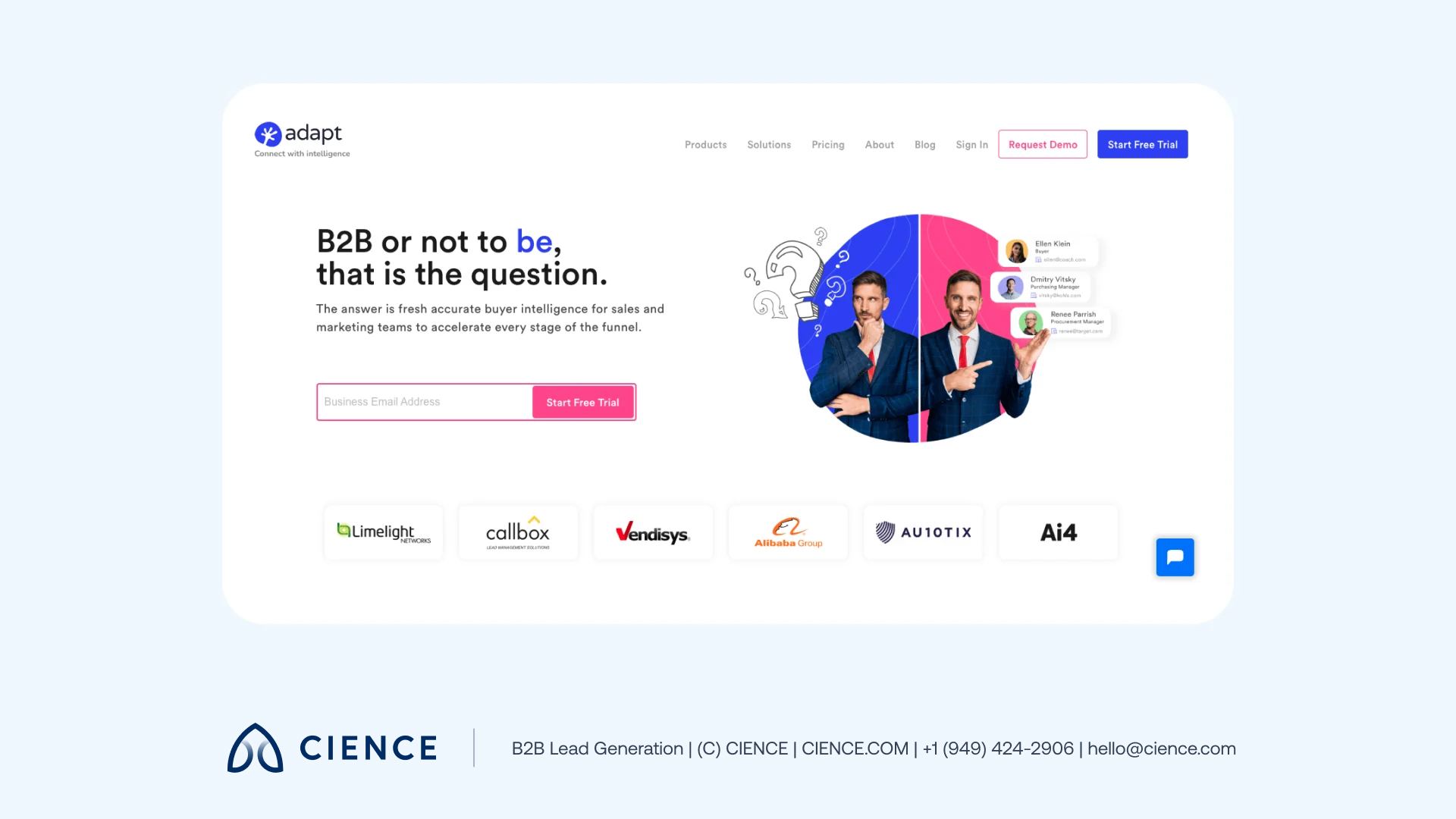
3. Adapt
Pricing: By request Free Trial: Available CRM Integration: Available Browser Extension: Available
Adapt combs through data from over 100 million business contacts across telecommunications, software, financial services, and more.
The platform relies on a community of contributors to regularly develop and update its data. Advanced filters and lead scoring help you compile actionable insights that directly improve targeting. Adapt integrates with most CRMs, enabling seamless data integration across your sales stack.
4. Seamless.ai
Pricing: By request Free Trial: Available CRM Integration: Available Browser Extension: Available
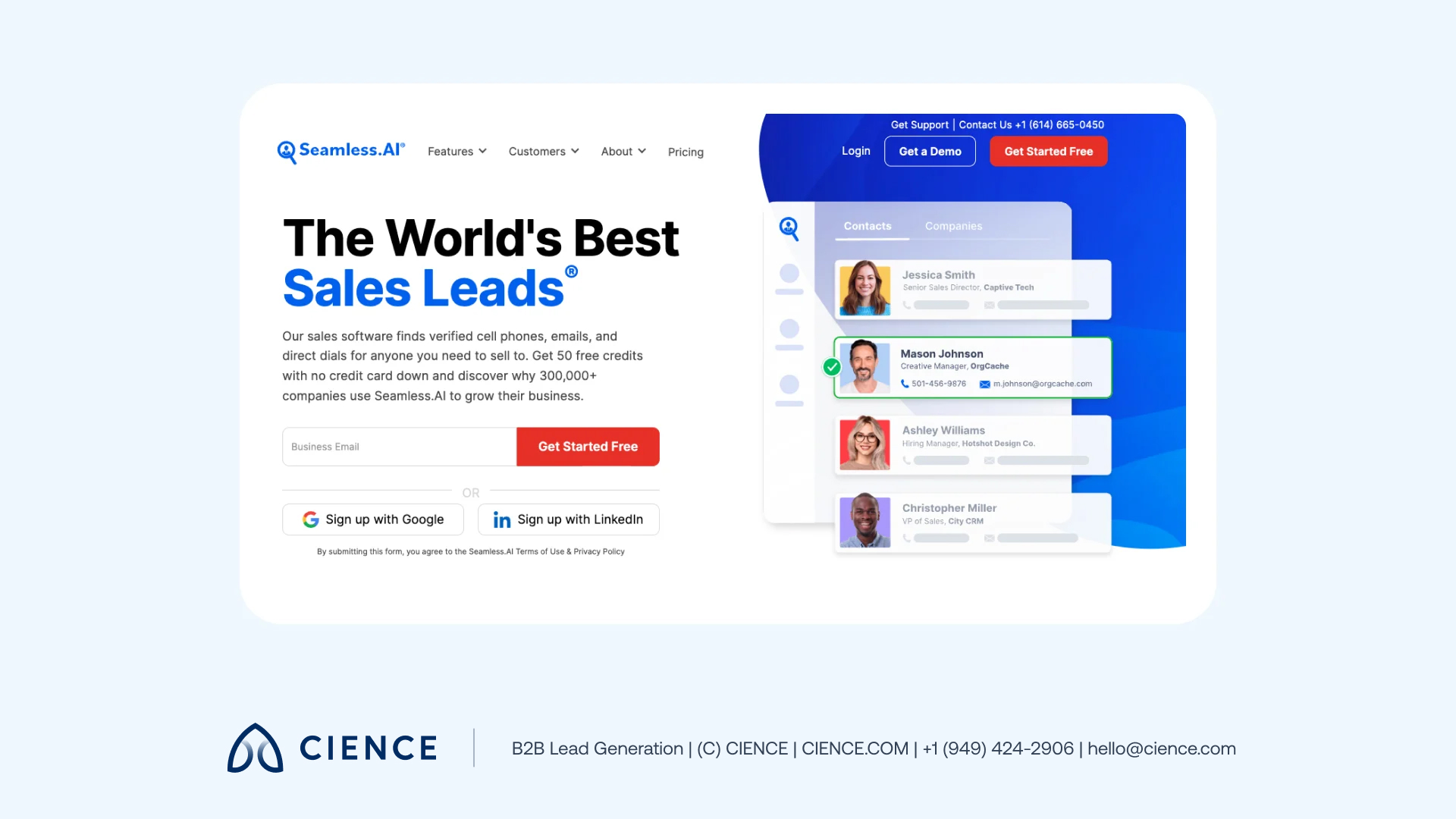
Seamless.ai provides real-time audience data through a B2B search engine covering phone numbers and email addresses from over 157 million companies. A ten-step AI verification engine authenticates all contact information before it reaches you.
Relevant filters let you narrow results to match your ICP. You can enable the free Chrome extension, automate list-building through GO Data, and sync with CRM and LinkedIn Navigator directly.
5. LeadSift
Pricing: Starts at $750/month Free Trial: Not Available CRM Integration: Available Browser Extension: Available
LeadSift (part of Foundry Intent) specializes in intent-based audience data. It delivers a daily summary of high-quality leads based on your data objectives and alerts you when a lead’s intent signals shift — giving you a real-time window into the buyer’s journey.
LeadSift uses data mining, machine learning, and AI to generate audience insights that go beyond contact lists. CRM integration is available.
Leverage Audience Data for B2B Marketing
Precise audience data is the difference between marketing at people and marketing to people. With the right data segmentation, enrichment pipeline, and provider, you build a holistic understanding of your ideal customers that compounds with every campaign.
“Thanks to CIENCE, we’ve seen a 500% monthly increase in new sales appointments.” — Bryce Garoutte, Sr. VP of Business Dev & Marketing, Silicon Valley Insight
CIENCE + graph8 pricing: $5,000 one-time GTM system setup, $2,499/mo strategic execution, and the graph8 platform at $499/mo. No long-term contracts. See full pricing →
Whether or not you decide to work with us, you’ll walk away with a clear picture of where your pipeline is leaking and what it would take to fix it.
Frequently Asked Questions
What is the difference between audience data and customer data?
Audience data encompasses information about both potential and existing customers — including anonymous website visitors and prospects who haven’t yet engaged with your brand. Customer data is a subset focused only on people who have already purchased or signed up. Audience data gives a broader view for targeting and acquisition campaigns, while customer data fuels retention and expansion plays.
How do you collect audience data ethically?
Ethical audience data collection relies on transparent consent mechanisms: cookie banners, opt-in forms, and clear privacy policies. First-party data from your own website is the most reliable and compliant source. When using third-party providers, verify they comply with GDPR, CCPA, and other relevant privacy regulations — and that their data originates from consented interactions.
Which audience data type is most valuable for B2B marketing?
Intent data is generally the most actionable for B2B teams because it reveals which accounts are actively researching solutions right now. However, pairing intent data with firmographic data — company size, industry, revenue, tech stack — creates the most powerful targeting criteria. According to Gartner, 80% of B2B interactions will occur through digital channels, which makes structured audience data integration a non-negotiable part of any modern GTM motion.

A graph8 company — AI-powered GTM execution across 250+ B2B industries.
graph8 Platform
From $499/mo
Run your own GTM campaigns with AI-powered data, sequences, and analytics.
Start Free — 2,500 Credits No credit card requiredCIENCE Managed
From $2,499/mo
Our GTM teams build and run your outbound campaigns end-to-end.
15-min call · No commitment2,500+ B2B companies served · Month-to-month contracts · See full pricing →