
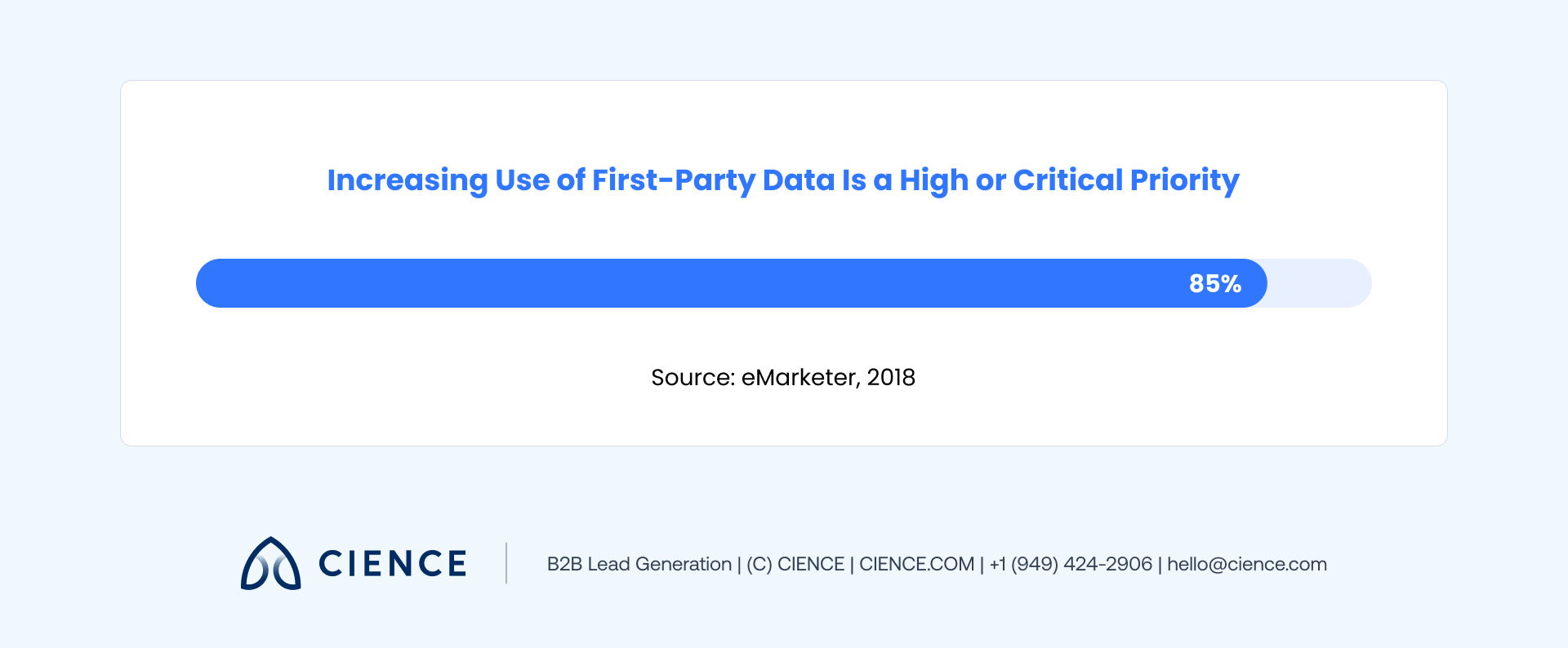
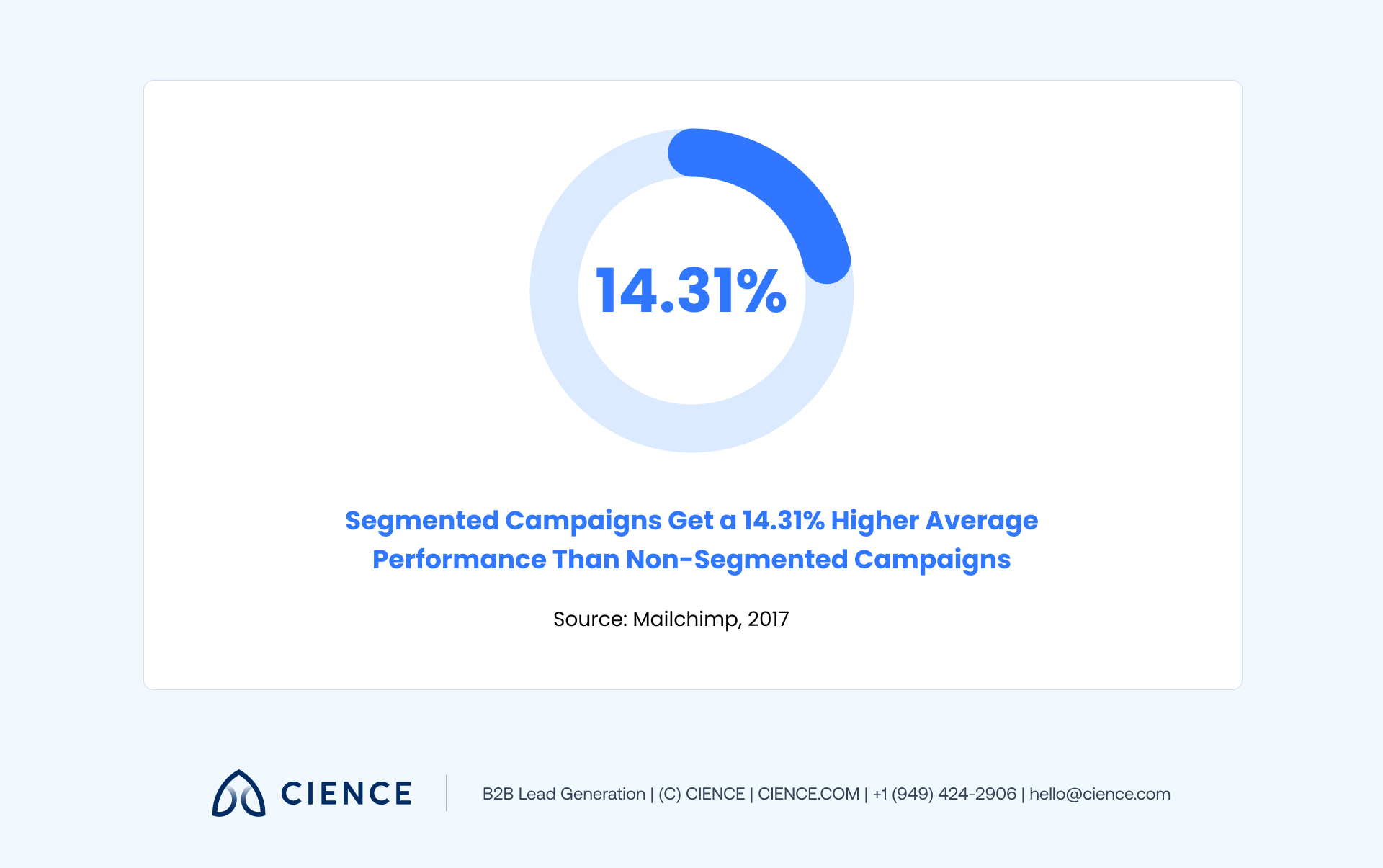
First-party data is customer information collected directly from your own websites, apps, CRM, and surveys. 85% of organizations view it as a primary asset. The 8 key benefits include reduced costs, higher accuracy, GDPR-compliant privacy, stronger customer trust, full data control, better audience segmentation (14.31% higher campaign performance), stronger marketing campaigns, and personalized customer experiences.
Last Refreshed: March 2026 with updated statistics and tool information.
First-party data is information about customers collected directly by your company from your own websites, apps, CRM systems, surveys, and social media platforms. It is the most accurate, privacy-compliant, and cost-effective data type available, and 85% of organizations consider it a primary business asset.
From Daniel Conn, GTM Strategist, graph8: “First-party data isn’t just about compliance — it’s about competitive advantage. Companies that own clean, consent-based data about their buyers can segment, personalize, and convert at rates that third-party data simply can’t match.”
Collecting and owning qualified customer data is a top priority for companies, with 85% of organizations seeing data as a primary asset. And these days, we have more data available and more ways to use it than ever before. Growing privacy regulations and the global shift away from cross-site tracking have pushed businesses to rethink how they collect and own data.
Google’s Privacy Sandbox initiative — which explored eliminating third-party cookies in Chrome — ultimately pivoted in 2024, giving users control over tracking rather than removing it outright. But the industry signal was clear: relying on third-party data is structurally fragile. Building a durable first-party data strategy is no longer optional. So what does this mean for your business? Let’s take a look at the critical importance of first-party data and the eight key benefits of having complete control over your data.
What Is First-Party Data?
First-party data is information about the company’s customers collected directly from them. It’s relevant to their needs and it can help to solve their current issues and predict future ones. It may include:
- Basic information: name, email, address
- Purchase information: invoices, payments
- Demographic information: age, gender, income, employment
- Tracked information: content downloads, comments, visited websites
First-party data is the kind of data you collect from your websites, applications, social media platforms, CRM, surveys, product reviews, and more. And as it comes directly from your audience, it’s the most reliable and trustworthy information you can have. It’s what makes it so valuable and unique for creating efficient marketing campaigns.
How does this compare to second and third-party data?
Second-party data is data you can acquire from your business partner. Though in relation to your partner, it’s still first-party data because it’s collected directly from the clients. And as such, it’s as accurate and relevant as your own first-party data. Acquiring second-party data from your partner, you can be confident that the information was obtained with customers’ consent. Unlike third-party data.
Third-party data is what you purchase from data aggregations. You cannot know which sources this data was collected from, so there’s no certainty that it’s reliable and complies with privacy regulations.
First-Party Data Strategies: What Are the Benefits?
With big decisions that will dramatically change the way we look at the data collection process, it’s more important than ever for B2B companies to understand the value of first-party data. In fact, 85% of them agree that increasing the use of first-party data is critical to their success:
Let’s take a look at the many benefits of introducing first-party data strategies to boost sales performance and target the right customers:
1. Reduces cost
Collecting first-party data doesn’t require a middleman, so you don’t need to purchase it from other parties. Compared to second and third-party data, it’s the least expensive and accurate data option because you gather it directly from your customers.
Collecting first-party data may require more time and effort to process, but it’s definitely worth it. With third-party data, you spend money on data that might not be accurately aggregated into segments, whereas first-party data offers individual engagement and detailed insight.
2. Increases accuracy, reliability, and relevance
First-party data is the most relevant and precise data. Having a close connection between the company and the accurate source of the data highly reduces the possibility of errors occurring.
Connecting directly to the audience that’s using your products or services—or at least interested in them—gives you a solid advantage over your competitors. You can track your customer’s behavior on your site to gather key insights and enhance the overall experience. You’ll be able to analyze their preferences and behavior to address their concerns and offer a solution.
3. Secures user privacy and data protection
With the introduction of the European General Data Protection Regulation (GDPR) privacy law in 2018, businesses realized the importance of owning data with customers’ consent. According to the GDPR, if a company wants to obtain personal data from customers in the EU/EEA, they must have their permission and ensure that it’s properly secured.
The adaptation to these regulations has been a relatively smooth process since 84% of marketers see the GDPR introduction as a positive measure. With first-party data as a primary resource, there’s no need to be concerned with privacy issues because you know exactly where it comes from, as you own that data.
4. Builds trust with customers
Asking your customers for consent and informing them how you intend to use it can help forge stronger relationships. Once they see you as a loyal and reliable partner, they will be more comfortable entrusting their business and perhaps referring you to other customers. This will increase your brand awareness and sales opportunities with potential clients.
5. Gives you control over data
When you purchase second-party or third-party data from other businesses, they determine what information is sent to you. This can seriously impact the quality of your data that may not be relevant to your brand or customers’ interests. By collecting your own first-party data, you control the quality and accuracy of the information that comes your way.
You can then leverage this quality data on the customer data platform (CDP) to connect and control the distribution of this data across all channels in one centralized location. It creates a much better view of customer data in one place.
6. Creates segmented audiences
Audience segmentation is a method of separating and classifying audiences into different groups based on shared characteristics. Collecting first-party data is an easy way to get to know your customers by segmenting them into specific groups based on demographics, geography, interests, online activities, and other qualities.
Once you segment them accordingly, you can create specific campaigns to achieve greater results—with an estimated 14.31% higher average performance than non-segmented campaigns.
7. Builds stronger B2B marketing campaigns
If you learn to determine how your segmented groups act, you can then create B2B marketing campaigns for upselling and cross-selling, and target other groups of customers that share similar characteristics. First-party data can considerably lower the cost of your campaigns and reduce the time spent on creating them, as you already know the needs and demands of similar audiences.
Knowing how your current customers use your products or services gives you an exceptional advantage. Collecting and owning first-party data empowers you to identify patterns and predict future trends to create highly successful targeted campaigns. CIENCE works with 2,500+ clients across 250+ industries, and the consistent differentiator in top-performing outbound programs is high-quality, owned data.
8. Fosters a personalized experience
And of course—a personalized experience! Where would any successful sales and marketing campaign be without it? According to an Epsilon study, 80% of customers say that they are more likely to do business with a company that offers a personalized experience.
Personalized emails have long proven to increase the effectiveness of the marketing campaign compared to mass-generated emails. Having the right data and making those connections will help you to engage with an audience on a deeper level, pinpoint their issues, and convert those qualified leads into ideal customers.
Increase Your ROI with First-Party Data
Regardless of your customers’ industry, background, and personal attributes, they all have a lot in common—the desire for a seamless customer experience, a personalized approach to outreach, and a relationship built on trust.
Bad data doesn’t just waste budget — it trains your team to accept poor results as normal. Clean intelligence changes everything.
Implementing a first-party data strategy offers a unique opportunity: By collecting and processing reliable customer data, you can attain the necessary information and attract the right prospects. You can then use this momentum to start a successful outreach campaign to drive your sales and marketing initiatives forward. Pair your first-party data with a structured data enrichment process and proper audience segmentation to maximize impact.
“We’ve worked with CIENCE for over a year. They consistently find good leads for us and expertly schedule demos.” — Sarah Allen-Short
CIENCE + graph8 pricing: $5,000 one-time GTM system setup, $2,499/mo strategic execution, and the graph8 platform at $499/mo. No long-term contracts. See full pricing →
Whether or not you decide to work with us, you’ll walk away with a clear picture of where your pipeline is leaking and what it would take to fix it.
“We worked with the CIENCE team to identify better ways to build lead lists and relax lead constraints. A little bit of lead iteration and finding new approaches to find viable companies helped us to get those 8–10 sign-ups per week.” — Federico Menapace, Head of Technology Partnerships at Segment
Frequently Asked Questions
What is the difference between first-party and third-party data?
First-party data is collected directly from your customers through your own channels—websites, apps, CRM, and surveys—making it highly accurate and privacy-compliant. Third-party data is purchased from data aggregators who compile information from various unknown sources, making its reliability, consent status, and relevance uncertain.
Why is first-party data more valuable than third-party data?
First-party data is more valuable because it comes directly from people who have interacted with your brand, ensuring higher accuracy and relevance. It costs less to acquire (no middleman fees), fully complies with privacy regulations like GDPR, and enables segmented campaigns that perform 14.31% better than non-segmented ones, according to Mailchimp research.
How do you collect first-party data effectively?
The most effective first-party data collection methods include website analytics and behavior tracking, customer surveys and feedback forms, CRM data from sales interactions, email engagement metrics, social media interactions, and gated content downloads. Consolidate all data into a customer data platform (CDP) to create unified customer profiles across channels.

A graph8 company — AI-powered GTM execution across 250+ B2B industries.
graph8 Platform
From $499/mo
Run your own GTM campaigns with AI-powered data, sequences, and analytics.
Start Free — 2,500 Credits No credit card requiredCIENCE Managed
From $2,499/mo
Our GTM teams build and run your outbound campaigns end-to-end.
15-min call · No commitment2,500+ B2B companies served · Month-to-month contracts · See full pricing →