
A marketing technology (martech) stack is an integrated collection of tools covering CRM, email automation, analytics, and content management. Nearly 7 in 10 CMOs consider martech central to marketing strategy. Companies with fully integrated martech stacks see 72% more revenue growth than those without. This guide explains how to build, evaluate, and optimize your stack for maximum ROI.
Last Refreshed: March 2026 with updated statistics and tool information.
A marketing technology (martech) stack is an integrated collection of software tools — CRM, email automation, analytics, ad platforms, and content management — that marketers use to plan, execute, and measure campaigns. Nearly 7 in 10 CMOs consider martech central to their strategy, with over 10,000 tools available in the market.
From Thomas Cornelius, Founder & CEO, graph8: “Most companies don’t have a tools problem — they have a coherence problem. The average B2B team runs 15 martech tools that don’t talk to each other, then wonders why pipeline data is unreliable. A real stack is a data architecture decision first, a software selection decision second.”
This guide covers what goes into a martech stack, which categories of marketing tools are essential, and how to build and optimize a stack that drives results.
From Daniel Conn, GTM Strategist, graph8: “The biggest mistake I see in martech selection is buying for features instead of buying for fit. A $50/month tool that your team actually uses beats a $2,000/month platform that sits idle. Before adding any new tool, map the data flow: what goes in, what comes out, and how it connects to your CRM. If you can’t draw that diagram in five minutes, the tool isn’t ready to deploy.”
What Is Marketing Technology (Martech)?
Marketing technology, or martech, is software that marketers use to improve their marketing processes, strategies, and campaigns. From lead generation and marketing campaigns to customer relationship management (CRM), there’s a tool for every marketing task.
In fact, there are more than 10,000 companies in the marketing technology landscape. Here are some of the significant marketing areas that martech aids:
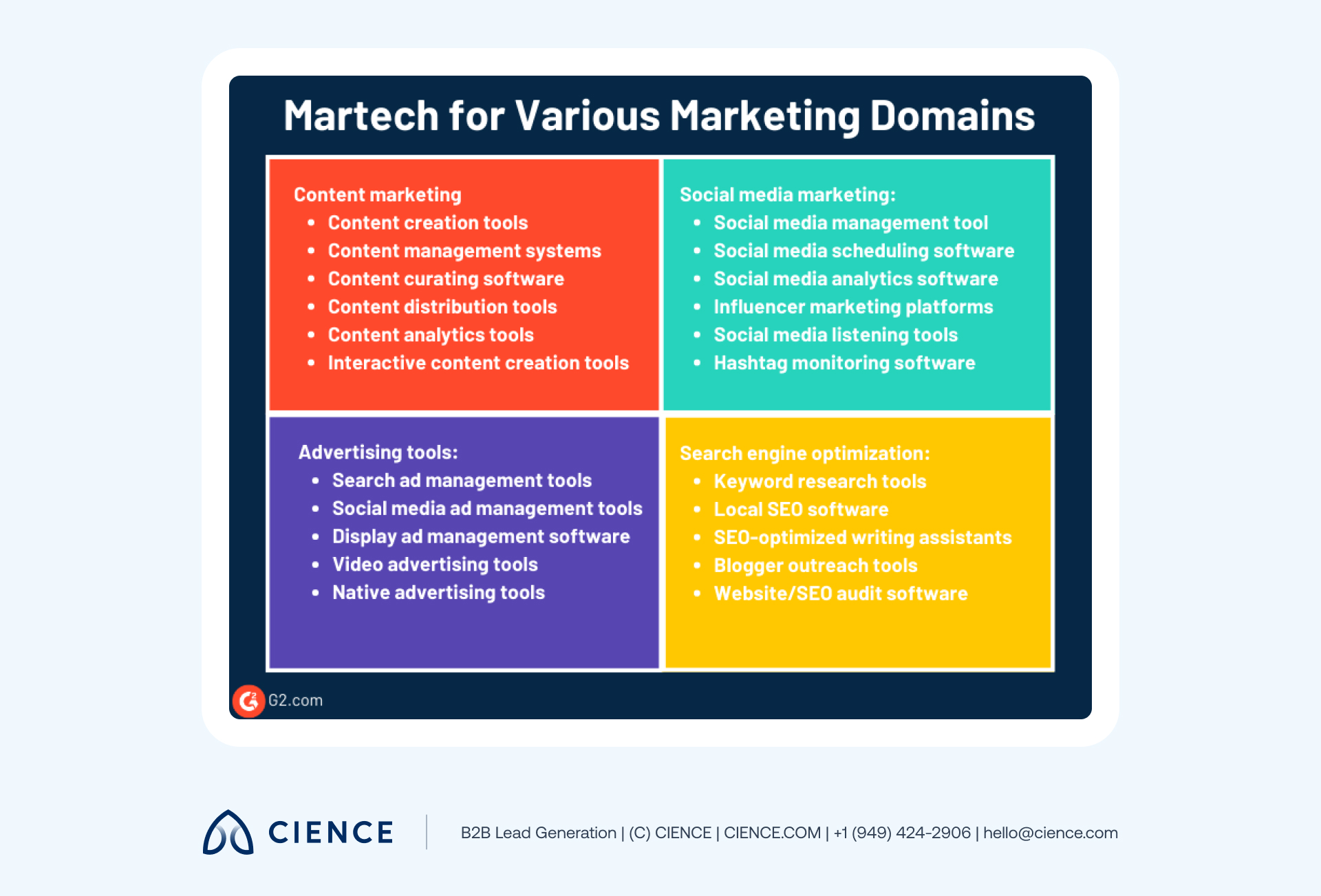
Other important marketing technologies are:
-
A/B testing tools for marketing and email campaigns
-
Automation software for email automation and marketing automation
-
Digital asset management software
-
Customer relationship management
-
Web analytics software
-
Lead generation and management tools
-
Generative AI tools like AI writers and image or video generators
-
Event management and webinar software
What Is a Marketing Technology Stack?
A marketing technology stack is a collection of tools marketers use to streamline and optimize their marketing process and make it more efficient, successful, and profitable for a business.
There are distinct differences between a well-built marketing technology stack and just a set of tools marketers use:
- The marketing technology tools connect and interact well with each other. They don’t work in silos.
- Martech tools allow for cross-functional teams like marketing and customer service to work together.
- The stack contains software for all the marketing needs of a business, covering the entire customer journey.
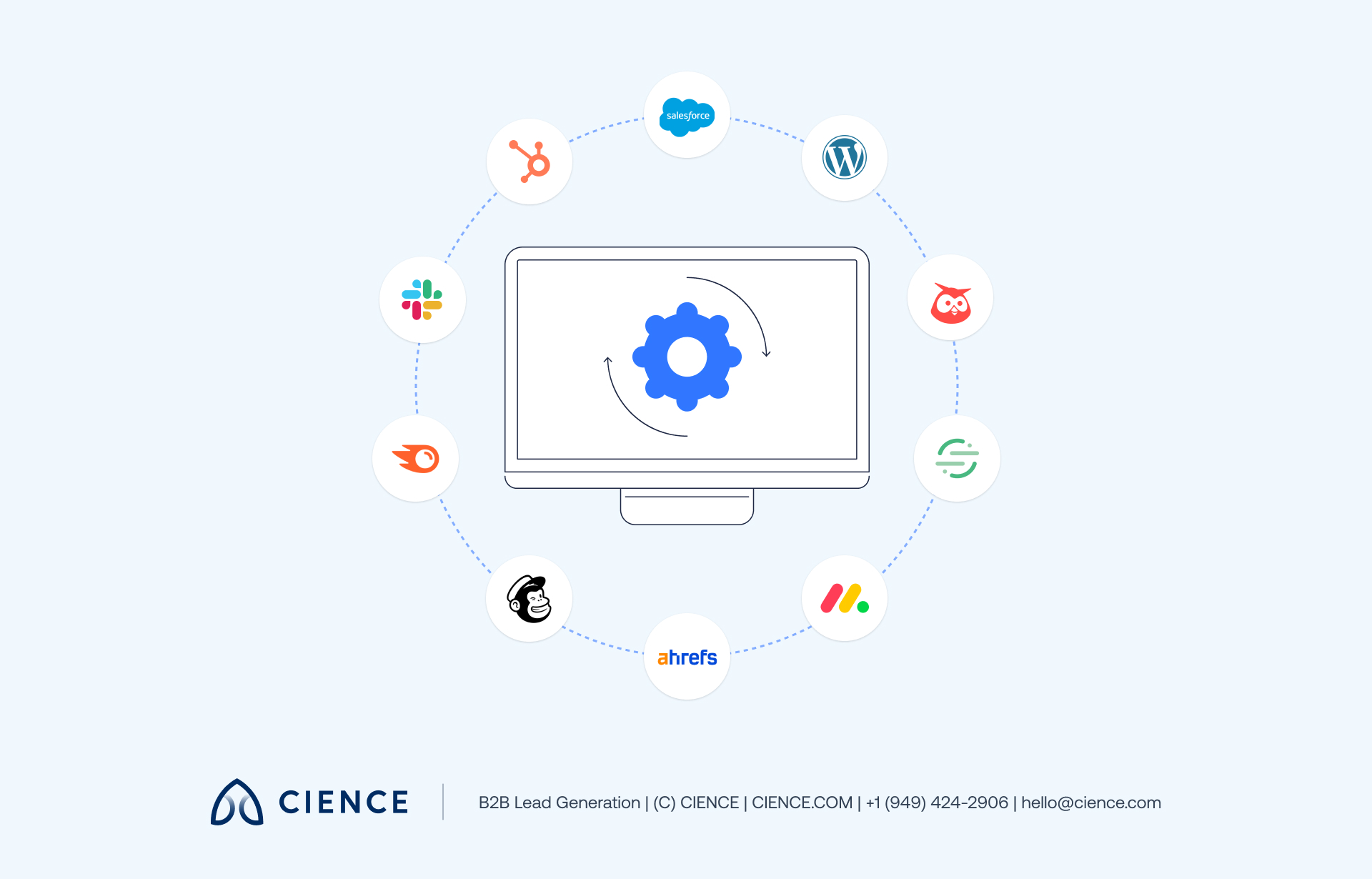
Your marketing tech stack can be an all-in-one marketing software or a suite. Or it can also be different tools integrated together or even be a combination of stand-alone tools with an all-in-one suite. In fact, most organizations prefer a blend of best-of-breed and integrated suites for their tech stack.
Why is investing in a marketing technology stack so important?
The modern marketer is under tremendous pressure to find, attract, engage, retain customers and maximize their value. In this digital world, customers are mostly online, on different channels.
They do their own research, and they have a plethora of options to choose from. In this competitive environment, marketers need tools that help navigate the complex customer journey. That’s where the martech stack comes in with these benefits:
- Optimizes and streamlines the company’s marketing activities and the tools used for different marketing channels
- Provides a 360 view of prospects and customers
- Allows marketers to better understand, predict, and satisfy their customers’ expectations
- Improves customer experience, a crucial element for business success
Think about the way marketers work without martechs: They manually download data from one tool and import it into another platform to work on it. Sometimes, they have to convert the data to suit the other platform. Such a manual process eats up a lot of time and resources.
But a well-integrated martech stack is built to:
- Collect and connect customer data sitting in multiple tools and systems
- Automate workflow
- Facilitate communication and cross-team collaboration
- Coordinate campaigns for buyers in different stages of the buying cycle
- Track, measure, and give reports on various marketing campaigns on different channels
Imagine the value it creates for marketers: It saves time and resources. Marketers can work on improving their marketing strategies instead of spending time hopping from one tool to another to gather customer data and insights. Moreover, 72% of marketers with fully integrated data flow in their martech stack witnessed more revenue growth than those who didn’t.
10 Marketing Technology Stack Examples
The marketing tech stack of companies differs based on their size, needs, and budget. However, the following marketing software tools are foundational to the martech stack of any company:
1. Customer data platform (CDP)
Customer data platforms (CDPs) consolidate customer data from different sources in a single, unified database. This is especially useful for companies that have a complex marketing technology stack.
Top CDP software tools: graph8 Data Platform, Insider, Segment, Planhat
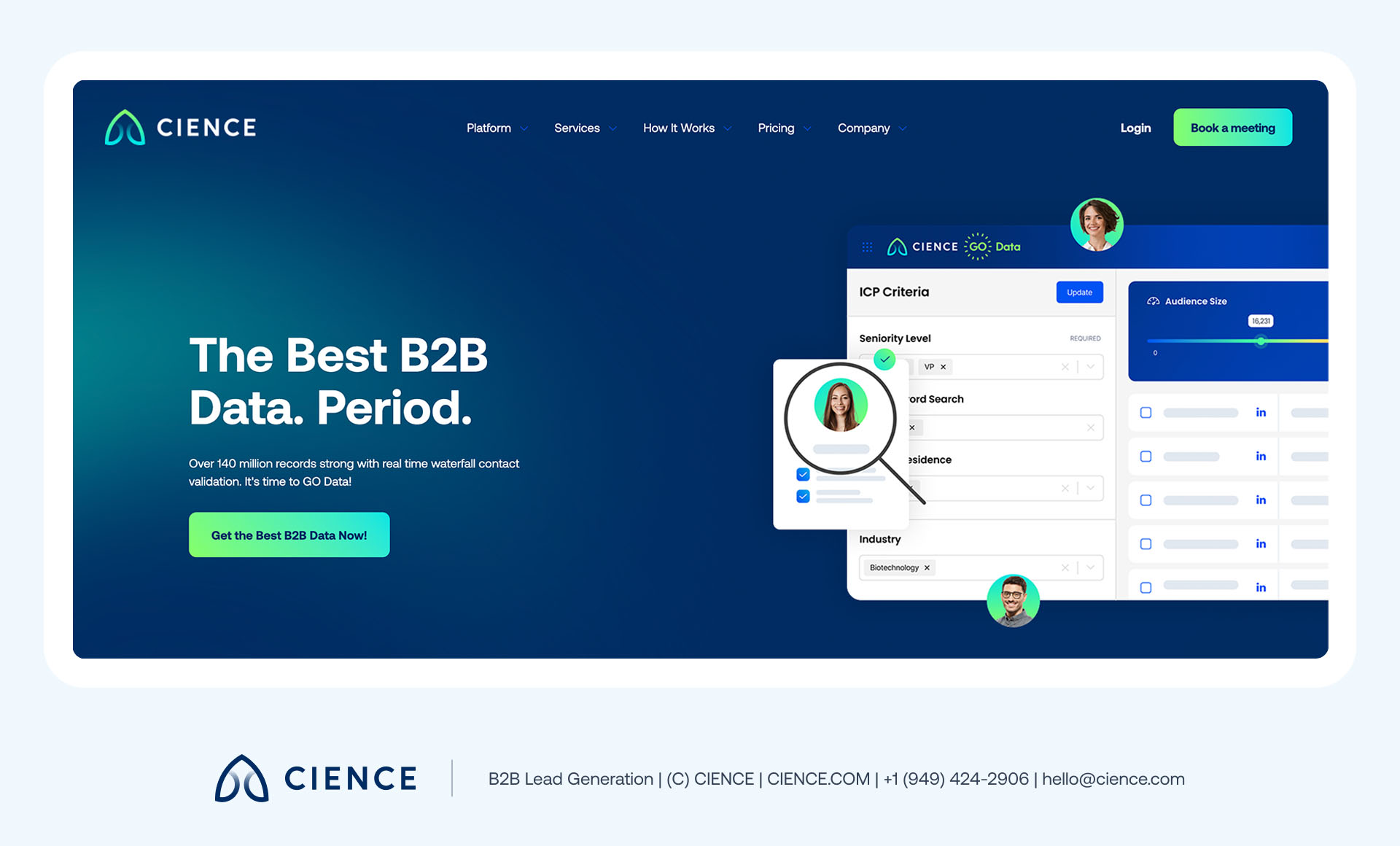
The graph8 data platform provides two core capabilities:
- graph8 Data offers over 300 million records of real-life validated leads from all industries, with up-to-date demographic and technographic records, company information, accurate email addresses, phone numbers, trigger events, specialized data points, and many other features.
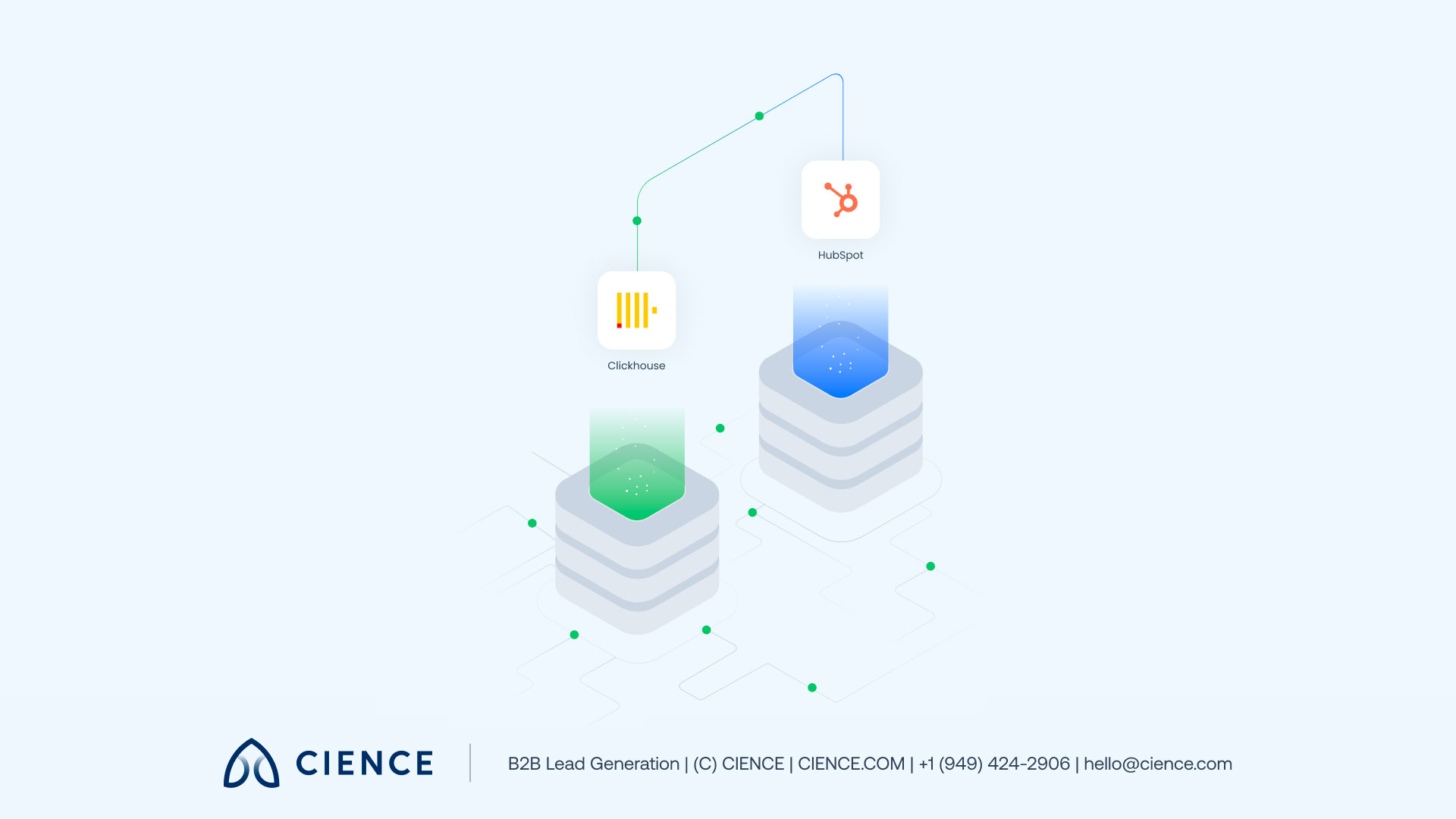
- graph8 Flow is a customer data integration solution designed for data-powered sales and marketing teams, connecting events across tools into a unified customer identity.
2. Ad Management Software
Ad management software is a tool used by marketers to help manage and optimize their online advertising campaigns. Additionally, it can help automate certain tasks such as ad creation, bidding, and targeting. Marketers can use ad management software to boost ROI and better understand the effectiveness of their campaigns.
Top ad management software: graph8 Digital, RollWorks, AdStream, 6Sense
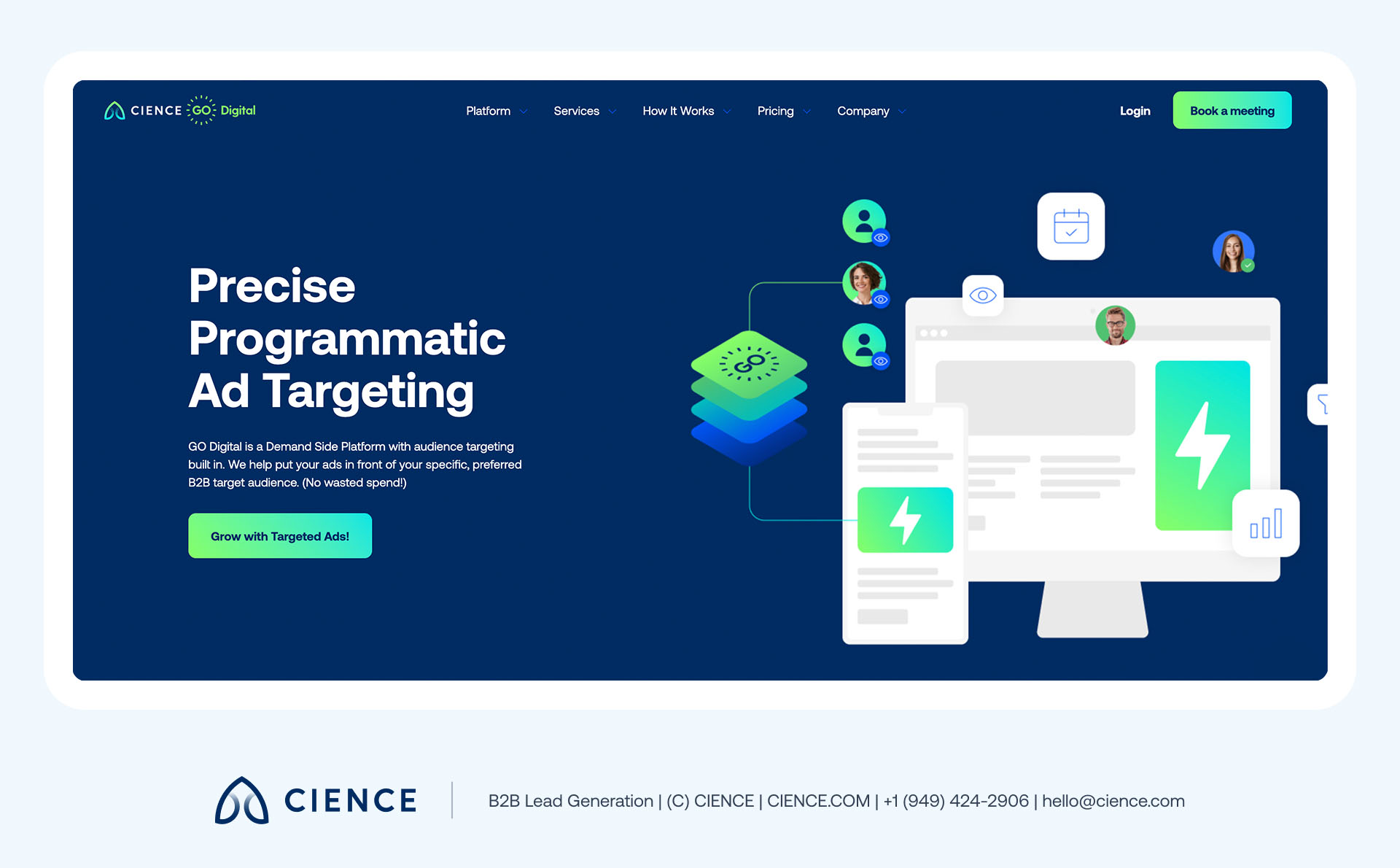
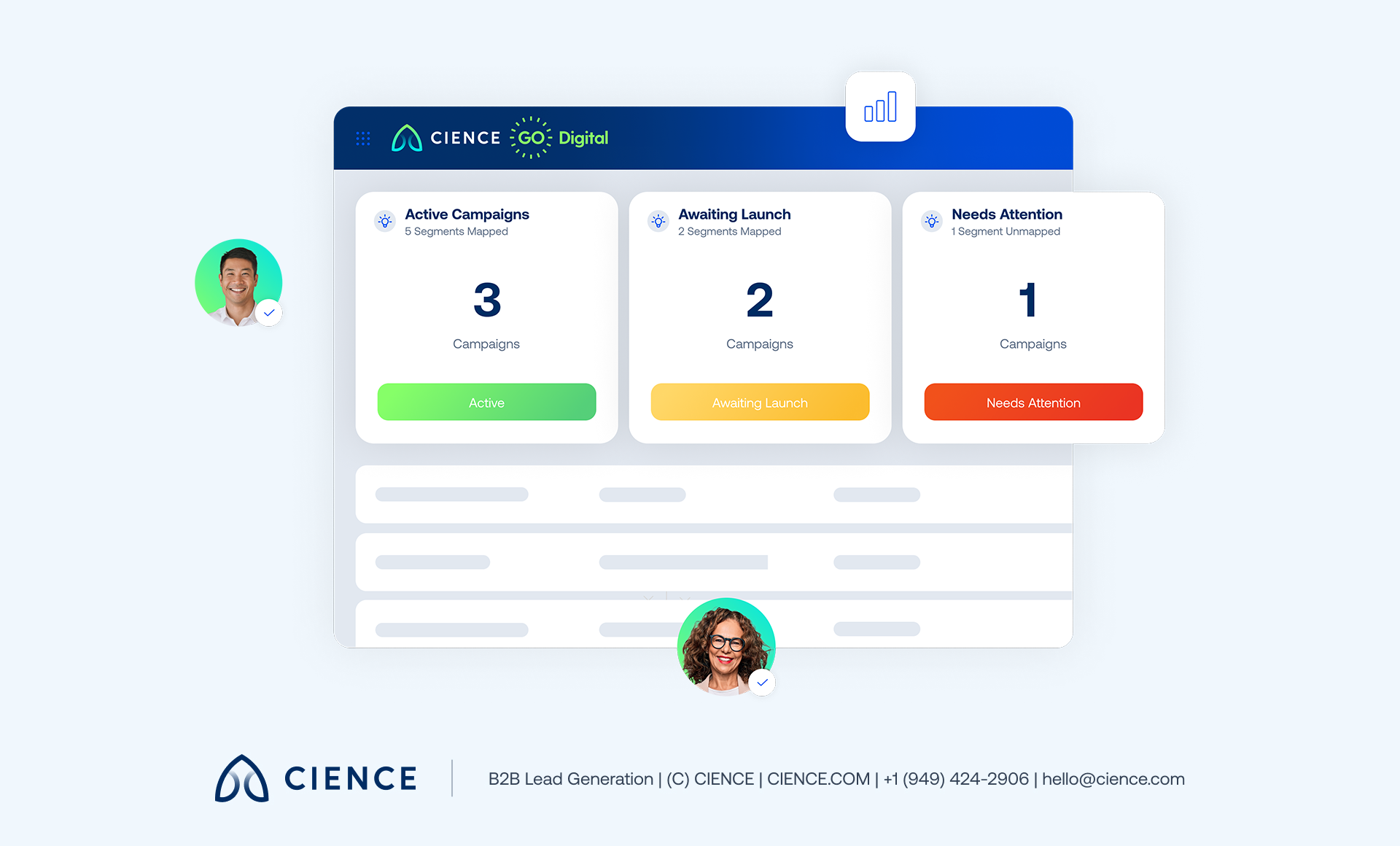
The graph8 Digital software solution enables marketers to deliver messages to their target audience through programmatic displays, videos, or audio ads. Its advanced technology combines bidder-as-a-service (BaaS) and demand-side platform (DSP) functionality to give marketers precise programmatic ad targeting for custom audiences.
3. Intent Data Software
Intent data software is a powerful tool that marketers can use to gain insights into consumer interests, intentions, and behaviors. It captures consumer activities online, such as website visits, clicks, searches, and other online interactions. By analyzing this data, marketers can target individuals in a more personalized way to increase customer engagement.
Top intent data software: graph8 Intent, graph8 Show, Demandbase, DemandJump, Leadfeeder
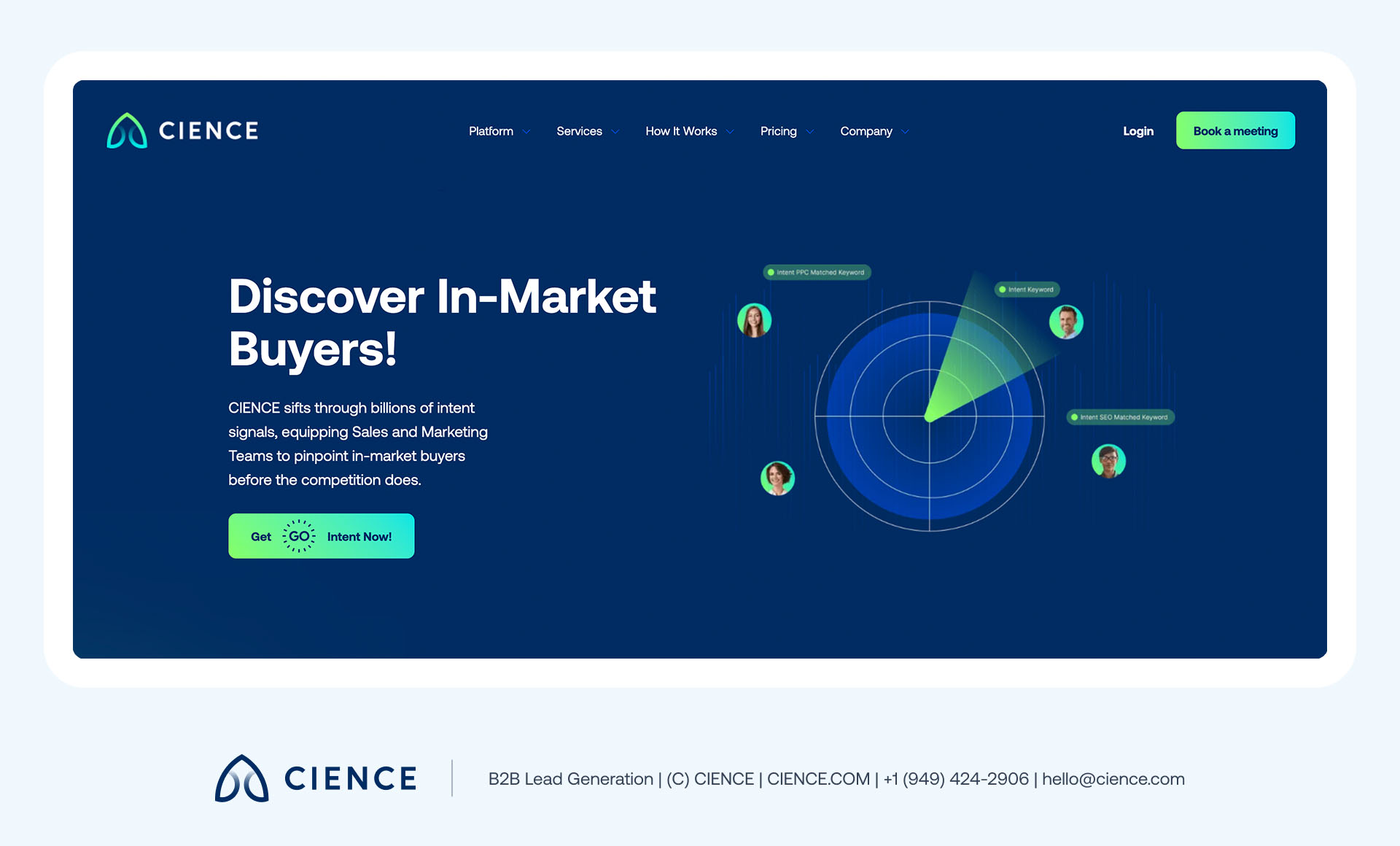
graph8 offers intent-based software, including Intent and Show:
- graph8 Intent analyzes billions of intent data signals from verified users. The Intent tool matches companies’ IP addresses and tracks underlying buyer intent topics across the web. It also determines the semantic meaning of the most searched website pages by targeted ICPs.
- graph8 Show uses tracking pixel technology to generate a detailed profile of all website visitors. Through this visual ID system, marketers are able to identify the anonymous traffic happening live on your landing pages and enhance your existing ICPs.
4. Content management system (CMS)
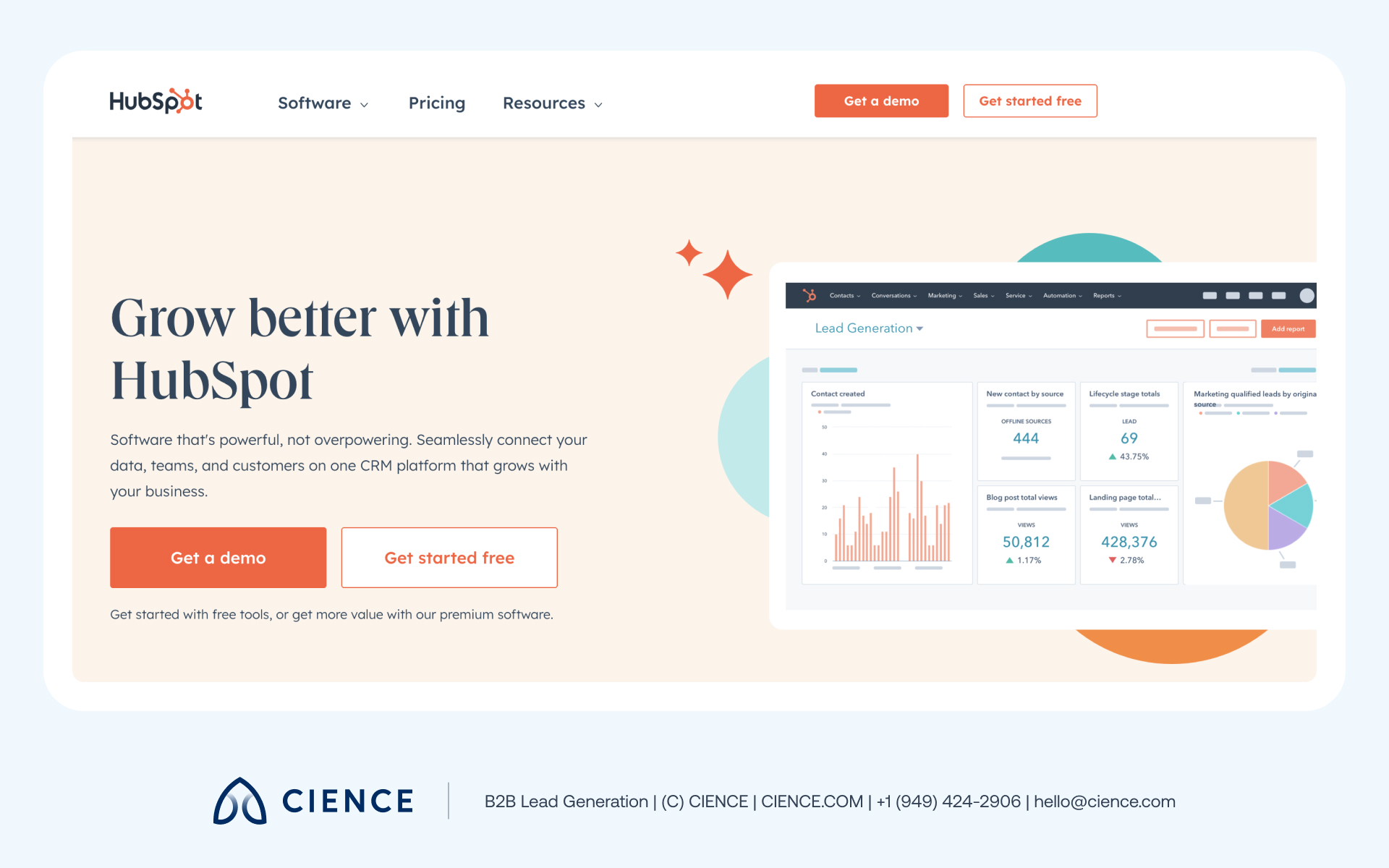
Content rules marketing today, and the content management system (CMS) is the tool that powers content marketing. This software helps create, edit, and publish content of all forms on your website—all in one place as a must-have tool in your martech stack.
Top CMS software: WordPress, Webflow, Joomla, Drupal, HubSpot
5. Email marketing software
If content is king, then email marketing is the reigning queen of the marketing world. And email marketing software helps businesses segment their audience, send automatic drip campaigns, and track engagement. This is an essential tool in every marketer’s bag of tricks, so it should be in your tech stack as well.
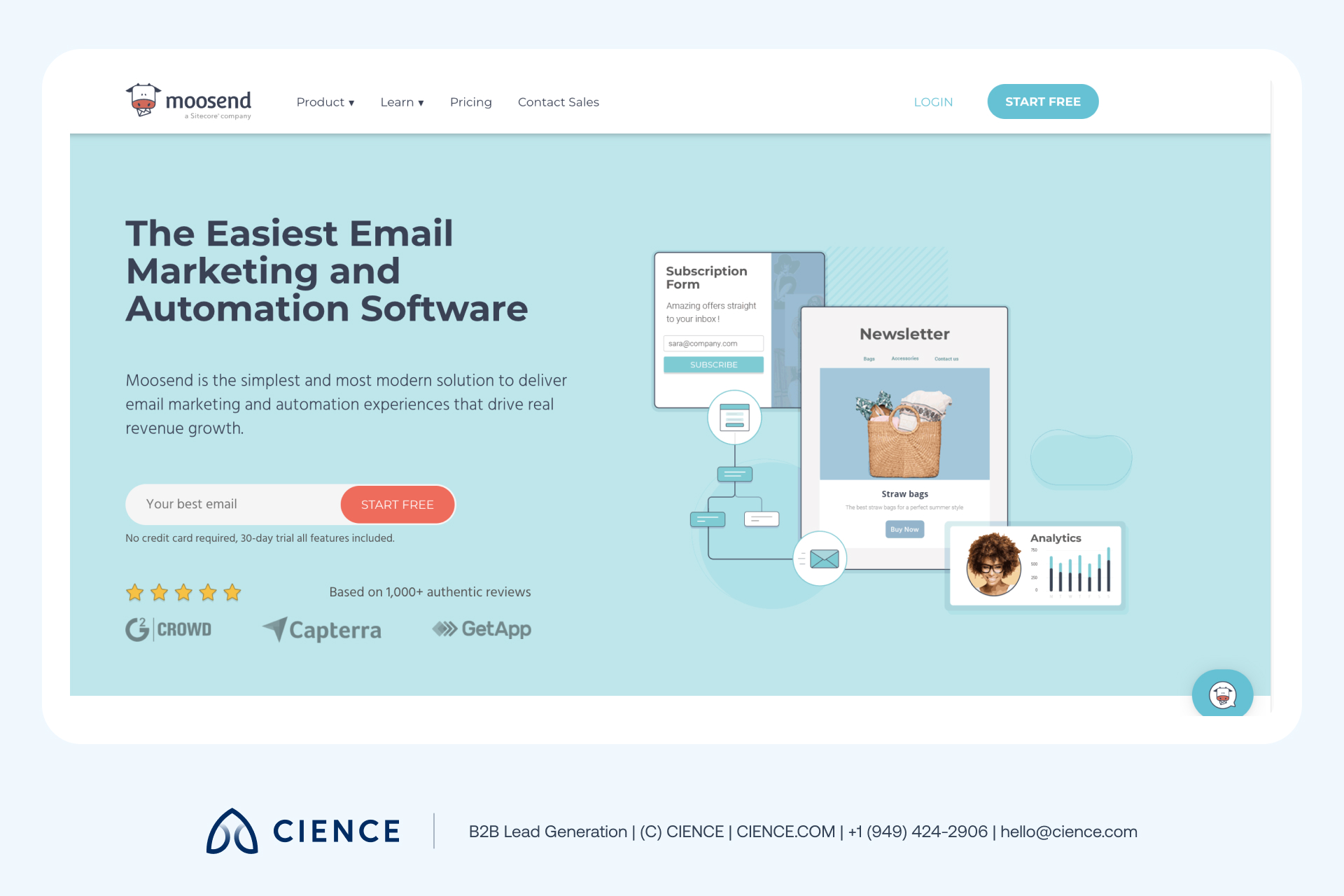
Top email marketing software: Intuit Mailchimp, Constant Contact, Zoho Campaigns, MailerLite, Moosend
6. Social media marketing software
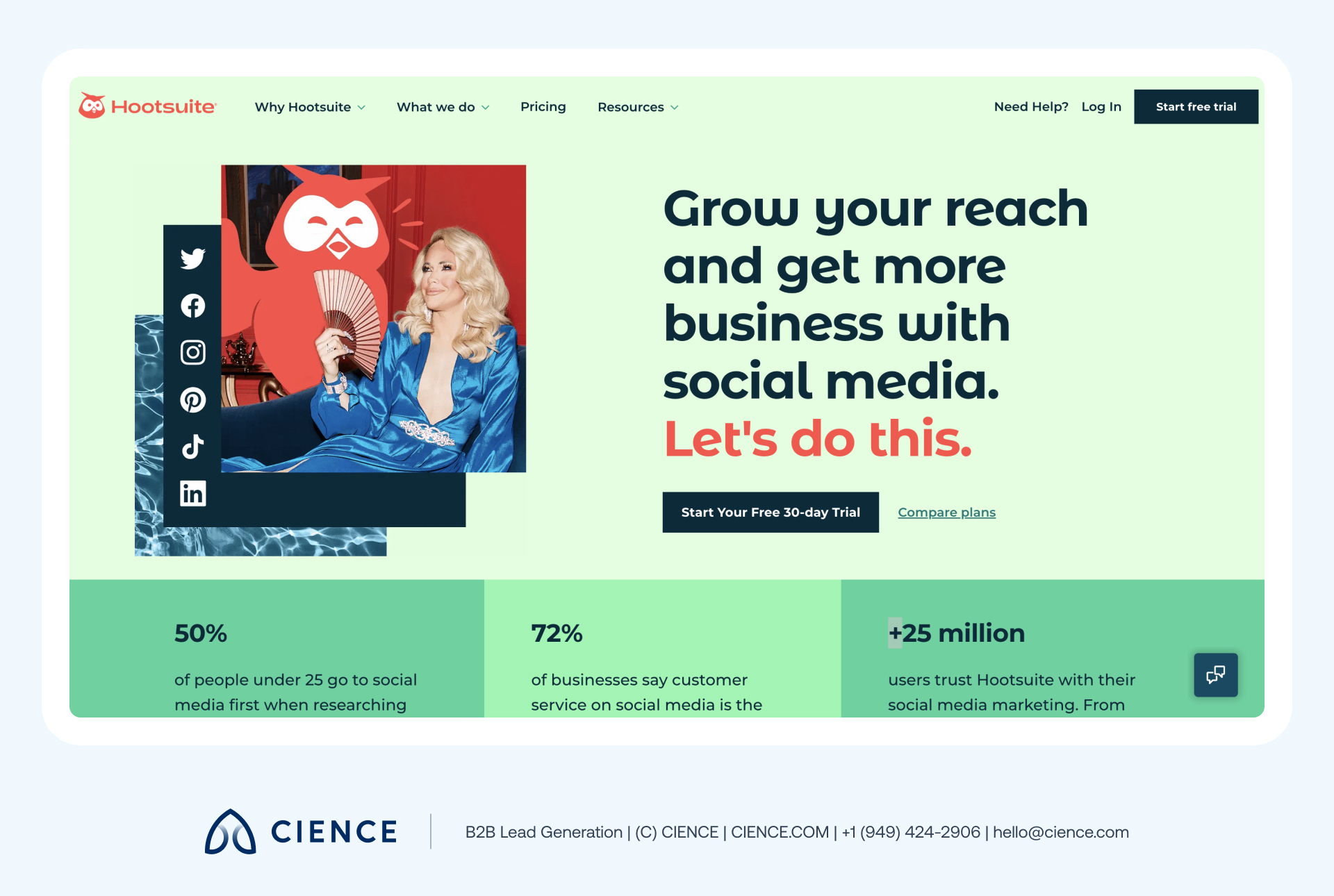
Any modern marketing tech stack should include tools to manage social media marketing. The tools help schedule and publish content on various social media sites and monitor and manage your social media presence. Social media sites like Facebook, LinkedIn, or Instagram also provide marketing solutions.
Top social media marketing software: SproutSocial, Agorapulse, Buzzsumo, Mention, Hootsuite, SocialBee
7. Search engine optimization (SEO) tools
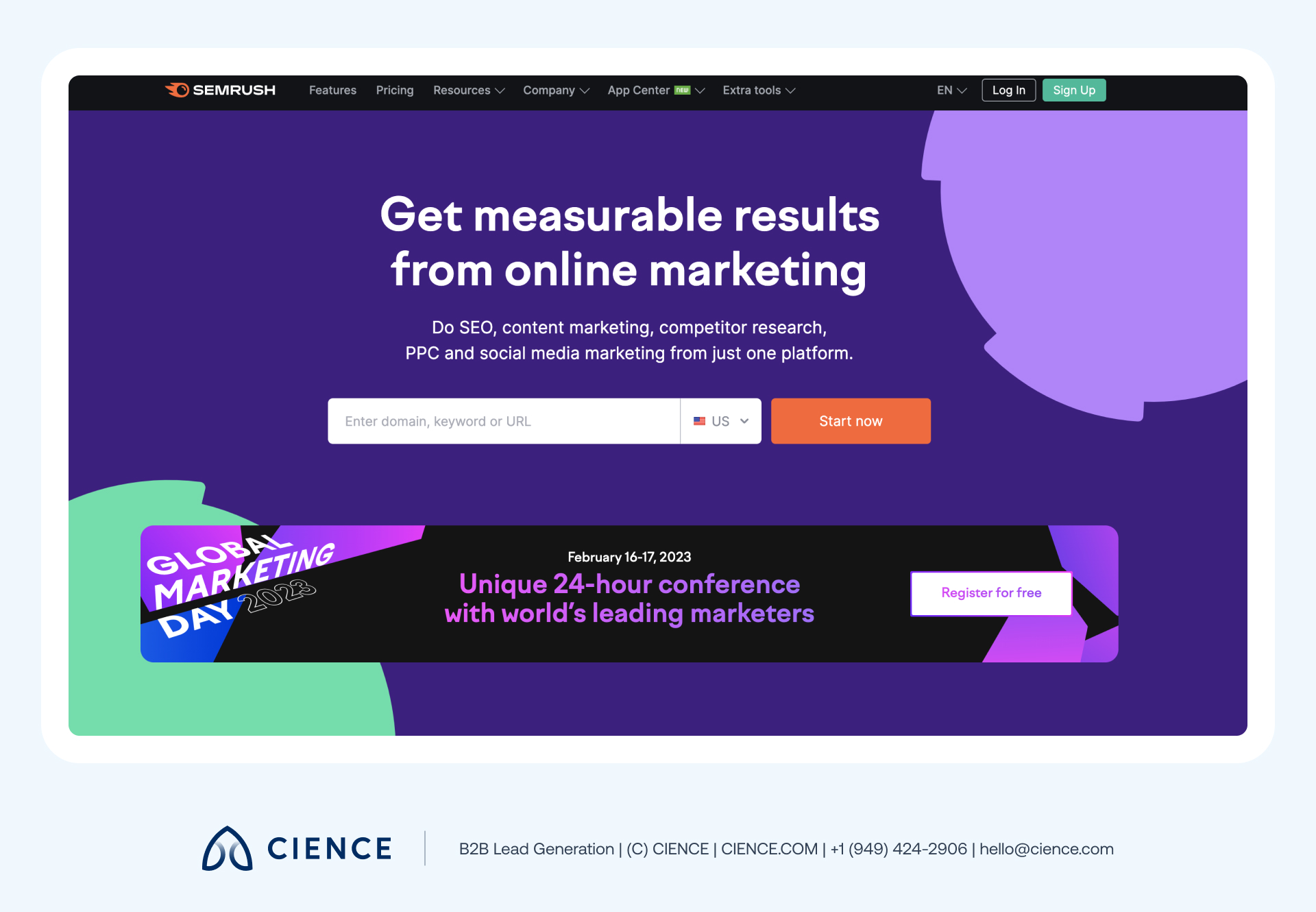
If you think SEO tools don’t deserve a place in your marketing tech stack, think again. SEO is one of the cost-effective ways of getting people to your website. These tools help with keyword research, website audit, content optimization, rank tracking, and link building.
Ultimately, this improves the website’s ranking in search engine results pages (SERPs) without paying the search engine.
Top SEO software: Ahrefs, Moz, Serpstat, BrightEdge, Semrush
8. Project collaboration and management software
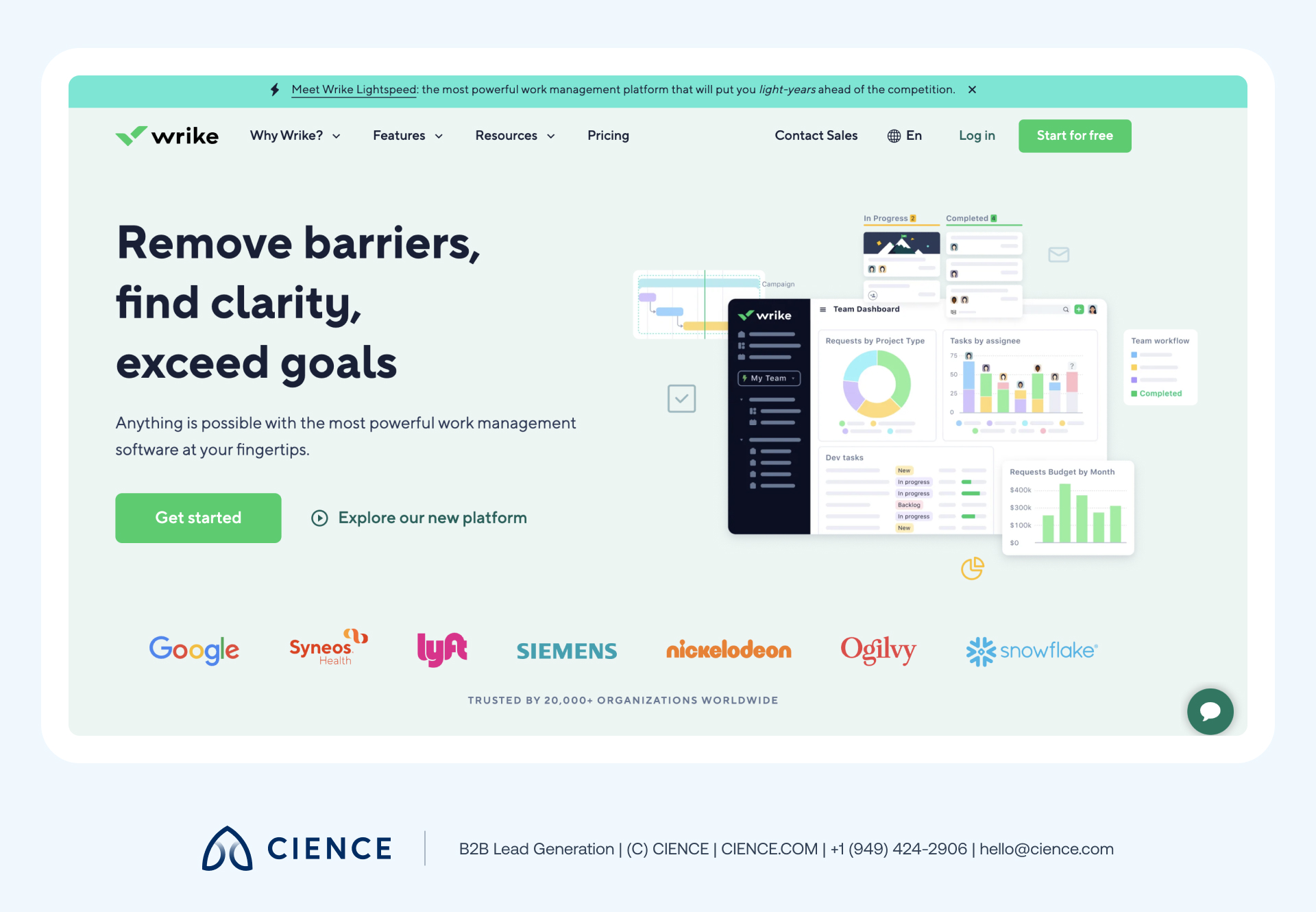
Though not directly related to marketing tasks per se, project collaboration tools are essential to keep track of all marketing projects. The software helps to plan, coordinate, and follow team projects and improves communication and team productivity.
Top project management software: Smartsheet, Monday.com, Asana, Trello, Wrike
9. Analytics and reporting
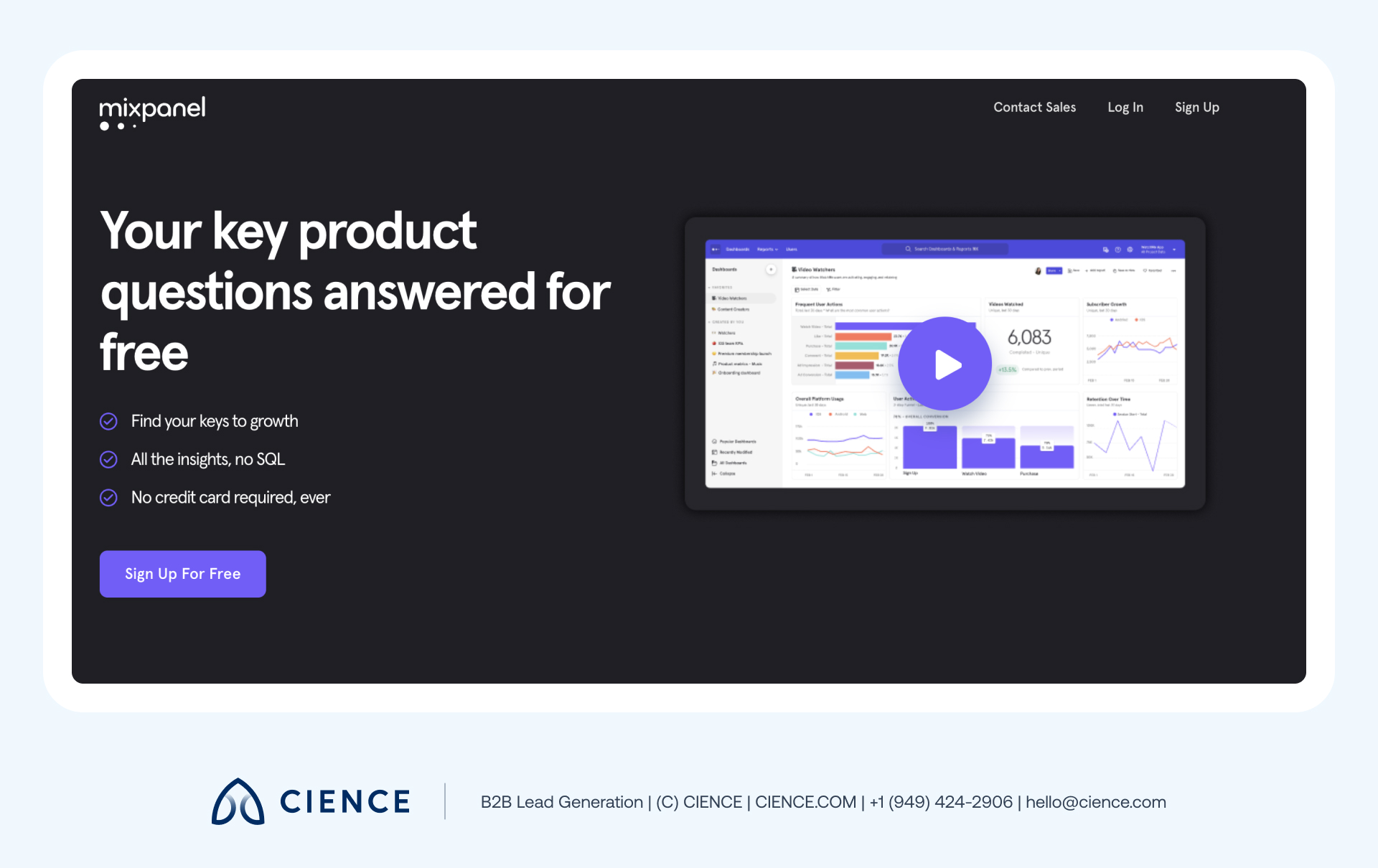
Another must-have tool in the martech stack is software to analyze data on all digital marketing efforts and results of marketing campaigns. Analytics tools can process, analyze, and present reports and insights in personalized dashboards.
It is essential for marketing leaders to measure the success or failure of a campaign and fine-tune future marketing activities to maximize conversions and sales.
Top digital analytics software: Google Analytics, Semrush, Supermetrics, Mixpanel
10. Customer relationship management (CRM)
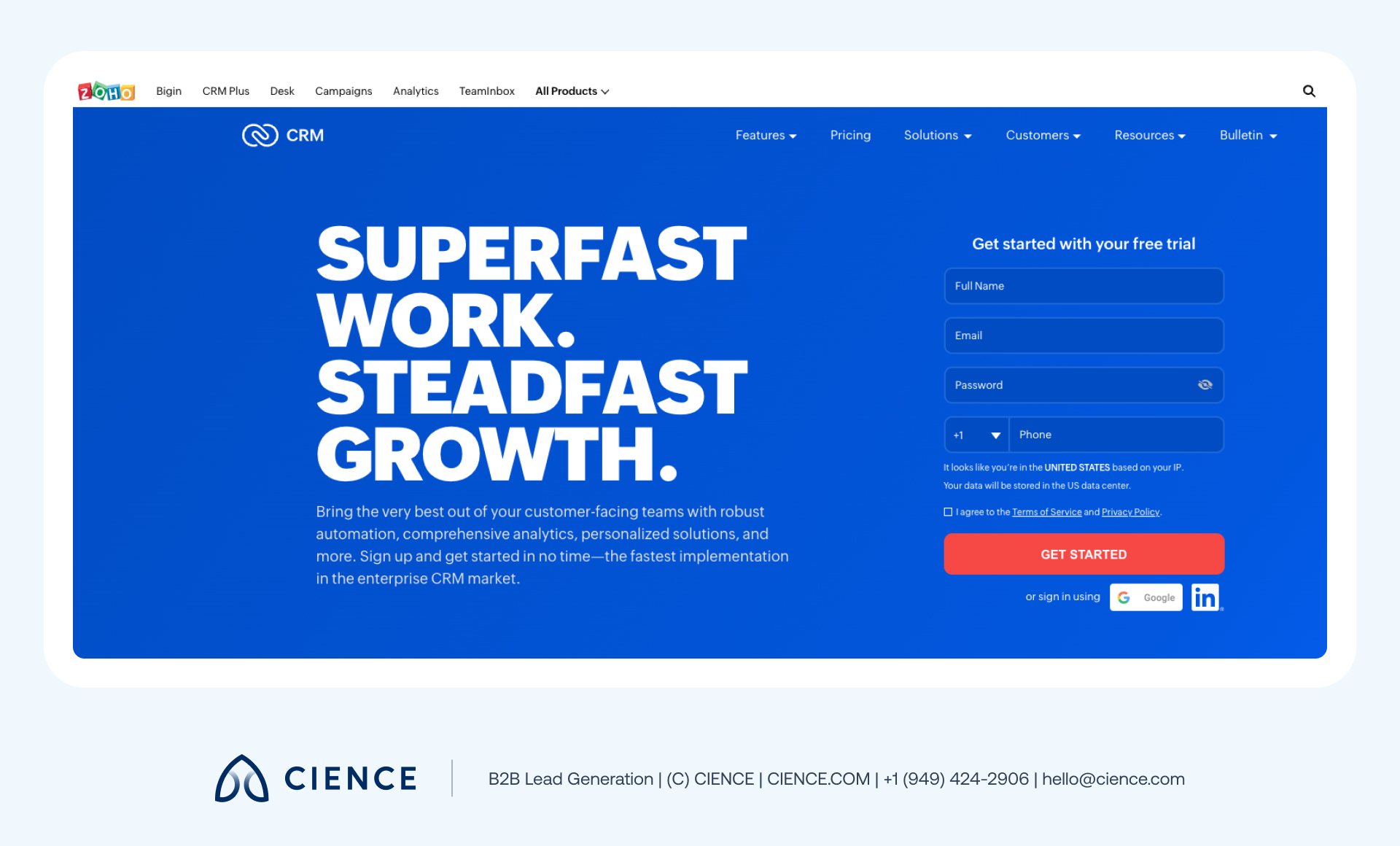
Customer relationships make or break your business. And CRM software makes it easy for you to manage customer relations and build a strong sales and marketing alignment. It tracks interactions with prospects and existing customers and provides a complete overview of the customer activities for the sales, marketing, and customer service teams.
Many CRM software provides integrations with various martech tools, making it a smooth process to create a tech stack.
Top CRM software: Salesforce Sales Cloud, HubSpot Sales Hub, ActiveCampaign, Freshsales, Zoho CRM
7 Steps to Build Your Marketing Technology Stack
When your marketing team starts using several martech tools, you inadvertently create a marketing technology stack. However, not all stacks are created equal. A well-built martech stack serves the business just right.
But often, marketers struggle with this process. One in five marketers says their current martech stack is more complex than a black hole. More than a third of them say their tools don’t talk to each other, and 24% feel they are missing critical parts in their martech stack.
To avoid such missteps, follow these steps when you build your martech stack:
1. Determine your marketing goals and strategies.
More often than not, companies let features and functions determine what’s in their martech stack when their marketing strategy and goals should define it.
So define your marketing goals and strategies before you choose your tech stack. If you are unclear on your next move, then now is the time to outline them. If you already have clear goals and strategies for your team, review them. Figure out the tools you’ll need to implement your plan.
For instance, if your marketing goal is to increase traffic to your site, the strategy will focus on content marketing and SEO. You’ll want to write more SEO-optimized blogs, and redesign your website for more visibility in search. Then your must-have tools will be a content management system, writers, SEO tools, and website analytics software.
If you are already using martech tools, review their usage and effectiveness. Are the tools helping you achieve your goals? Are there any better alternatives you can look for? Make a note of it.
2. Get your team’s input.
Talk to your marketing team about the challenges they face in marketing tasks: What takes most of their time? Which task is resource-consuming?
Getting answers to these questions from your team gives you specific tools and features to look for. For instance, if your writer says it’s difficult to optimize the content for search engines by manually looking at SERP results, you can look for tools that make this job easier.
If your marketing and sales email campaigns are clashing, you can find a solution to avoid this problem.
3. Determine your resources.
It’s essential to understand your resource limitations when choosing a martech stack.
Once you have a list of martech tools to look for, decide on the budget you need. Your budget can be on a per-tool basis or a team basis over a monthly, quarterly, or annual period. This is important so that you don’t overshoot your mark.
Also, make sure you have people who can manage the tools effectively. Sometimes, companies don’t understand the complexity and resources they need to manage the martech stack and end up underutilizing it.
So, put in place a marketing operations team to help you manage your martech stack. While the team size may vary depending on the industry and company size, their function should remain the same, whether it’s one person or a team of experts.
The operations team ensures all tools are connected and accessible, data is flowing into the system, and that the teams are adopting and using the tools to their full potential.
4. Research, research, research
You have a list of tools and a budget. Now, hunt for products that match your needs. This is an important step because you’ll have to find the tool that suits your needs from an abundance of products in the marketing technology landscape.
Search companies on Google. Read their reviews and compare their features and pricing on review sites. Look for products that offer native integrations or APIs to integrate easily with core martech like CRM or marketing automation.
Consider the following questions:
- Does the tool solve the problem my team faces?
- Does it serve my marketing strategy and goal?
- Does the tool integrate well with my existing martech solutions?
- Is it under my budget?
- Do I need a particular skill or resource to use this?
Shortlist a few tools, and get a free demo or trial for those products. Once you are sure the product will serve your goals, finalize, and buy the martech you want. You shouldn’t fall for shiny new products at this stage just because they’re new and promise outstanding results. Always limit yourselves to the tools that you require.
5. Integrate your tools.
A martech stack isn’t just a collection of tools — it’s a series of integrated software that allows seamless operations. Make sure all your applications are connected.
Use system integration tools if you need to fuse them. The integrated stack allows you to build workflows and gather data across martech tools for different marketing channels.
6. Train your team.
Most importantly, train your team to use the tools in the tech stack. The tools are only as good as the people who use them. So, get your employees to explore the tools and realize their full potential. This includes training not just your marketing team but also the customer service and sales team that interact with the tech stack.
You can probably assign each tool to one of your interested team members. Let them explore, learn, and create a workflow that everyone can use. Ask them to share their training materials and teach the rest of the team with a meeting and step-by-step tutorial. This eases the burden on the team as each person learns a tool and teaches others. You also create a knowledge base about these tools for future reference.
7. Review and replace.
Once you have a suite of ten to fifteen tools in your tech stack, do not assume your job of building a martech stack is over—it’s always a work in progress. Consistently review and reassess if your tech stack is serving your goals to your satisfaction. See how to improve usage and performance.
If it’s not satisfying, don’t be afraid to swap it to try a new tool. You must consistently refine your stack to make it the most agile and efficient martech stack.
“We’ve worked with CIENCE for over a year. They consistently find good leads for us and expertly schedule demos.” — Sarah Allen-Short, Client
When your cost per lead keeps climbing but pipeline stays flat, adding another tool won’t fix it. You need a different system.
10 Best Marketing Technology Stack Examples
If you are still unsure where to start, take inspiration from companies with the best marketing stacks. CIENCE has worked with 2,500+ clients across 250+ industries — and the pattern is consistent: the best stacks are lean, connected, and strategy-driven, not tool-maximalist. (Source for images: Chiefmartech - excluding CIENCE)
1. graph8 Data Platform
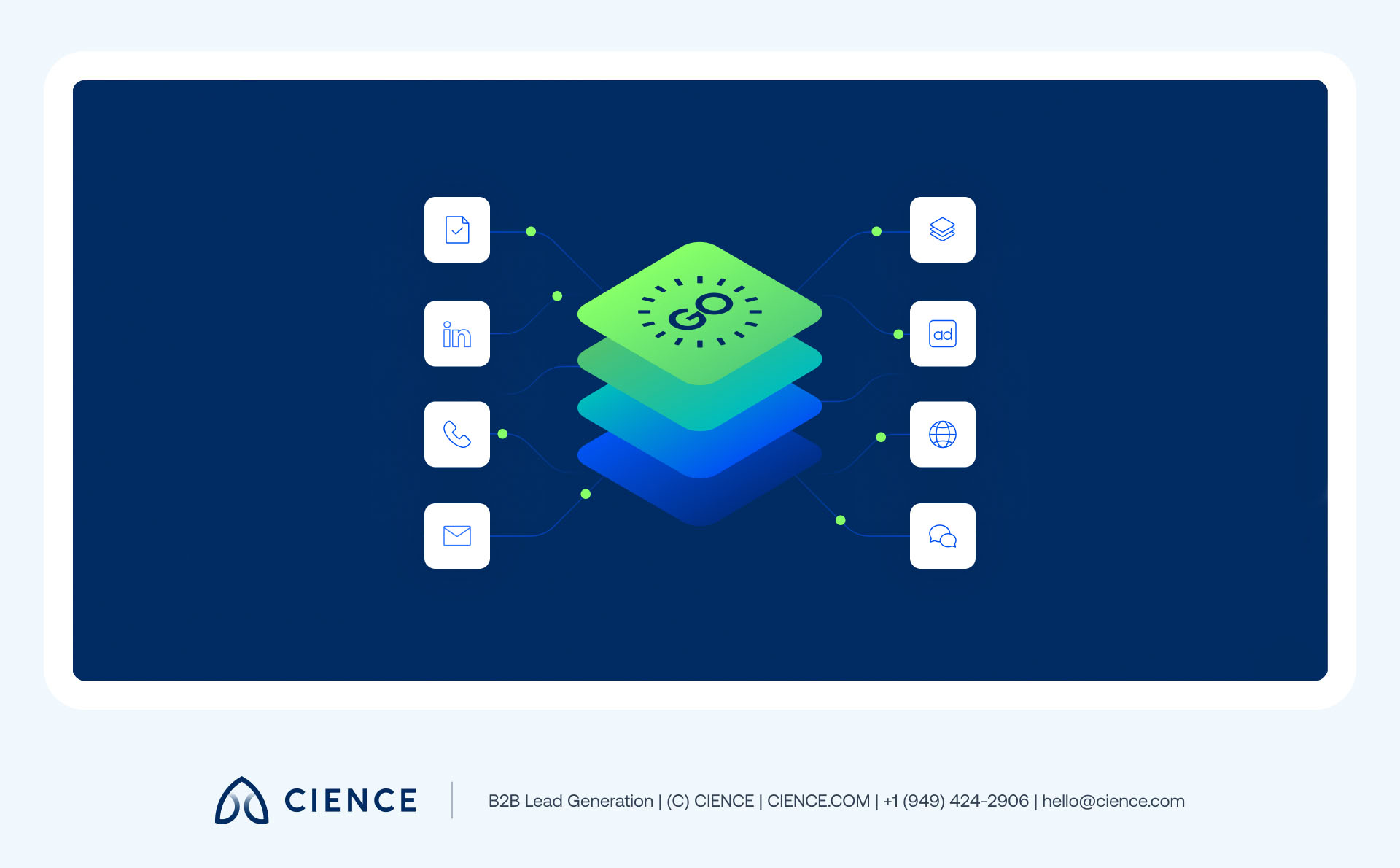
Sales reps, business development departments, customer data analytics, and account-based marketing (ABM) teams benefit greatly from integrating the graph8 data platform into their lead generation strategies. This unique platform attends to each phase of the prospecting process with tools that adapt to every pipeline development.
The essential stack allows marketers and sales to create filtered and qualified target account lists to help them make data-based decisions to boost personalized follow-ups, trigger content approaches, and test new audiences with great conversion possibilities.
2. Verizon martech stack
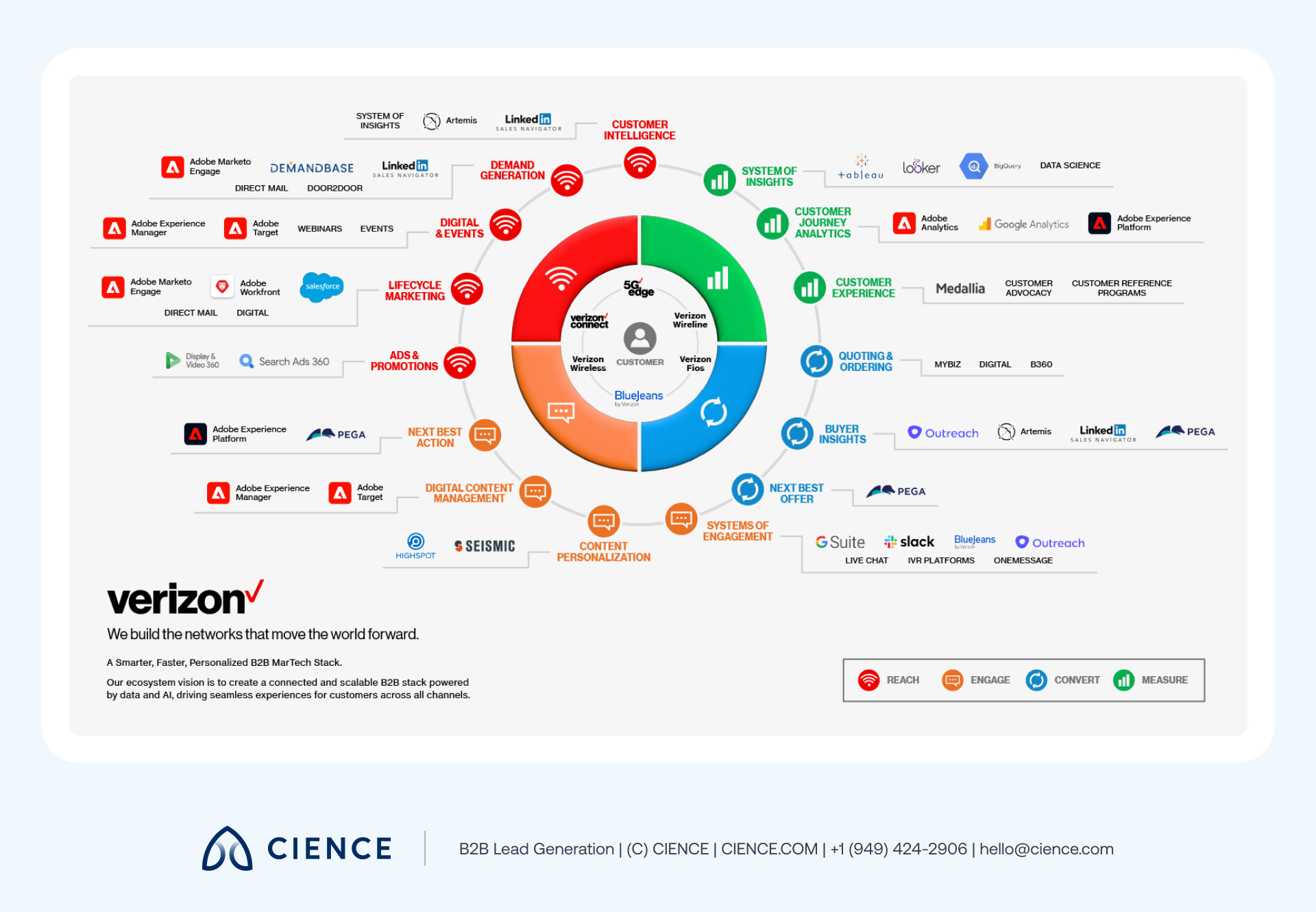
Like a truly large enterprise, Verizon has a large martech stack. However, it has clearly demarcated which martech is used for which marketing tasks, grouping the tech stack into two levels:
- The first level shows the four stages of their customer journey (reach, engage, convert and measure).
- The second level indicates the marketing activities in each stage of a customer journey.
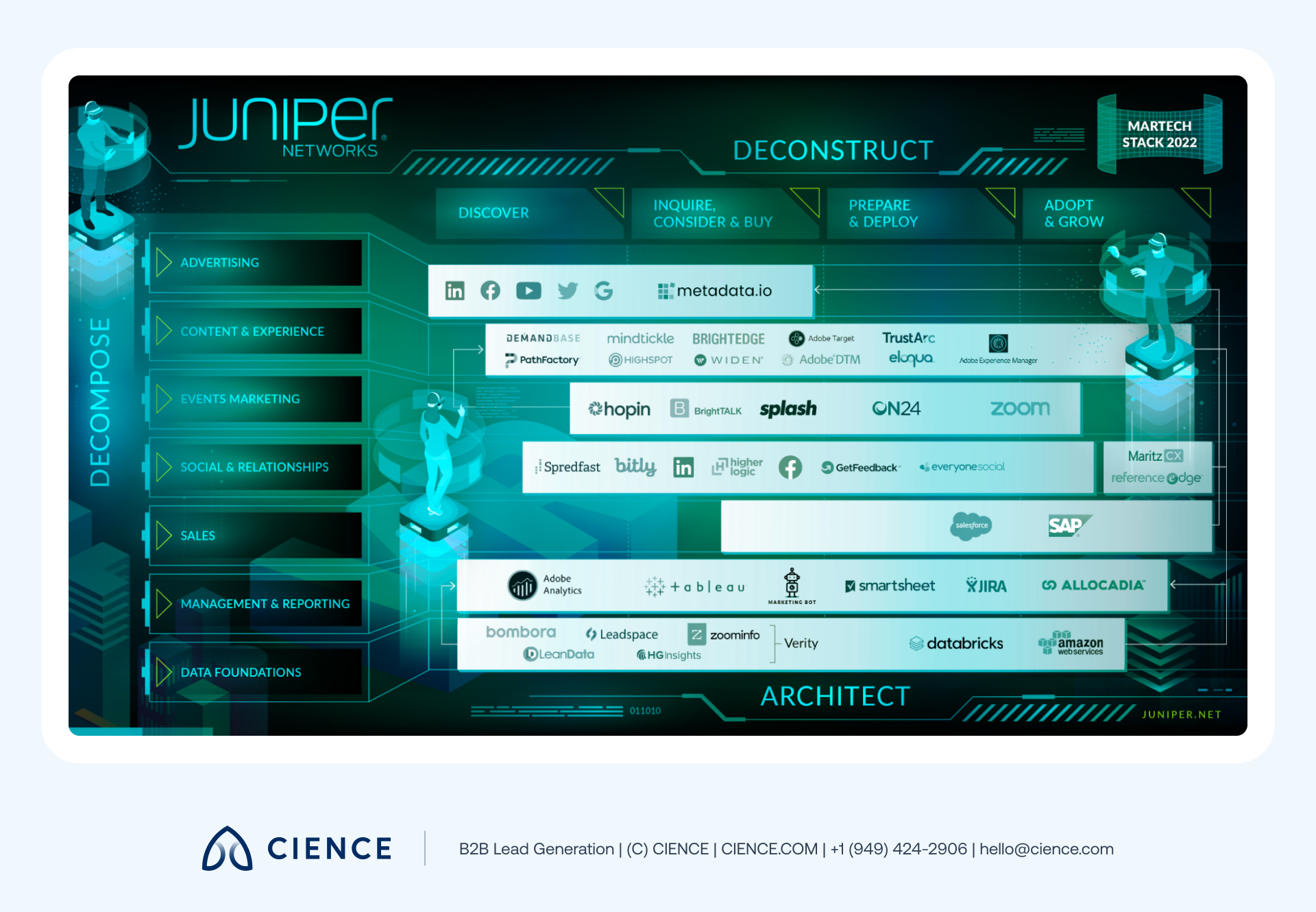
3. Juniper Networks martech stack
Juniper Networks has a comprehensive and well-thought-out martech stack. Their tools cover important marketing activities like content, event marketing, and advertising. They also have included the sales tools in the martech stack, supporting better collaboration and internal workflows between teams.
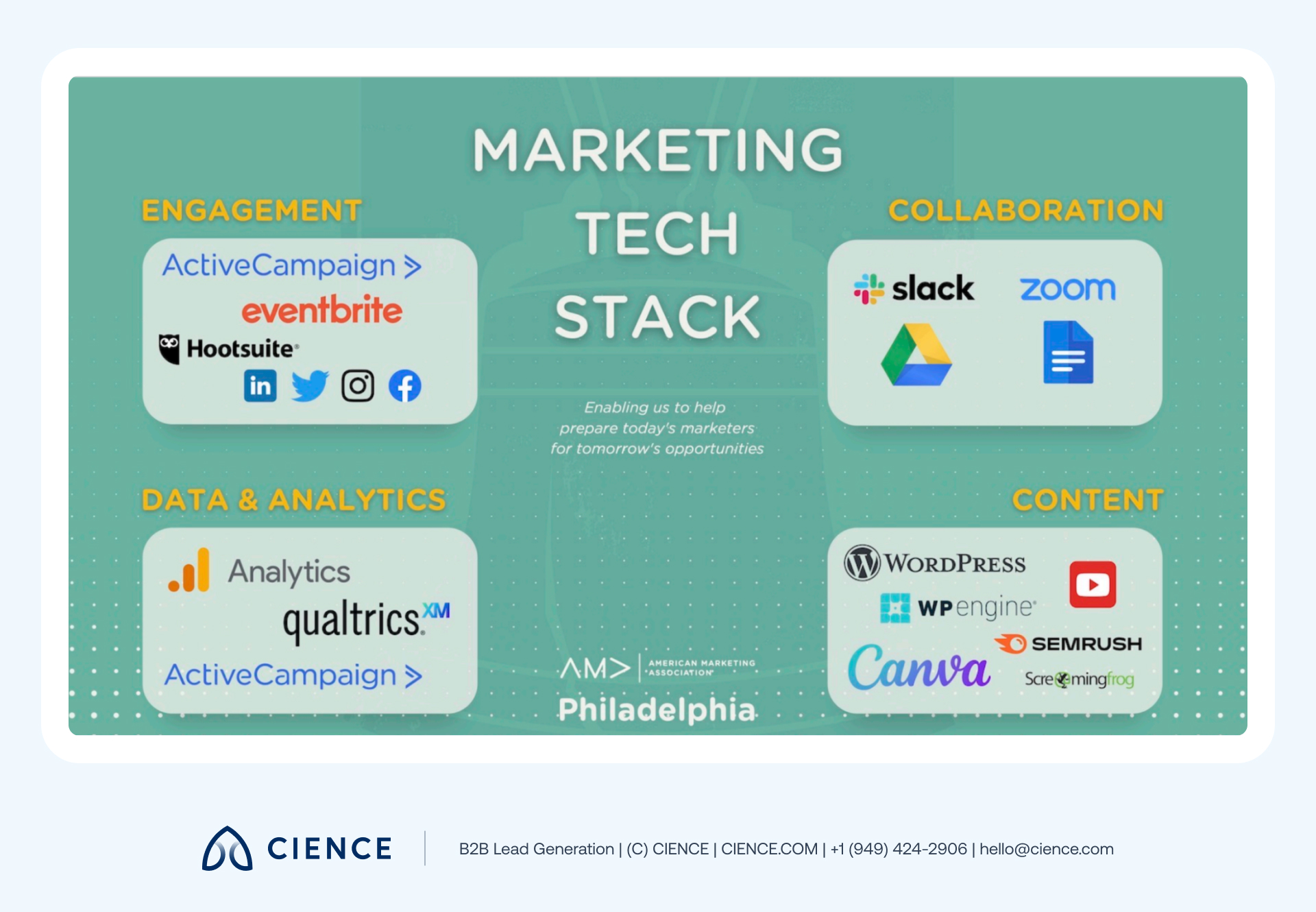
4. American Marketing Association martech stack
The American Marketing Association (AMA) has one of the simplest and uncluttered martech stacks with limited tools. There is no fancy product but just the essential tools an organization needs for its activities.
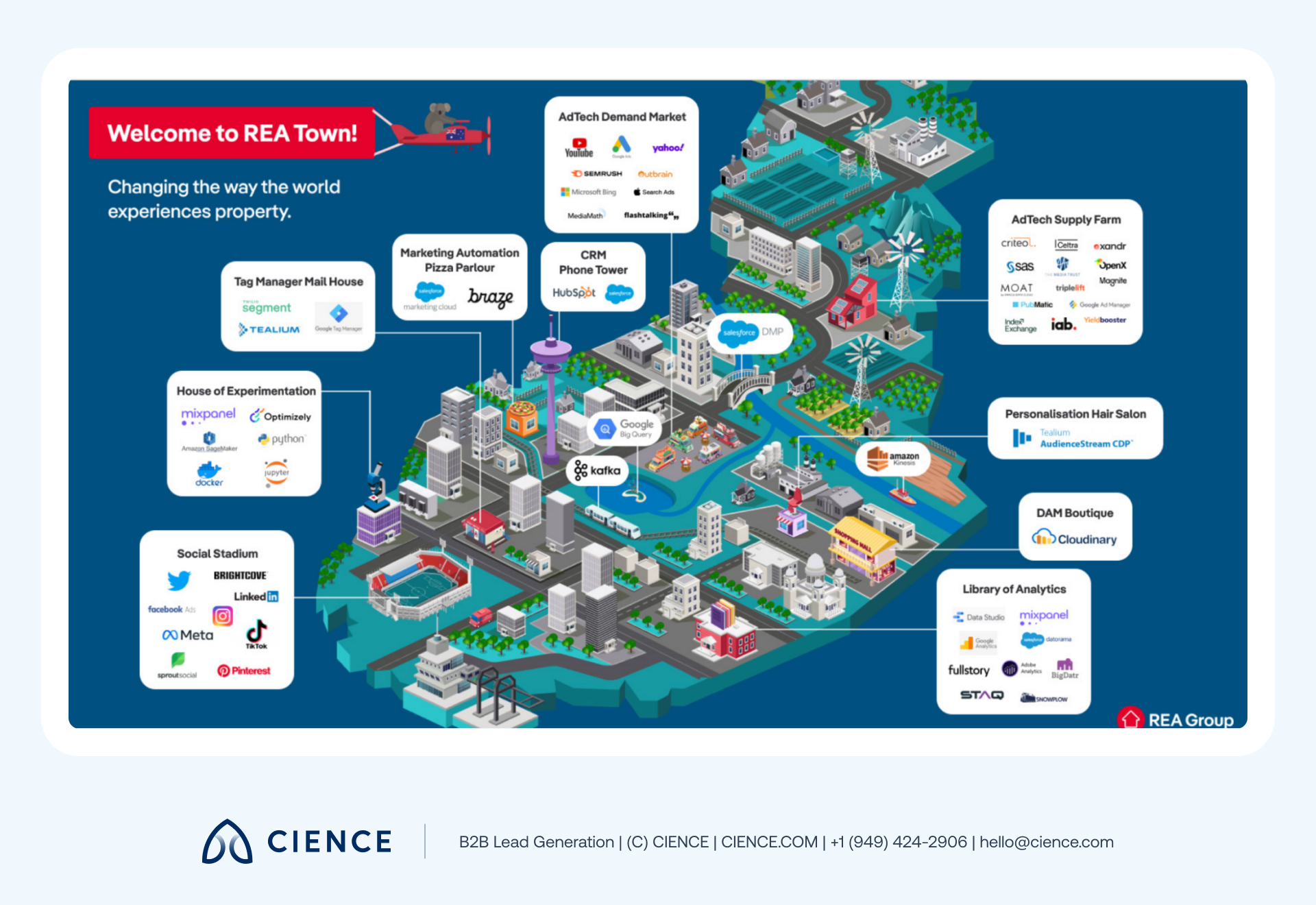
5. REA Group martech stack
The real-estate advertising company REA Group’s martech stack shows digital maturity. The company is not just leveraging essential marketing tools but also experimenting with new marketing and data science programs like python.
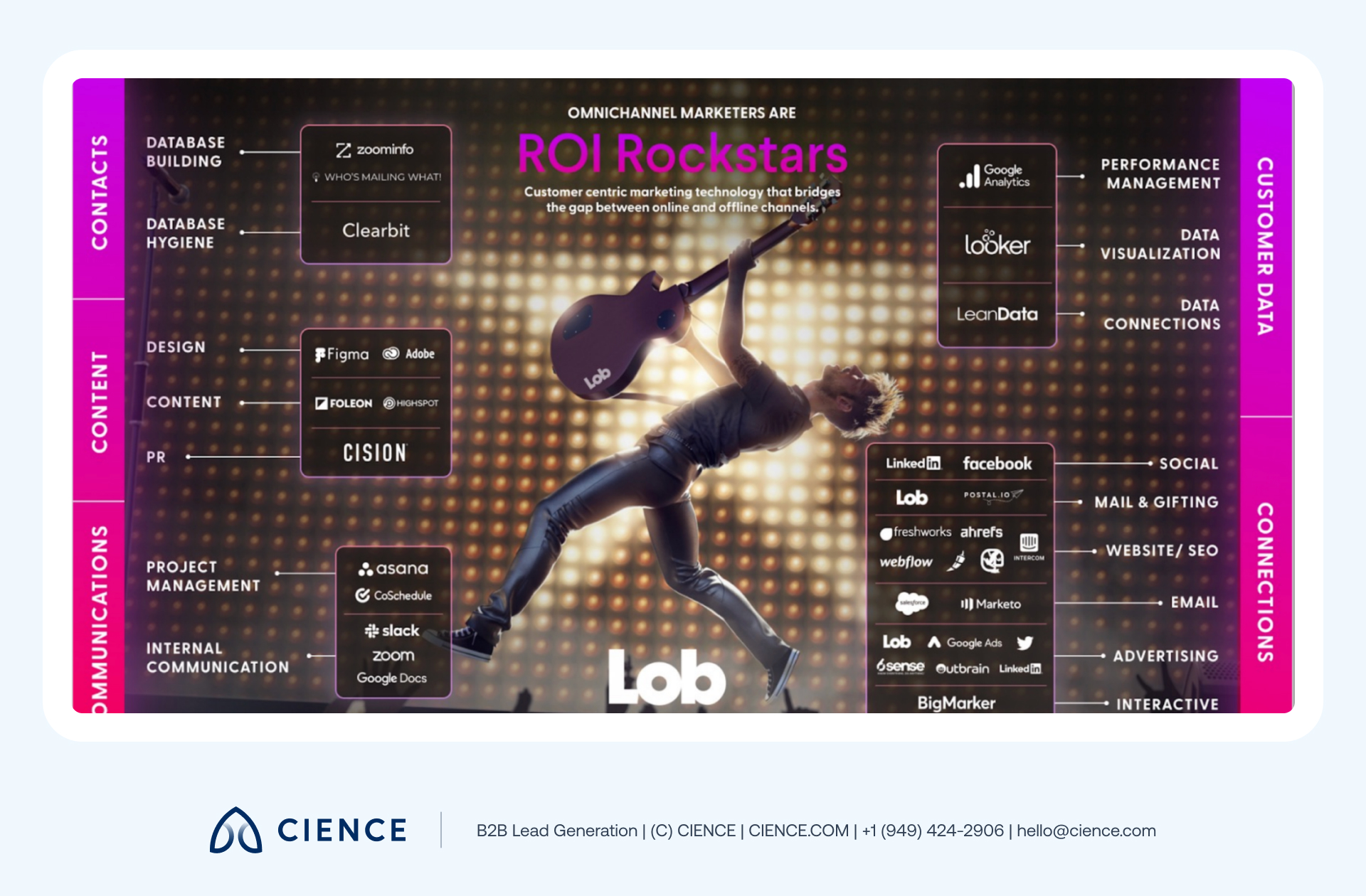
6. Lob martech stack
The direct mail automation company, Lob, shows the must-have tools for a SaaS company’s martech stack. Nothing more, nothing less.
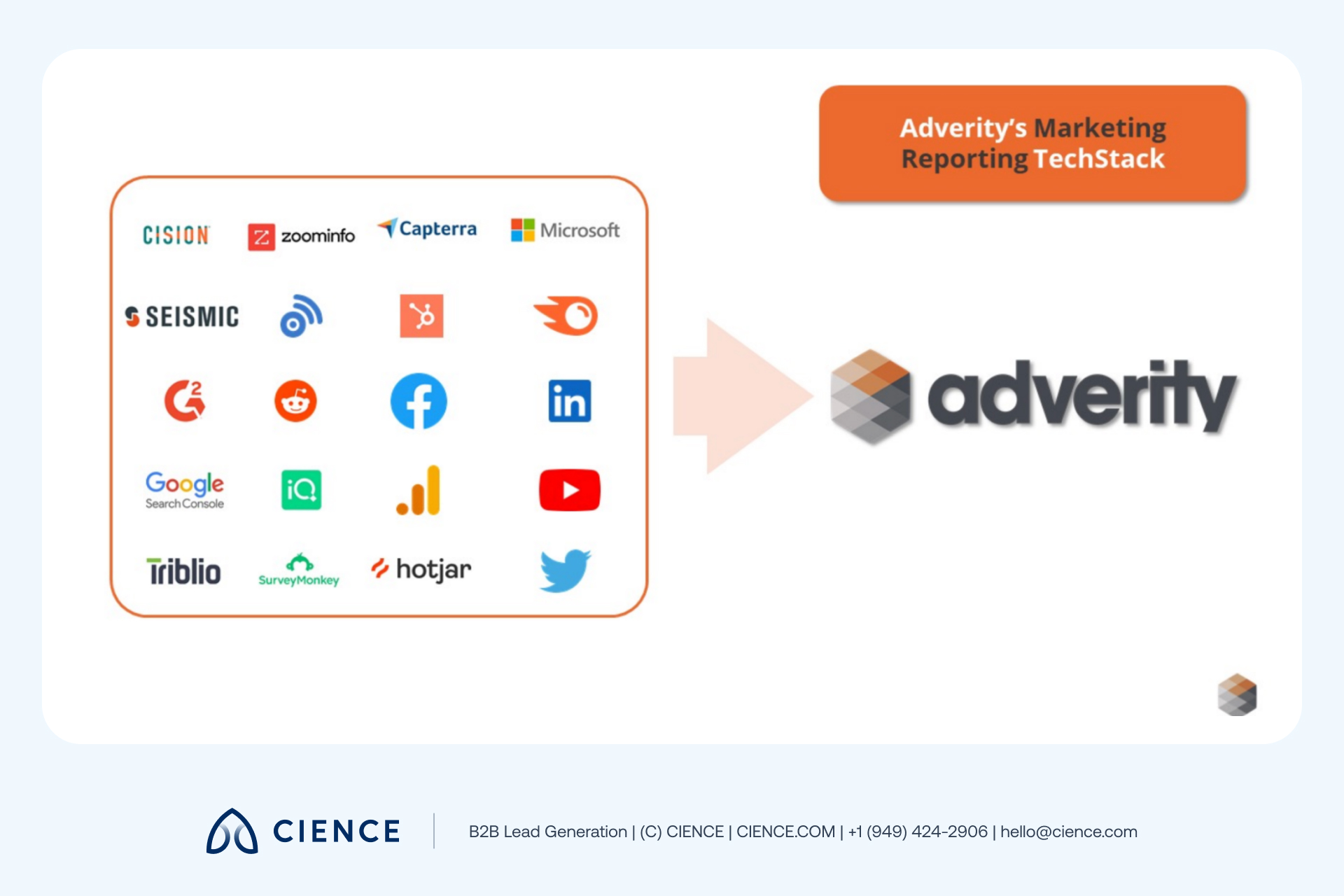
7. Adverity martech stack
The data platform, Adverity, also has a very simplified martech stack with all the usual suspects of the martech landscape. Only companies with clear marketing priorities could simplify their tech stack to the extent of having the essentials and a few more tools for specific purposes.
8. Digital Reach Online Solutions martech stack
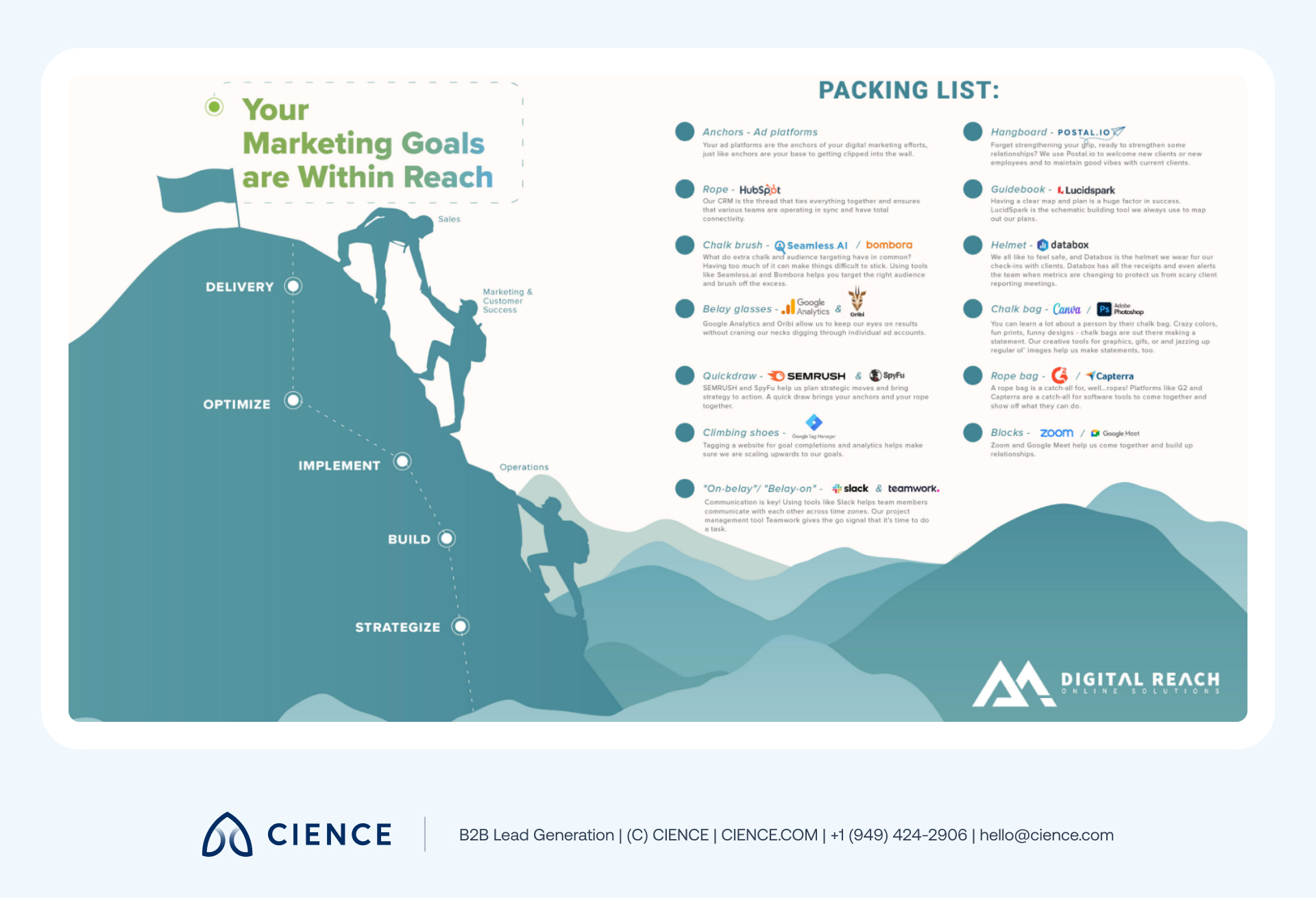
If you are a marketing or advertising agency, look no further than Digital Reach Online Solutions for an ideal martech stack. It has a straightforward stack built on a CRM and ad platform, fulfilling all critical marketing needs.
9. Rabobank martech stack
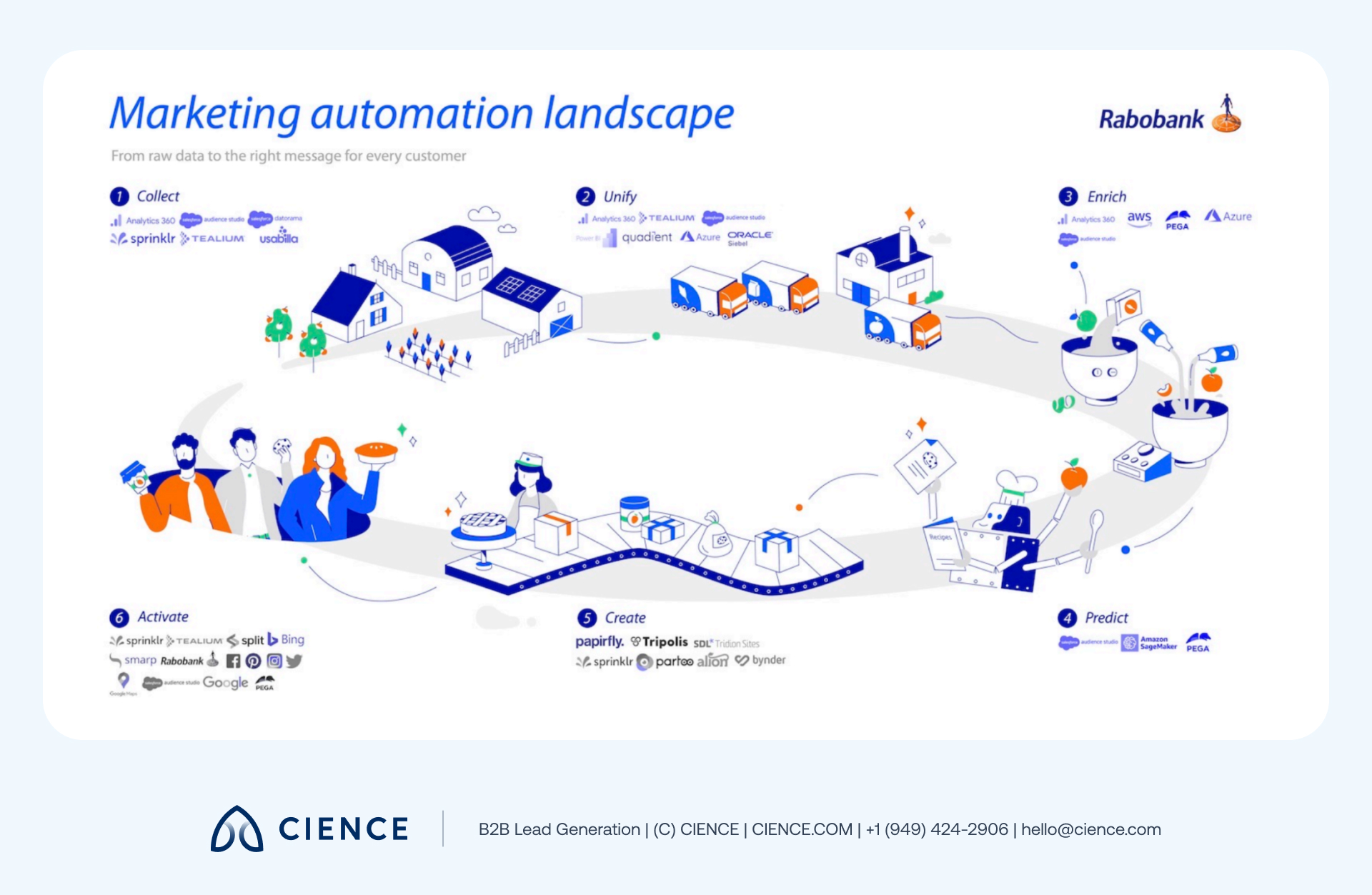
The banking firm, Rabobank, has one of the elaborate martech stacks that covers every technology needed to convert raw data into the right customer message. Any company moving toward data-driven marketing can take inspiration from this tech stack.
10. InvoiceCloud martech stack
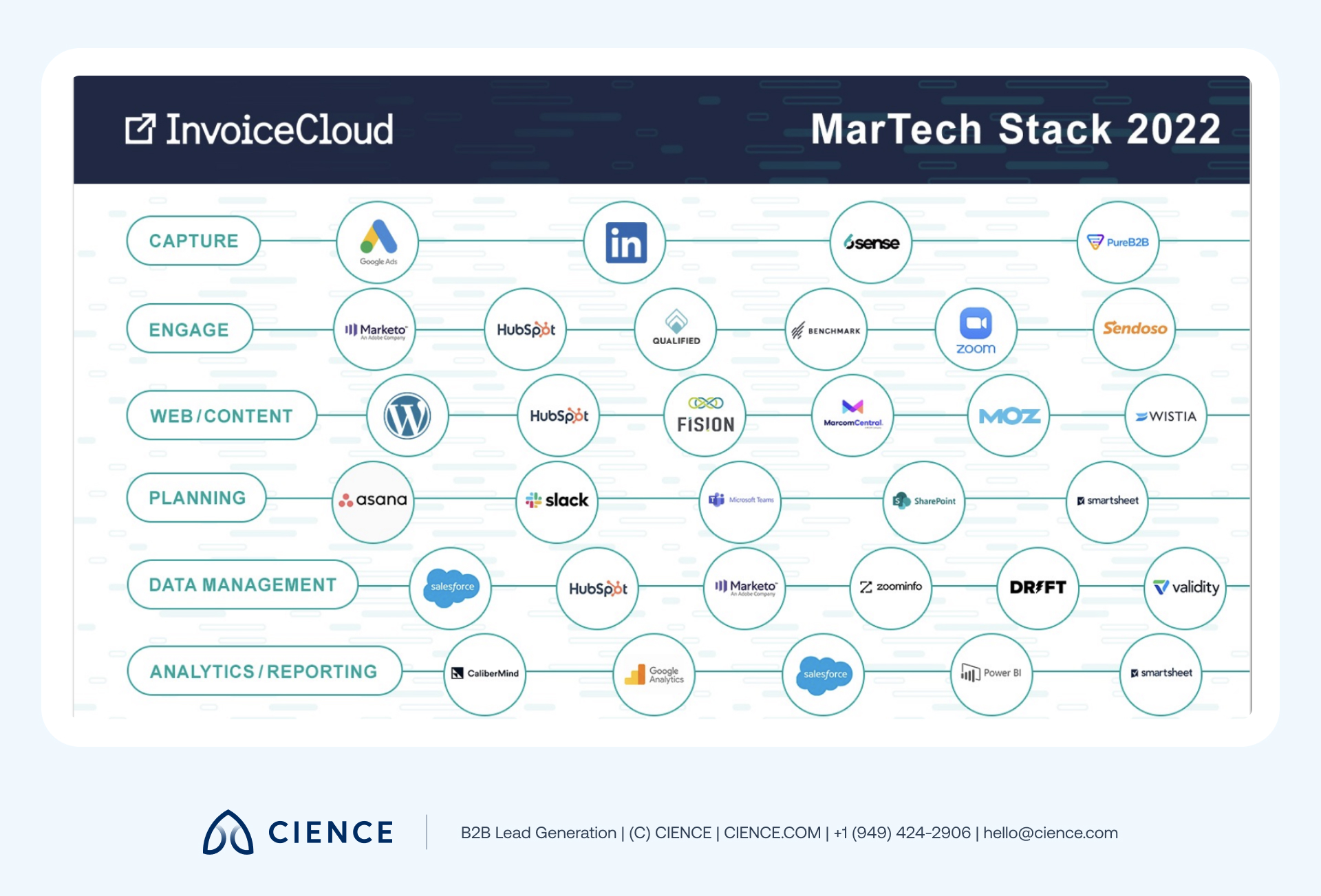
Another example of a SaaS platform with a good martech stack is InvoiceCloud, a payments solutions company. While there are certain products that are repeated, as you would see in any martech stack, there are many more tools that are specific to a particular task. It’s methodical and neat.
“Working with CIENCE tripled our weekly meetings booked — their team understood our ICP immediately and built sequences that converted.” — Mandolin team
Frequently Asked Questions
What is a martech stack?
A martech (marketing technology) stack is the collection of integrated software tools a marketing team uses to run campaigns. A typical stack includes CRM, email automation, analytics, content management, social media management, and advertising platforms — all connected to share data and workflows.
What are the must-have tools in a martech stack?
Every B2B martech stack should include: a CRM (Salesforce, HubSpot), email automation (Marketo, Mailchimp), web analytics (Google Analytics), content management (WordPress, Webflow), and advertising tools (Google Ads, LinkedIn Ads). Advanced stacks add intent data, ABM platforms, and conversation intelligence.
How much does a martech stack cost?
A basic martech stack using free or entry-level tools costs $200-500/month. Mid-market stacks with professional-tier tools run $2,000-5,000/month. Enterprise stacks with premium CRM, ABM, and analytics platforms can exceed $20,000/month. The key is choosing tools that integrate well — overspending on disconnected tools wastes budget.
How do I evaluate if my martech stack is working?
Audit your stack quarterly. Check adoption rates (are teams actually using each tool?), integration health (is data flowing between systems?), and ROI per tool (what pipeline or revenue does it influence?). Most companies use 12-20 martech tools but actively rely on fewer than half.
CIENCE + graph8 pricing: $5,000 one-time GTM system setup, $2,499/mo strategic execution, and the graph8 platform at $499/mo. No long-term contracts. See full pricing →
Whether or not you decide to work with us, you’ll walk away with a clear picture of where your pipeline is leaking and what it would take to fix it.
Stack Up Your Marketing Technology
Now that you’ve discovered the world of martech stacks, you are one step closer to building it and taking your marketing team to success. It is a complicated process, but investing in the platforms your business needs to be successful should never be ignored. CIENCE works with 2,500+ clients across 250+ industries, earning a 4.6/5 rating on Capterra — and the most effective stacks we see are the ones built around strategy, not software catalogs. So, stack up your martech and deliver an experience that delights your customers.

A graph8 company — AI-powered GTM execution across 250+ B2B industries.
graph8 Platform
From $499/mo
Run your own GTM campaigns with AI-powered data, sequences, and analytics.
Start Free — 2,500 Credits No credit card requiredCIENCE Managed
From $2,499/mo
Our GTM teams build and run your outbound campaigns end-to-end.
15-min call · No commitment2,500+ B2B companies served · Month-to-month contracts · See full pricing →