
Email marketing automation delivers an average ROI of 4,400%, yet 45% of teams still send campaigns manually. This guide reviews 5 top platforms — Moosend (from $7/mo), HubSpot, MailerLite, Mailchimp, and Mailjet — scored on automation workflows, segmentation, reporting, and pricing so you can stop guessing and start converting.
Last Refreshed: March 2026 — updated tool pricing, automation feature comparisons, and B2B use-case guidance.
The best email marketing automation tools for 2026 include Moosend (from $7/mo), HubSpot, MailerLite, Mailchimp, and Mailjet — and choosing the wrong one costs you more than money, it costs you pipeline. 55% of marketers now use automation for email, and email marketing delivers an average ROI of 4,400%.
From Daniel Conn, GTM Strategist, graph8: “Most teams pick an email automation tool based on price, then wonder why their sequences underperform. The real criteria are trigger flexibility, segmentation depth, and CRM sync quality — because a $7/month tool with rigid triggers will cap your results faster than a $100/month tool with full behavioral branching.”
This guide reviews 5 top platforms on workflow builders, drip sequences, segmentation, A/B testing, and CRM integration to help you choose the right fit for targeting prospects with personalized content.
What Is Email Automation?
Email marketing automation is creating and automatically dispatching email sequences that are activated by specific actions your subscribers take. Those actions are known as triggers and may vary depending on the criteria you set for your automation workflow.
All you need to do is set up your automated email series and let it work for you. To achieve that, you first need to choose a reliable tool that fits your workflow complexity, contact volume, and budget.
What Makes a Great Email Automation Tool?
Before moving forward with the individual tools and their pros and cons, here is what you should be looking for when choosing an email automation service:
- Advanced email sequences: Activated based on several triggers, not just people subscribing to an email list.
- Automation workflow editor: A user-friendly interface with drag-and-drop capabilities to set up automation quickly.
- Ready-made automated sequences: Templates that can be tweaked to fit your business needs, even with minimal technical skills.
- List management capabilities: Segment and tailor every email based on the recipient’s demographic or behavioral data.
- Detailed reporting: In addition to email marketing metrics (open and reply rates), real-time reporting can track overall sequence performance and discover potential bottlenecks in the user experience.
5 Top Email Automation Tools for Business Growth
Covered above are the essential characteristics of a solid email automation tool, but you should also factor in your contact list size, niche, and marketing resources. Here are the top five platforms based on features, pricing, and ease of use:
1. Moosend
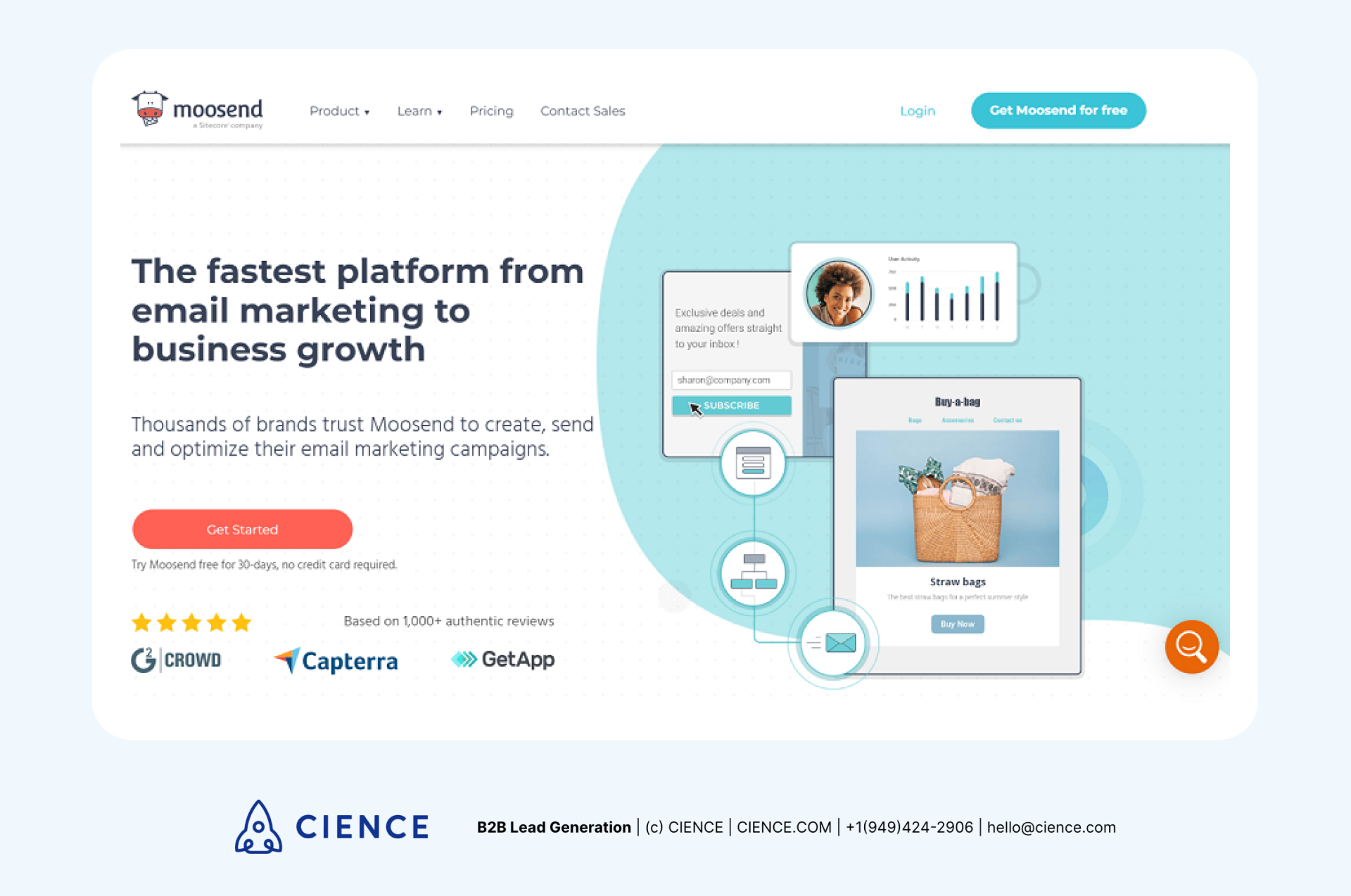
Moosend is an email marketing automation service with advanced automation features to create behavioral email campaigns according to your recipients’ actions and information. You can automate repetitive tasks and design automation workflows as you please, choosing from several triggers and even adding conditional steps for even more accurate email messages.
Its advanced segmentation features help you dispatch accurate email campaigns to each subscriber. Moosend’s detailed campaign performance reporting helps you optimize your campaigns and find the recipients most likely to convert — then dispatch personalized emails to address their specific pain points.
Pros:
- Pre-built automation sequences to tweak as you see fit, editing or removing steps, duplicating parts, or using them as-is
- An intuitive automation workflow builder that is easy to handle even for beginners
- Real-time campaign analytics and sophisticated A/B testing capabilities to monitor what resonates best with your target audience
- Drag-and-drop email editor and ready-made email templates for every occasion
- Integration with popular apps so that you can seamlessly transfer data between tools
Cons:
- No permanent free version — only a 30-day free trial
Pricing:
Moosend’s pricing starts at $7/month with its Pro plan (paid yearly), offering built-in automation recipes, CRM and email marketing options, and detailed reporting. Its flexible pricing model adjusts to your business needs with a 30-day free trial.
2. HubSpot
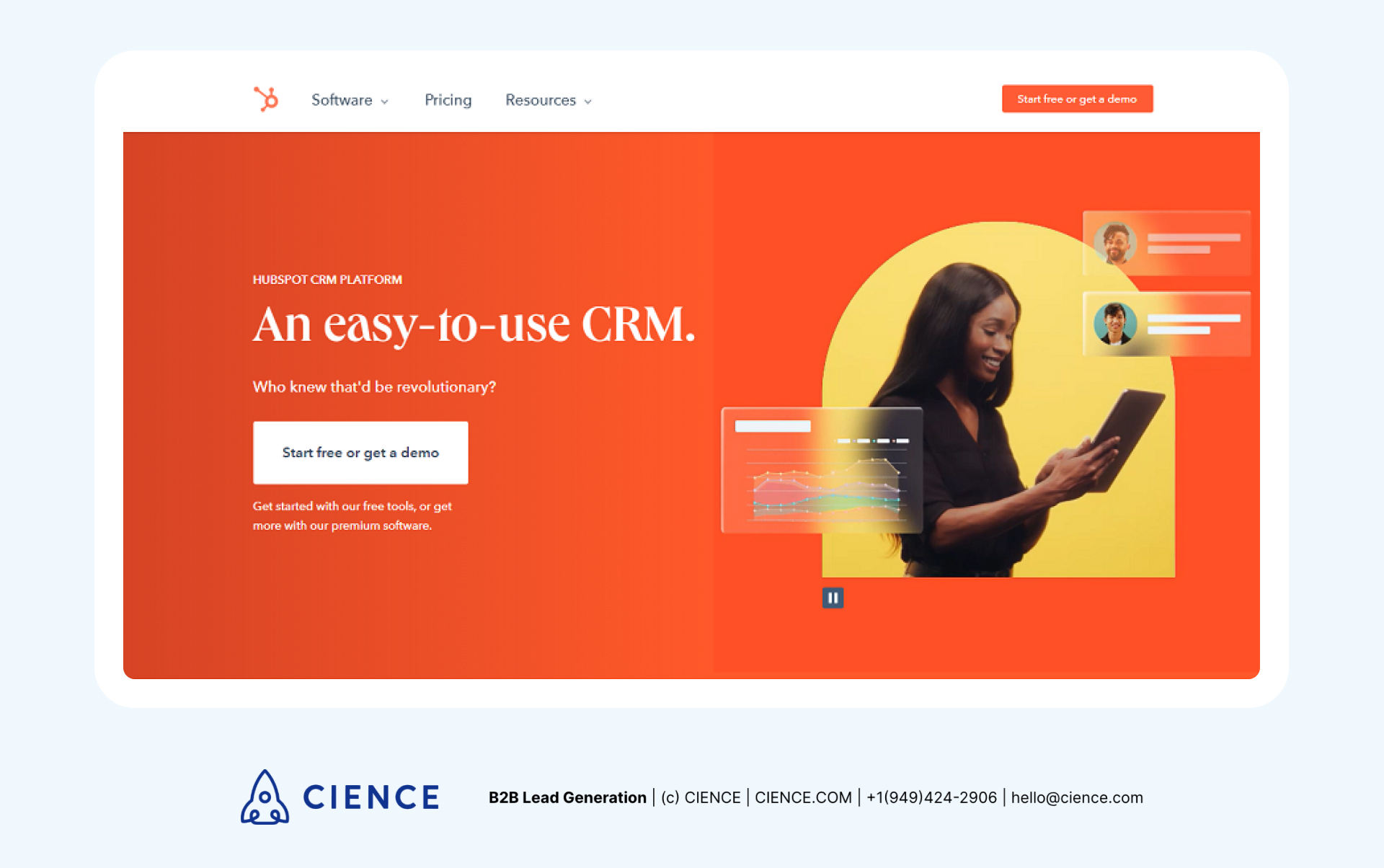
HubSpot is an all-in-one CRM tool, well-known for its lead capture and email tracking capabilities. The platform provides a number of drip email sequences, making a simple process out of monitoring their performance and tracking subscriber activity. Its dynamic list-building and advanced segmentation enable its users to invest in behavioral targeting.
HubSpot’s internal notification and lead tracking system are helpful if you want to take an omnichannel marketing approach and keep your marketing and sales teams coordinated. Automated sequences created with this platform help you keep track of every part of the buyer’s journey.
Pros:
- Top-notch analytics to monitor every part of your lead generation sales pipeline
- A wide range of social media management options
- A handy visual editor with drag-and-drop elements and pre-built templates to get started immediately
- Free-forever CRM with limited access to other HubSpot tools
Cons:
- HubSpot can get quite costly — its different suites make pricing tricky for growing teams
Pricing:
HubSpot’s plans start at $41/month (billed annually) allowing up to 1,000 contacts and one automated action. There’s also a feature-restricted free plan that offers one automation action and up to 2,000 emails per month.
3. MailerLite
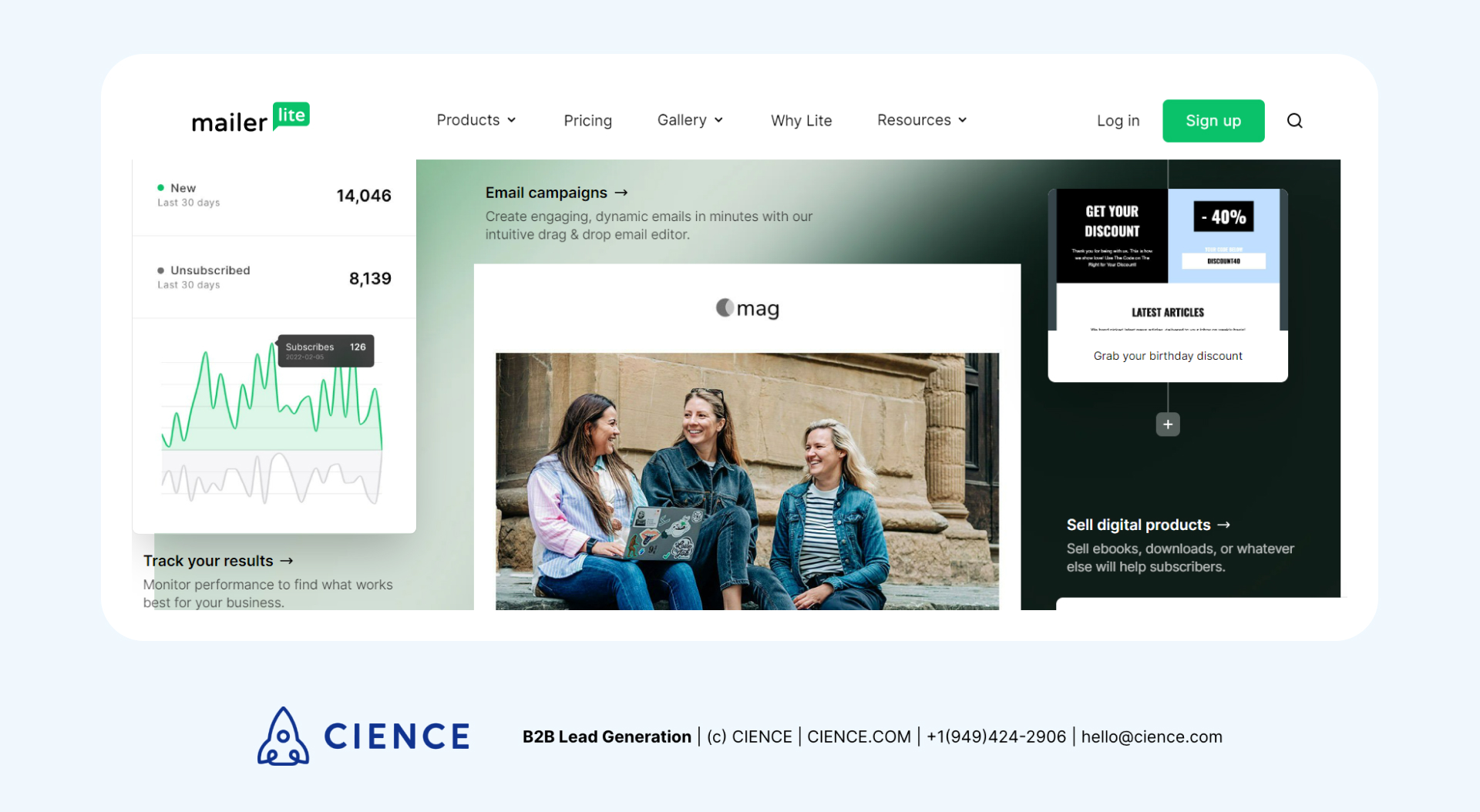
MailerLite is an email marketing solution with a reputation for being one of the easiest tools out there. Creating automation sequences within its intuitive workflow editor is straightforward, even for entry-level marketers. MailerLite may fall behind in advanced workflows, but it wins among marketers with its combination of useful features and low prices.
Its user-friendly design helps you set up multi-step automated campaigns activated by triggers like list signups or specific dates. You get access to basic campaign analytics including open rates and unsubscribe rates.
Pros:
- Sophisticated capabilities like the pop-up customizer and photo editor in the email builder
- Easily editable sign-up forms and responsive landing pages
- A generous free plan that gives you access to all its automation options
- The ability to run split tests on your email campaigns to measure conversion performance
Cons:
MailerLite lacks the level of advanced features other solutions on this list offer, so it struggles to track the entire customer journey at scale. Multiple triggers per workflow require a paid upgrade.
Pricing:
MailerLite’s free plan gives you full access to automation workflows but caps email subscribers at 1,000. Its Growing Business plan starts at $9/month (paid annually) and includes unlimited emails and email templates.
4. Mailchimp
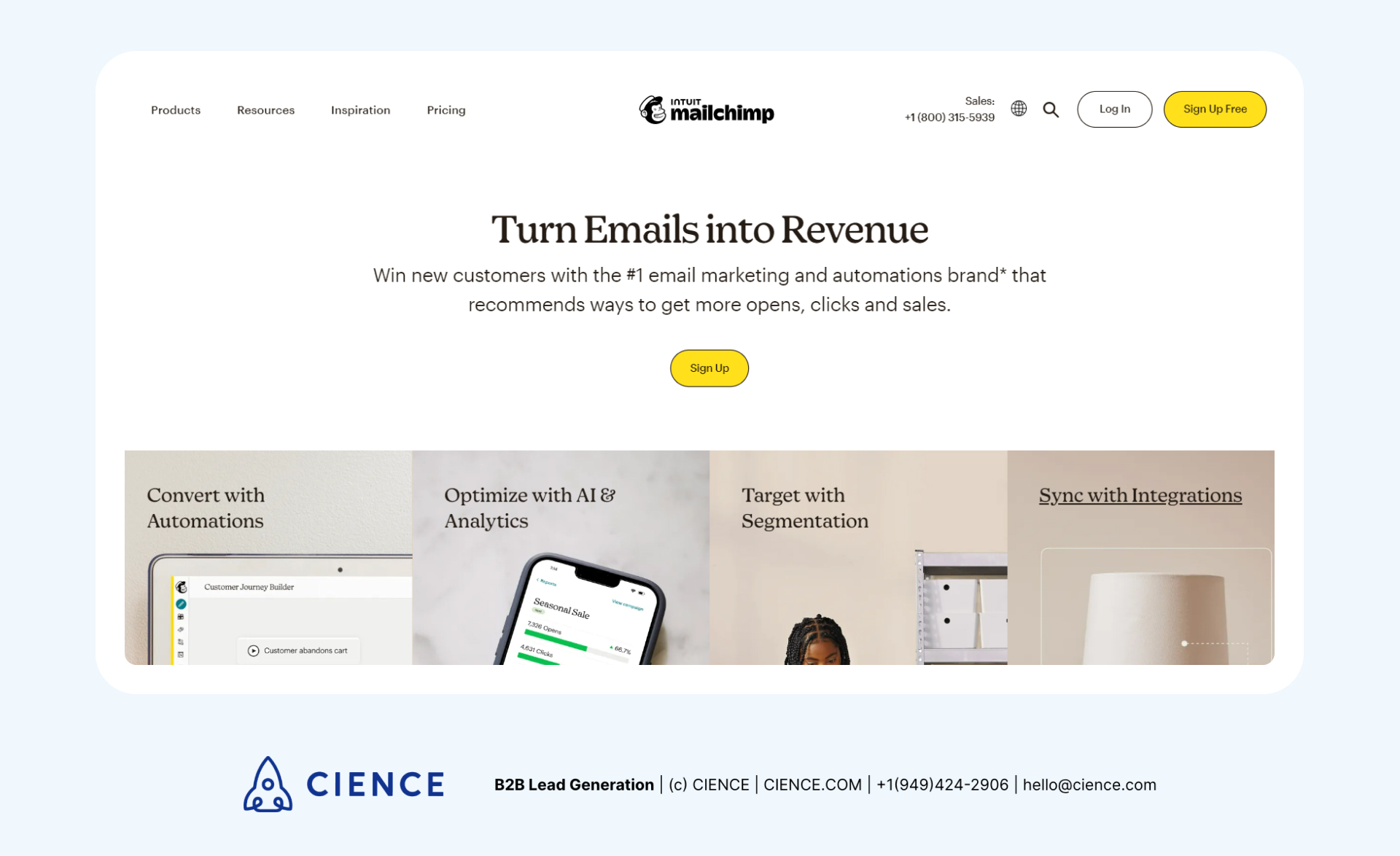
Mailchimp is a longtime player in email marketing and has stepped up its game in automation. You can use it to create standard autoresponders or more complex campaigns with various triggers such as clicks or blog updates. Mailchimp makes it possible to integrate your platforms and automate your email marketing efforts at different steps of the buyer’s journey.
Mailchimp gives you access to detailed reports to gather audience insights. Its content optimizer tool displays real-time suggestions, enabling you to improve your messaging without hiring a content writer.
Pros:
- Ready-made automations with trigger suggestions according to the email sequence you wish to send
- Integrated CRM and website-building options
- A free plan that comes with a solid set of features
- A flexible UI that facilitates email creation
Cons:
- Advanced segmentation and A/B testing are locked behind high-tier plans
- Campaign tracking is considered limited and complicated by many users
Pricing:
Mailchimp’s free tier includes a website builder, landing pages, and CRM but restricts users to single-step automations. Its Essentials plan starts at $11/month, offering up to 5,000 email sends and basic reporting.
5. Mailjet
Mailjet is a platform focused on email marketing with solid automation options. You can monitor automation performance through the tool’s Workflow Statistics feature. It offers automated sequences and triggers, though it lacks advanced workflows with multiple conditional factors.
This email automation solution lets you add dynamic content to campaigns and send personalized content to each subscriber. Its flexible drag-and-drop email editor makes crafting emails a seamless experience, and you can integrate it with your CRM and manage contacts through a single dashboard.
Pros:
- Known for a strong inbox delivery rate
- Pre-designed email templates can be easily customized
- Email editor allows saving individual email sections, not just full templates
- Real-time collaborative tools enhance team coordination
Cons:
- Segmentation and automation conditions are limited; list management is not the most user-friendly experience.
Pricing:
“CIENCE ran a highly targeted outreach campaign for us that hit a 12% reply rate — we were booking double-digit meetings every month within the first quarter.” — Matt Bauer, CEO, Imagecraft
Choosing the right tool won’t fix broken targeting. If your email sequences are underperforming, the issue is usually the list, not the platform — we’ve helped 2,500+ clients across 250+ industries build audiences that convert.
Mailjet has a flexible pricing structure that fits every business size. Its Essentials plan starts at $13.50/month (billed annually) and gets you 15,000 email sends per month and segmentation options. Mailjet has a free plan with unlimited contacts and basic statistics, but limited features.
Frequently Asked Questions
What is email marketing automation?
Email marketing automation uses software to send targeted, personalized emails based on triggers, schedules, and subscriber behavior — without manual intervention. It includes drip campaigns, welcome sequences, abandoned cart emails, and lead nurturing workflows that move prospects through the funnel automatically.
How much do email automation tools cost?
Pricing typically starts at $7–15/month for basic plans (Moosend, Mailchimp) and scales to $800–2,000+/month for enterprise features. Most tools charge based on subscriber count. Free plans are available from several vendors for lists under 500–1,000 contacts.
What is the best email automation tool for B2B?
For B2B companies, HubSpot and ActiveCampaign are top choices because they combine email automation with CRM, lead scoring, and sales pipeline management. Moosend offers the best value for smaller teams. For enterprise B2B with complex workflows, Marketo and Pardot are industry standards.
“CIENCE Technologies secured about 30 meetings with ideal prospects, several of which represented Fortune 500 companies.” — Ben Kraus, Head of Sales, Jane.ai
CIENCE + graph8 pricing: $5,000 one-time GTM system setup, $2,499/mo strategic execution, and the graph8 platform at $499/mo. No long-term contracts. See full pricing →
Whether or not you decide to work with us, you’ll walk away with a clear picture of where your pipeline is leaking and what it would take to fix it.
Transform Marketing with Email Automation
Addressing your marketing challenges and keeping up with different audiences and needs can get tough. Email automation takes a load off your shoulders by streamlining your email marketing efforts, helping you stay connected with your target audience, and providing valuable insights to inform your next move.
The five email automation tools reviewed here each excel in different areas. The features, usability, and automation creation process differ from one platform to another — so take advantage of free trials before committing.
Fortunately, you can experiment with each tool for free, either with a forever free plan or a free trial version. Try as many as you need before committing to the platform that will move your outbound sales forward and closer to your email recipients.

A graph8 company — AI-powered GTM execution across 250+ B2B industries.
graph8 Platform
From $499/mo
Run your own GTM campaigns with AI-powered data, sequences, and analytics.
Start Free — 2,500 Credits No credit card requiredCIENCE Managed
From $2,499/mo
Our GTM teams build and run your outbound campaigns end-to-end.
15-min call · No commitment2,500+ B2B companies served · Month-to-month contracts · See full pricing →