
Brand consistency — presenting a unified identity across all channels — can increase revenue by up to 23% according to Forbes. The 5 key areas are multichannel content distribution, customer experience, brand relevancy, cross-team collaboration, and global campaign management.
Last Refreshed: March 2026 with updated statistics and tool information.
Brand consistency is the practice of presenting a unified, coherent identity across every channel and touchpoint — and according to Forbes, it can increase B2B revenue by up to 23%. Without it, conflicting messages erode the trust that drives purchasing decisions.
From Thomas Cornelius, Founder & CEO, graph8: “Brand consistency isn’t a design problem — it’s a GTM infrastructure problem. When your sales team pitches one thing and your marketing says another, you don’t just lose deals, you lose trust at the category level. The companies winning right now treat brand as a system, not a style guide.”
Jeff Bezos summed it up succinctly when he said, “Your brand is what other people say about you when you’re not in the room.” By this, Bezos, the founder and executive chairman of Amazon, meant that your brand is not what you say it is, but how customers experience it. Consequently, you need to think about what your customers expect to experience when buying from you and how you can deliver that.
Most business owners understand the power of branding. It’s what makes a customer choose your product over the competition. And an estimated 50% of the content created by B2B marketers is focused on creating brand awareness and interest. However, not everyone recognizes the importance of brand consistency and of brand experience in maintaining the integrity of your business’s identity and maximizing its impact.
In this article, we’ll look at why brand consistency is essential and on five areas you can focus on to ensure your business is more consistent with its brand messaging.
Why Is Brand Consistency Important?
From the very outset of the brand launch, businesses need to build a brand that customers trust. Why? Because the vast majority of customers prioritize abstract emotional factors over concrete data when making purchasing decisions. In other words, whether they trust and respect a brand is just as important—if not more important—than whether you can undercut your competitors’ prices. To ensure your visuals are consistent you can explore a free logo creator to generate ideas for an eye-catching brand identity.
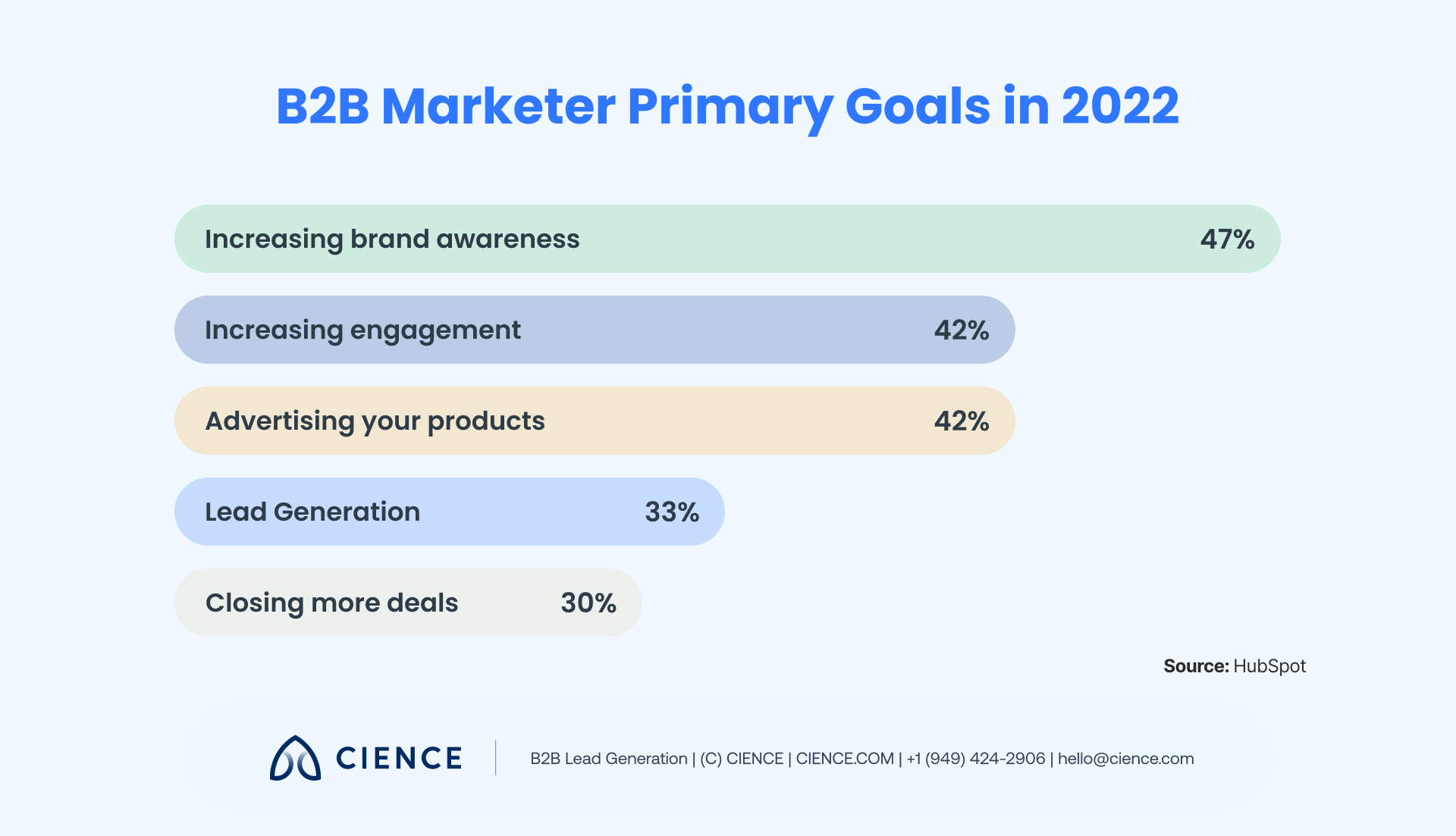
Building a brand means creating a coherent, relatable, and trustworthy identity that elicits a positive emotional response from customers. If your branding isn’t consistent, that identity will not convince customers and will quickly fall apart. Why should customers trust a business that sends out conflicting messages, contradicts itself, or generally seems unsure of what it stands for? According to a HubSpot report, the primary goal right now in marketing campaigns is to increase brand awareness. CIENCE works with 2,500+ clients across 250+ industries, and inconsistent messaging is one of the top reasons pipeline underperforms.
Five Areas of Focus for Building Brand Consistency
Now we have established why brand consistency is so important, it’s time to turn to what you can do to improve brand consistency. Consistency in brand visuals is the foundation. Using a logo maker that provides you with preset brand guidelines can help automate this process. Here’s a list of five areas in brand marketing your organization can focus on for maximum effect when planning your brand activation strategies.
1. Multichannel content distribution
Anyone who has worked in digital for any amount of time will have heard the phrase “Content is king.” By now, it’s a bit of a cliché. But relatively few people remember the second half of this popular truism: “content distribution is queen.”
A powerful content distribution system ensures brand consistency across all channels. Typically, this is achieved via a content relationship management (CRM) system, digital experience platform (DXP), or marketing automation software that allows you to manage marketing processes and campaigns across multiple channels automatically. For paid channels, programmatic ad management can extend your reach while keeping messaging on-brand. This makes it easier to maintain brand consistency when publishing across diverse markets, devices, and sites.
Guaranteeing regularity and predictability in your content strategy is one of the easiest and most effective ways of building brand consistency. Consequently, it’s one of the first steps your organization needs to take as it looks to grow its market presence.
2. Enhanced customer experience
Today, your brand is defined by customer experience (CX). This can be best described as the impression or perception a customer has of your business and brand based on their experience interacting with it.
Whatever the industry, whichever channel they use, your customer demands a sophisticated, elegant digital experience. This includes interacting with your logo design and brand colors, to getting proper customer support online. It also means you need to cover all aspects of the customer’s journey, including interactions with your business’s people, products, and digital touchpoints.
To ensure your customers have a positive experience, it’s important to invest in a well-designed logo and website. You can even find logo designs online and use them to create a visually-appealing brand identity. It doesn’t matter how much money you throw at marketing and advertising; if you don’t offer a service that meets or exceeds customer expectations, your reputation will suffer. And so will your brand.
3. Brand consistency and relevancy
The customer experience is essential to modern businesses because it defines your brand. Unfortunately, it’s not the simplest of things to manage. This is because every customer interacts uniquely with your organization.
One of the main challenges in B2B is that there is not just one customer experience—there are many. And customer experiences differ from stakeholder to stakeholder. A partner interacts with your organization differently from a supplier or distributor. Likewise, individual decision-makers interact with your business in unique ways. One customer will experience your business in an entirely different way from another customer. And they’ll also intersect with your buying process at different stages of the buyer’s journey.
As a B2B business, you need to ensure brand consistency across all channels and devices, as well as for all the various decision-influencers. You also need to make your brand relevant to each of these stakeholders—contextualizing and visualizing products as well as navigating them through a personalized journey to match their needs, giving them quick and easy ways to locate what they want is key to building frictionless experiences.
According to Forbes, presenting a brand consistently across all platforms can increase revenue by up to 23%. By tailoring content to the needs of each group with relevant content and product recommendations to your target audience in real-time, you will guarantee a more streamlined and satisfying customer experience that helps grow your brand.
4. Cross-team workflows and collaboration
To build brand consistency, you need to ensure every part of your organization is on the same page and pulling in the same direction. A lot of the time, that’s easier said than done.
One of the best ways of guaranteeing consistent messaging across a business is to implement standardized workflows that allow employees, teams, and departments to collaborate more efficiently. By using an integrated platform (CMS, DXP, or CRM), you can make it easier for your B2B sales and marketing teams to keep content relevant and on-brand while also ensuring deadlines are met.
Factor in permissions and granular rights, and you have enhanced control over who can access your content as well as greater transparency and oversight over the whole process. This enables you to stay on message and brand consistent no matter which distribution channel you use and which teams are involved in your campaigns.
5. Global campaigns
One of the biggest threats to brand consistency are borders, political, and linguistic barriers. While you may find it easy to communicate clearly and consistently in one market—how about two, three, four, or more?
It’s important to invest in a global digital solution that not only has workflows but can configure multi-language sites, enabling machine translation as well as the ability for sales and marketers to localize content as well as run their own brand campaigns. You can start by controlling your messaging on websites.
A good example is how Essilor, a French-based international ophthalmic optics company, manages multiple markets and languages and remains consistent in the way it guides its web visitors through its sites, from Dubrovnik to Dublin.
When there’s new content or features on the global website, these can be cascaded to all its European sites yet still leave the country sites free to promote local campaigns particular to their markets. Take a look at how Essilor’s website is translated into Portuguese and Swedish:
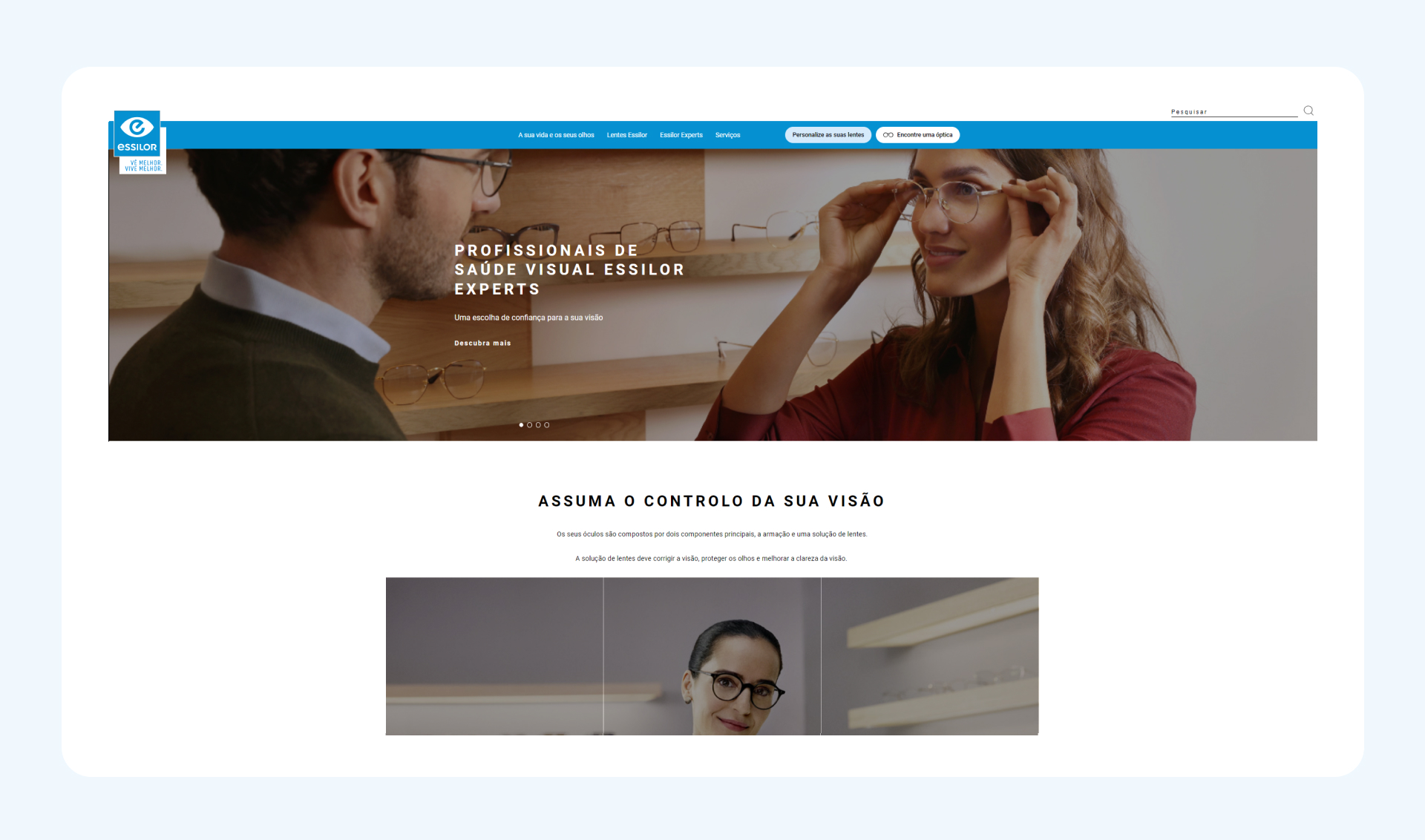
This Essilor website is updated in Portuguese for its target market:
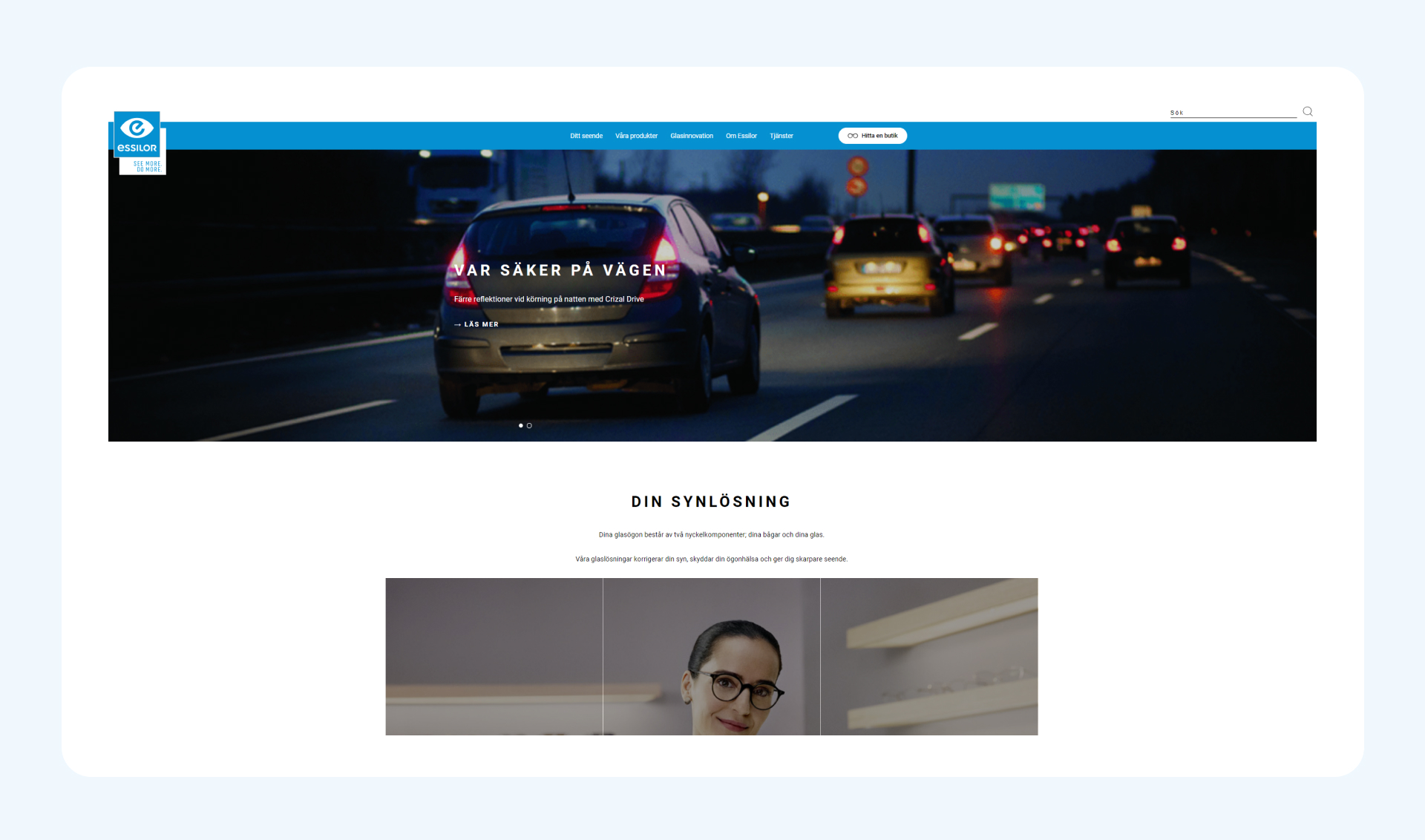
When your cost per lead keeps climbing but pipeline stays flat, adding another tool won’t fix it. You need a different system.
“Working with CIENCE helped us build a scalable, predictable pipeline — we generated over 4,000 qualified leads in just four months.” — August Ash, Marketing Agency
CIENCE + graph8 pricing: $5,000 one-time GTM system setup, $2,499/mo strategic execution, and the graph8 platform at $499/mo. No long-term contracts. See full pricing →
Whether or not you decide to work with us, you’ll walk away with a clear picture of where your pipeline is leaking and what it would take to fix it.
Your brand is much more than the product or service you sell. Remember, the hard work of building your brand begins well before a customer chooses a product and continues long after the sale is finalized. And, as you can see, there are plenty of things you can do to improve your brand consistency and build an identity that customers trust and relate to for your business. With a 4.6/5 rating on Capterra and clients across 250+ industries, CIENCE has helped organizations at every scale solve the brand consistency challenge.
“The CIENCE team are true professionals — reliable, consistent, and results-driven from day one.” — Wrike, Project Management Software
Frequently Asked Questions
Why is brand consistency important in B2B sales?
Brand consistency builds the trust that drives purchasing decisions. Most B2B buyers prioritize emotional factors — like whether they trust and respect a brand — over price alone. According to Forbes, presenting a consistent brand across all platforms can increase revenue by up to 23%. Inconsistent messaging creates confusion and erodes the credibility needed to win high-value deals.
How do you maintain brand consistency across multiple channels?
The most effective approach uses a CRM, digital experience platform (DXP), or marketing automation system to manage content distribution across all channels automatically. These tools enforce brand guidelines, standardize workflows, and ensure that messaging stays on-brand whether published on your website, social media, email campaigns, or partner sites.
What is the biggest threat to B2B brand consistency?
International expansion and multi-market operations pose the greatest challenge. Different languages, cultural contexts, and regional marketing teams can fragment your brand identity. The solution is investing in a global digital platform that supports multi-language sites, machine translation, and localized campaigns while maintaining central brand guidelines and cascading updates across all regional properties.

A graph8 company — AI-powered GTM execution across 250+ B2B industries.
graph8 Platform
From $499/mo
Run your own GTM campaigns with AI-powered data, sequences, and analytics.
Start Free — 2,500 Credits No credit card requiredCIENCE Managed
From $2,499/mo
Our GTM teams build and run your outbound campaigns end-to-end.
15-min call · No commitment2,500+ B2B companies served · Month-to-month contracts · See full pricing →